
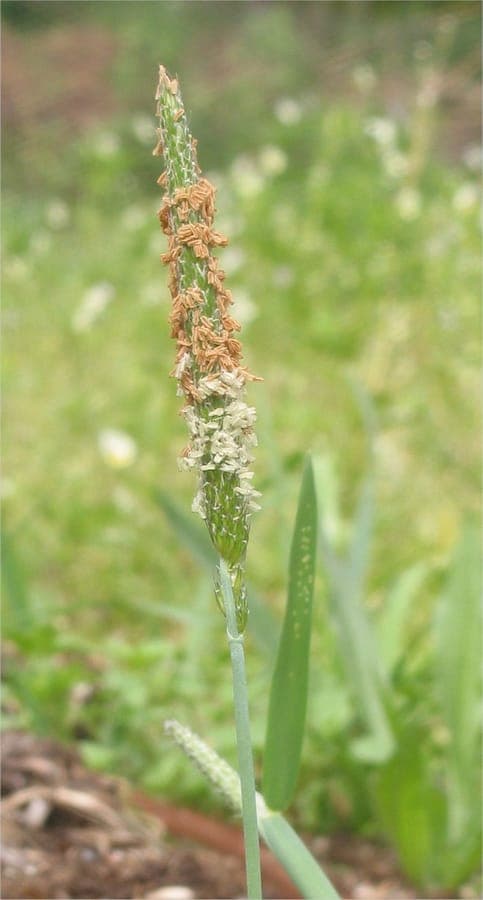
Rasbak / CC BY-SA 3.0, via Wikimedia Commons
Marsh foxtail: complete guide
Alopecurus geniculatus
Want to see Marsh foxtail: complete guide in your garden?
1 minute, no credit card
Overview
Marsh foxtail, or Alopecurus geniculatus, is a perennial grass in the Poaceae family that thrives in consistently moist to wet soils. Native across much of central and northern Europe, it's commonly found in marshes, damp meadows and along ditch banks. If you've got a soggy patch in your garden that resists most plants, this grass could be your best ally. It's not flashy, but it brings subtle beauty and resilience to wet corners where few others survive.
This grass is perfect for naturalistic planting, rain gardens or the edges of ponds. On gardenworld.app, you can design a planting scheme that highlights moisture-loving grasses like marsh foxtail, ensuring they're placed exactly where water collects.
Appearance & bloom cycle
Marsh foxtail grows 50–90 cm tall with a spread of 30–40 cm. The foliage is fine-textured, bright green and upright in spring. The standout feature is the flower spike: a soft, cylindrical, nodding panicle, 3–7 cm long, appearing from April to June. At first pale green, it matures to a warm beige or light brown, adding interest well into late summer.
The plant forms loose tussocks and spreads slowly via short rhizomes. It won't take over your garden, but it will fill in gently over time. The spent flower heads persist through winter, catching frost and light beautifully.
Ideal location
Full sun is ideal, but it tolerates partial shade, especially in hotter climates. The key factor isn't light - it's moisture. This grass needs wet feet. Think pond margins, bog gardens, low-lying areas that collect rainwater or alongside drainage swales. It's excellent for wildlife gardens, sustainable drainage systems (SuDS) and informal meadow plantings.
Avoid dry, sandy spots. If your soil drains too fast, consider creating a shallow depression to hold water. On gardenworld.app, use the moisture zoning tool to map out where marsh foxtail will thrive in your garden layout.
Soil requirements
Heavy, moisture-retentive soils are best - clay, silt or loam rich in organic matter. The pH should be slightly acidic to neutral (5.5–7.0). Avoid chalky or sandy soils unless you can heavily amend them with compost and mulch to retain water.
Fertiliser isn't necessary and can lead to floppy growth. This grass evolved in nutrient-poor wetlands, so rich soils may cause it to weaken or collapse.
Watering
Keep the soil consistently damp, especially during the first growing season. Once established, it requires little to no supplemental watering, provided it's in a naturally wet spot. During prolonged droughts, especially in USDA zones 7 and above, occasional soaking is recommended.
It can tolerate temporary flooding - up to 5 cm of standing water for short periods - but isn't a true aquatic plant. Don't plant it in deep water.
Free design
Want to see Marsh foxtail: complete guide in your garden? Make a free design now.
Pruning
Cut back in late winter or early spring, before new growth emerges. Trim the old foliage to about 10 cm above ground level. This clears space for fresh shoots and keeps the clump tidy. Remove the cut material to prevent fungal issues in damp conditions.
In naturalistic designs, some gardeners leave the grass standing over winter for visual texture and habitat value. The dry spikes sway in the wind and shelter overwintering insects.
Maintenance calendar
- Jan: Check for soggy debris, remove rotted material
- Feb: Light cleanup if weather permits
- Mar: Cut back old growth, watch for new shoots
- Apr: Growth begins, flowering spikes emerge
- May: Peak bloom, monitor plume development
- Jun: Flowers fade, no further care needed
- Jul: Dormant phase, check for drought stress
- Aug: No maintenance, observe seed dispersal
- Sep: Prepare for dormancy, reduce watering
- Oct: Leave standing for winter interest
- Nov: Avoid cutting unless rotting
- Dec: Winter observation, protect from compaction
Winter hardiness
Hardy to USDA zone 5 (-20°C), marsh foxtail handles cold winters well. Foliage may brown but regrows reliably in spring. In areas with heavy, waterlogged clay, improve drainage slightly by mixing in grit or compost to prevent crown rot.
Mulching isn't required, but a thin layer of leaf litter can help retain moisture and protect the crown in exposed sites.
Companion plants
Pair with other moisture-loving perennials: Carex vulpinoidea, Eutrochium maculatum, Iris versicolor, and Ligularia. For contrast, include fluffy grasses like Calamagrostis langsdorffii or flowering plants such as Trollius europaeus and Persicaria bistorta.
Avoid drought-tolerant plants like lavender or sedums in the same bed. Stick to species that accept wet feet year-round.
Closing
Marsh foxtail isn't a headline act, but it's a backbone plant for wet areas. It asks for little, survives what others can't, and adds quiet rhythm to the border. Its nodding plumes bring movement and softness, especially when backlit by low sun.
You can find it at garden centres across the UK and US, often sold in 1 or 2-litre pots. Look for nursery-grown stock - don't dig from the wild. Steer clear of the similar-looking Alopecurus pratensis, which prefers drier meadows.
With the design tools on gardenworld.app, you can integrate marsh foxtail into a functional, beautiful garden that works with your site's natural conditions instead of fighting them.
Want to see Marsh foxtail: complete guide in your garden? Make a free design now.
Upload a photo, pick a style, and get a photorealistic design with plant list in under a minute.
No credit card required


Similar plants
Sporobolus pungens: complete guide
Sporobolus pungens
Sporobolus pungens is a stoloniferous Mediterranean coastal grass with outstanding salt and drought tolerance, perfect for seaside and dry gardens.
Mediterranean aegilops: complete guide
Aegilops biuncialis
Everything about Aegilops biuncialis, a Mediterranean annual grass with ornamental spikes and outstanding drought tolerance for dry gardens.
Silver bluestem: complete guide
Bothriochloa saccharoides
Full guide to Bothriochloa saccharoides (silver bluestem): site, soil, watering, winter hardiness, pruning, and garden companions.