
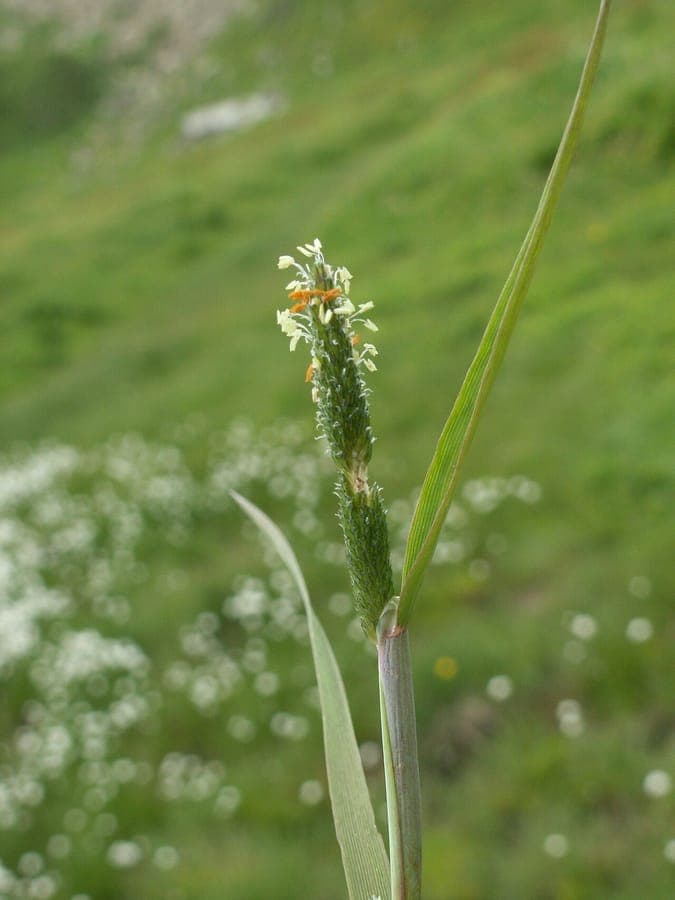
No machine-readable author provided. Thommybe assumed (based on copyright claims). / CC BY-SA 3.0, via Wikimedia Commons
Orange foxtail: complete guide
Alopecurus aequalis
Want to see Orange foxtail: complete guide in your garden?
1 minute, no credit card
Overview
Orange foxtail (Alopecurus aequalis) is a graceful, clump-forming grass in the Poaceae family, valued for its airy flower heads and adaptability in garden settings. Native to regions from Alaska to Afghanistan, this perennial graminoid thrives in temperate climates and brings a soft, waving motion to borders and naturalistic plantings. It typically reaches 30–60 cm in height with a spread of 20–25 cm, making it ideal for mid-border placement or as a textural filler in modern garden designs.
While often found in moist meadows in the wild, cultivated Orange foxtail performs well in average garden conditions once established. It's not just a background player-its seasonal color shifts and movement in the breeze make it a standout feature. On gardenworld.app, you can map out where this grass fits best in your layout based on sun exposure and companion plants.
Appearance & bloom cycle
The charm of Orange foxtail lies in its dense, cylindrical flower spikes, which emerge in late spring and persist through summer. Initially green to blue-green, these 3–6 cm long inflorescences mature to a warm orange or rusty-golden hue by midsummer-giving the plant its common name. The flowers appear in late May and continue blooming into September, peaking in June and July.
The foliage is narrow, bright green, and semi-erect, forming a tidy mound. Leaves are typically 20–40 cm long and less than 5 mm wide, with a soft, slightly glossy texture. Unlike some coarser grasses, Orange foxtail maintains an elegant, lightweight presence. The dried seed heads remain attractive through autumn and into winter, offering visual interest and shelter for overwintering insects.
Ideal location
Orange foxtail thrives in full sun, scoring an 8 out of 10 on the light scale-meaning at least 6 hours of direct sunlight daily. In partial shade, the plant becomes leggy and flops more easily, reducing its ornamental value. It performs best in open borders, wildflower meadows, or gravel gardens where its movement and texture can be appreciated.
Plant in groups of 5–7 for a natural drift effect. Space them 30 cm apart to allow for air circulation and full development. Avoid overcrowding, which can lead to fungal issues in humid conditions. This grass works especially well near patios or pathways, where its fine foliage brushes gently against passing feet.
Using gardenworld.app, you can simulate how Orange foxtail moves in different wind zones and sunlight angles, helping you place it for maximum impact.
Soil requirements
This grass is adaptable but prefers well-drained soil with a pH between 5.5 and 8. It tolerates clay if not waterlogged, and performs well in sandy or loamy soils. While it originates in moist habitats, established plants show good drought tolerance. Avoid stagnant water, especially in winter, as this can lead to crown rot.
Improve heavy soils with compost or grit to enhance drainage. In sandy soils, incorporate organic matter to retain moisture during dry spells. No heavy feeding is needed-Orange foxtail grows well in low-fertility conditions.
Free design
Want to see Orange foxtail: complete guide in your garden? Make a free design now.
Watering
During the first growing season, water deeply once a week, providing about 2.5 cm of water. This encourages deep root development. After establishment, reduce frequency-Orange foxtail is drought-tolerant and only needs supplemental watering during extended dry periods, especially in USDA zones 7–8.
Overwatering is more harmful than underwatering. Let the soil dry out between waterings. If you notice leaf tip browning in summer, it's usually a sign of dryness, not disease-give a deep soak and the plant will recover quickly.
Pruning
Pruning is minimal. Cut back old foliage in late winter or early spring before new growth emerges. Trim to about 10 cm above ground level using sharp shears. This clears space for fresh green shoots and prevents old material from smothering new growth.
Leave the plant standing through autumn and winter for visual interest and ecological benefit. The seed heads provide food for finches and sparrows, and the structure shelters beneficial insects.
Maintenance calendar
- January: Cut back old growth if not done in late winter.
- February: Prepare tools; inspect crowns for rot.
- March: Trim remaining old foliage; apply light compost if desired.
- April: New shoots appear; watch for slug damage.
- May: Bloom begins; ensure consistent moisture.
- June: Peak bloom; monitor for overcrowding.
- July: Continue watering during heatwaves.
- August: Bloom tapers off; avoid cutting back.
- September: Let seed heads remain for winter effect.
- October: No action needed.
- November: Leave plant intact for winter.
- December: Check mulch; protect young plants in zone 4.
Winter hardiness
Orange foxtail is hardy in USDA zones 4–8. In zone 4, a light mulch of straw or leaves can protect the crown during severe freezes. In milder zones (6–8), it typically overwinters without issue, especially in well-drained soil. The plant dies back to the base but regrows reliably in spring from the root crown.
Avoid heavy mulching, which can trap moisture and promote rot. In wet winters, ensure good air flow around the base.
Companion plants
Pair Orange foxtail with plants that share its sun and moisture needs. Excellent companions include Echinacea purpurea, Sedum 'Matrona', Stachys byzantina, and Carex elata 'Aurea'. These combinations offer contrast in texture and form while extending seasonal interest.
Avoid overly competitive spreaders like mint or aggressive ground covers. Instead, use low-growing perennials such as Thymus or Ajuga to frame the grass without overwhelming it.
Closing
Orange foxtail is a quiet achiever in the ornamental grass world-undramatic but reliable, soft but resilient. It's perfect for gardeners who want movement, texture, and low maintenance without sacrificing beauty. Available seasonally at garden centres across the UK and North America, it's often sold in 1L pots. Watch for mislabelling-sometimes it's confused with Alopecurus pratensis or A. geniculatus.
With proper placement and minimal care, Orange foxtail delivers year-round appeal. And with tools like gardenworld.app, you can visualize its growth pattern and seasonal shifts before planting a single blade.
Want to see Orange foxtail: complete guide in your garden? Make a free design now.
Upload a photo, pick a style, and get a photorealistic design with plant list in under a minute.
No credit card required


Similar plants
Sporobolus pungens: complete guide
Sporobolus pungens
Sporobolus pungens is a stoloniferous Mediterranean coastal grass with outstanding salt and drought tolerance, perfect for seaside and dry gardens.
Mediterranean aegilops: complete guide
Aegilops biuncialis
Everything about Aegilops biuncialis, a Mediterranean annual grass with ornamental spikes and outstanding drought tolerance for dry gardens.
Silver bluestem: complete guide
Bothriochloa saccharoides
Full guide to Bothriochloa saccharoides (silver bluestem): site, soil, watering, winter hardiness, pruning, and garden companions.