
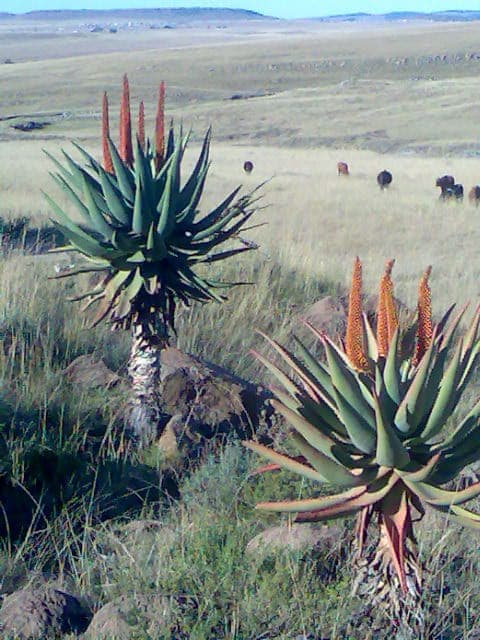
Gregorydavid / CC BY 2.5, via Wikimedia Commons
Bitter aloe: complete guide
Aloe ferox
Want to see Bitter aloe: complete guide in your garden?
1 minute, no credit card
Overview
Aloe ferox, commonly known as bitter aloe, is a striking succulent native to the arid regions of South Africa, Lesotho, and the Free State. This bold plant thrives in full sun and poor soils, making it a top choice for xeriscapes and low-maintenance gardens. In the UK and northern Europe, it's best grown in containers so it can be moved indoors during winter. Its sculptural form and dramatic winter blooms make it a standout in any outdoor or patio setup.
Gardeners in cooler climates appreciate its resilience and architectural presence. On gardenworld.app, you can design a container layout that highlights Aloe ferox as a focal point, ensuring it gets the space and light it needs.
Appearance & bloom cycle
Aloe ferox forms a large, symmetrical rosette of thick, sword-shaped leaves that can reach 60–80 cm in length. The leaves are dark green with prominent reddish-brown teeth along the margins. As the plant matures, it may develop a short trunk and produce offsets at the base.
From late autumn to early winter - typically November to February - it sends up a towering flower spike of 60 to 120 cm. The inflorescence holds hundreds of tubular, bright orange-red flowers that attract sunbirds and bees. This bloom period adds life to the winter garden when most plants are dormant.
The plant grows slowly, reaching maturity in 5–7 years. Older specimens can form clusters of rosettes, creating a bold, sculptural presence.
Ideal location
Place Aloe ferox in full sun. It needs at least 6–8 hours of direct sunlight daily to maintain compact growth and trigger flowering. Outdoors, choose a south-facing spot with no overhead shade. On patios or balconies, use unglazed terracotta or stone planters that absorb excess moisture.
In USDA hardiness zones 9b–11, Aloe ferox can be grown in the ground. Elsewhere, keep it in a container so you can bring it indoors before temperatures drop below -2°C (28°F). Avoid placing it under eaves or in damp corners - consistent moisture leads to rot.
Soil requirements
Use a fast-draining mix. A blend of 2 parts cactus compost and 1 part coarse sand or perlite works well. In garden beds, amend the soil with gravel and sand to prevent water retention. The ideal pH range is 6.0–7.5, but this plant tolerates a wide range as long as drainage is excellent.
Never use rich, moisture-retentive soils. Avoid compost-heavy mixes or water-holding gels. These conditions are the main cause of root rot in container-grown aloes.
Free design
Want to see Bitter aloe: complete guide in your garden? Make a free design now.
Watering
Water deeply but infrequently. During the growing season (March to October), soak the soil and let it dry completely before watering again - roughly every 10–14 days. In winter, reduce watering to once every 4–6 weeks. The plant is dormant and excess moisture can kill it.
Always water at the base, avoiding the leaf rosette. Use rainwater or dechlorinated tap water if possible. Overhead watering increases the risk of fungal issues, especially in cool weather.
Pruning
Pruning is rarely needed. Remove only dead, damaged, or diseased leaves with sterilized shears. Cut close to the base without injuring the central stem. Do not remove healthy lower leaves - they protect the stem and recycle nutrients.
If offsets appear, you can detach them in spring. Let the cut ends callus for 2–3 days, then plant in a gritty mix. These pups root easily and grow into new plants.
Maintenance calendar
- Jan: Indoors, dry, cool (5–10°C)
- Feb: Minimal watering, check for pests
- Mar: Move to brighter spot, start light watering
- Apr: Increase watering every 10–14 days
- May: Full sun outdoors, no fertilizer
- Jun: Monitor for overwatering, ensure airflow
- Jul: Keep dry, avoid humidity buildup
- Aug: No feeding, reduce water slightly
- Sep: Begin reducing watering
- Oct: Bring indoors before frost
- Nov: Winter dormancy, little to no water
- Dec: Protect from cold, maintain dry soil
Winter hardiness
Aloe ferox is not frost-hardy. It tolerates brief dips to -2°C but cannot survive prolonged freezing. Best kept above 5°C in winter. USDA zones 9b–11 are ideal for outdoor cultivation. In colder zones, grow it in a pot and overwinter in a greenhouse, sunroom, or bright conservatory.
Ensure good air circulation to prevent fungal diseases during cold months.
Companion plants
Pair Aloe ferox with other drought-tolerant plants. Excellent companions include Agave americana, Echeveria elegans, Sedum spectabile, and Kniphofia. Ornamental grasses like Stipa tenuissima add movement and contrast.
Avoid moisture-loving plants such as ferns, hostas, or astilbes. Their care needs clash with Aloe ferox's preference for dry roots.
In mixed containers, group it with plants that share similar sun and soil needs. On gardenworld.app, explore curated plant palettes that match Aloe ferox with ideal partners for visual impact and low maintenance.
Closing
Aloe ferox is a hardy, low-fuss succulent that brings drama and structure to any garden. Its bold form, vibrant blooms, and minimal care needs make it a favorite among both novice and experienced gardeners. Grow it in a sunny spot with sharp drainage, and it will thrive for years. Buy healthy specimens from reputable garden centres like those found at OBI or Truffaut, or explore local nurseries with a focus on succulents. With the right setup, this South African native will be a long-lasting feature in your outdoor space.
Want to see Bitter aloe: complete guide in your garden? Make a free design now.
Upload a photo, pick a style, and get a photorealistic design with plant list in under a minute.
No credit card required


Similar plants
Aloe castanea: complete guide
Aloe castanea
Discover Chestnut aloe, a South African succulent. Growth, nutrition, and garden integration for warm climates and container culture.
Aloe pratensis: complete guide
Aloe pratensis
Learn how to grow Meadow aloe, a South African succulent. Nutrition, propagation, and front yard integration for warm climates or containers.
Pretoria aloe: complete guide
Aloe pretoriensis
Discover Aloe pretoriensis, an elegant South African succulent with striking red blooms. Learn care tips, ideal conditions, and companion planting for this hardy, drought-tolerant plant.