
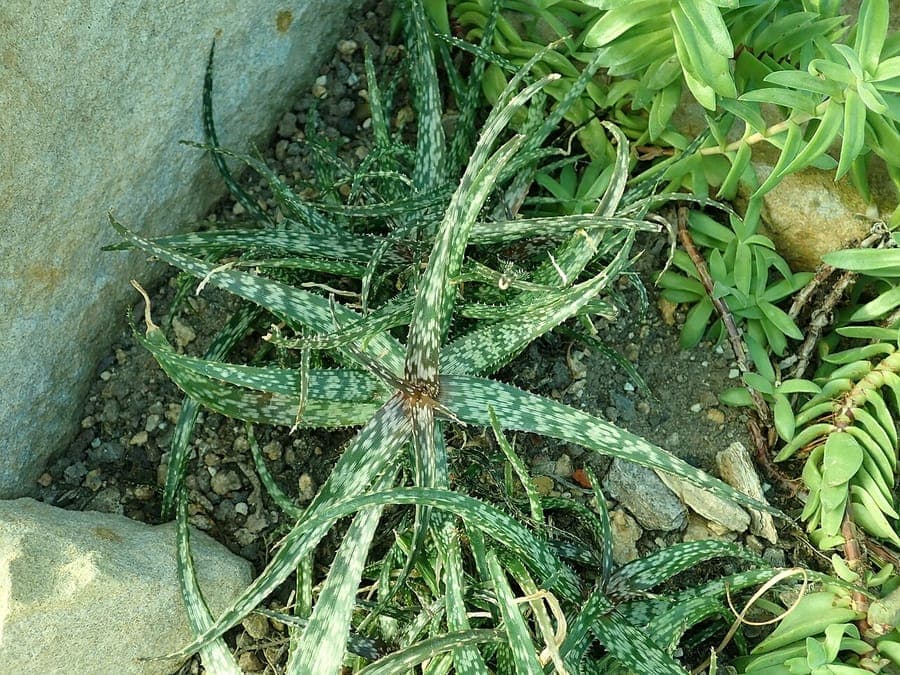
Salicyna / CC BY-SA 4.0, via Wikimedia Commons
Aloe bakeri: complete guide
Aloe bakeri
Want to see Aloe bakeri: complete guide in your garden?
1 minute, no credit card
Overview
Aloe bakeri is a fascinating succulent with a unique history, native to the island of Madagascar. Scientifically described by Scott Elliot in 1891, this species has a remarkable status: Aloe bakeri is currently extinct in the wild, making it a significant plant for collectors and plant enthusiasts. This status makes its cultivation not merely horticultural but also a form of plant conservation. Growing Aloe bakeri means preserving a species that would otherwise disappear.
With its elegant structure and interesting growth pattern, Aloe bakeri is ideal for container cultivation and indoor gardening. The plant displays characteristics of Malagasy succulents: adaptation to specific climates and refined appearance. This is a plant for dedicated collectors seeking something unique and meaningful.
Appearance and Bloom
Aloe bakeri forms dense, remarkably refined rosettes of pointed leaves. The plant typically reaches moderate size of approximately 50-70 centimeters in height. The leaves are pointed and, in good light, can develop subtle red tinting. The overall appearance is elegant and architecturally interesting.
Aloe bakeri blooming is striking. During spring, slender flower stems emerge bearing tubular yellow to orange blooms. These flowering stems are highly attractive to insects and hummingbirds. The blooming period lasts several weeks, making the plant visually interesting through extended seasons.
Ideal Location
Aloe bakeri grows best in positions with abundant sunlight. Ensure the plant receives at least five to six hours of direct daily sunlight. In very hot climates, light afternoon shade may be beneficial. For indoor cultivation, position near a bright south-facing window.
The plant tolerates average household temperatures well but should be protected from extreme cold drafts. For nursery use, a location with good light and minimal cold air movement is ideal. Avoid areas with moisture problems or excessive humidity.
Soil
Aloe bakeri grows optimally in highly draining soil mixture. Use a blend of approximately 60% dedicated succulent potting mix and 40% very coarse sand, gravel, or perlite. This ensures rapid drainage while retaining nutrition. A pH between 6.0 and 7.5 is ideal.
For container cultivation, specialized succulent potting mix is essential. Ensure pots have large drainage holes. Better to have slight underfeeding symptoms than root rot from poor drainage. Repot plant yearly in slightly larger container.
Free design
Want to see Aloe bakeri: complete guide in your garden? Make a free design now.
Watering
Water moderately and seasonally. During the growing season (spring through fall), water when soil feels dry to about 3 centimeters depth. This is typically every two to three weeks, depending on temperature and humidity.
During winter, reduce watering substantially, perhaps only every four to six weeks. Aloe bakeri tolerates drought better than wet conditions. For indoor cultivation, carefully adjust seasonal water needs.
Pruning
Pruning is not strictly necessary for Aloe bakeri. Remove only completely dead leaves or damaged parts. The plant maintains its natural form without assistance. Healthy plants benefit from minimal intervention.
Maintenance Calendar
Spring: Resume cautious watering; inspect for fungal issues. Summer: Regular moisture; protect from extreme heat. Fall: Gradually reduce watering. Winter: Minimal water.
Winter Hardiness
Aloe bakeri is not cold-hardy in European outdoor conditions. This plant must be protected absolutely in frost-prone areas. All cultivation should occur in pots under controlled conditions. For indoor use: maintain temperatures above 10 degrees Celsius during winter.
Companion Plants
For container display with mixed succulents, combine Aloe bakeri with other African succulents like Sempervivum, Echeveria, or small Crassula species. Avoid large, moisture-loving plants. In indoor arrangements, this plant pairs beautifully with other low-water houseplants.
Closing Remarks
Aloe bakeri is a special plant with historical significance, representing an extinct-in-wild species preserved only in cultivation. Growing Aloe bakeri carries not only horticultural value but conservation significance. By cultivating this plant, you help preserve a species that would otherwise vanish. This makes it an exceptionally valuable addition to any succulent collection. Find this rare plant through specialized succulent collectors. GardenWorld.app can help integrate this important jewel into your collection.
Want to see Aloe bakeri: complete guide in your garden? Make a free design now.
Upload a photo, pick a style, and get a photorealistic design with plant list in under a minute.
No credit card required


Similar plants
Aloe africana: complete guide
Aloe africana Mill.
South African aloe with thick greyish-blue leaves and orange tubular flowers. Hardy to -12 degrees C, perfect for xeric gardens and arid landscapes.
Aloe petricola: complete guide
Aloe petricola
Discover Aloe petricola, the nespruit rock aloe. Care, growing tips, and design applications for this unique compact South African aloe.
Aloe reitzii: complete guide
Aloe reitzii
Discover Aloe reitzii, a refined succulent from South Africa. Complete care guide, growing tips, and landscape integration for this elegant plant.