
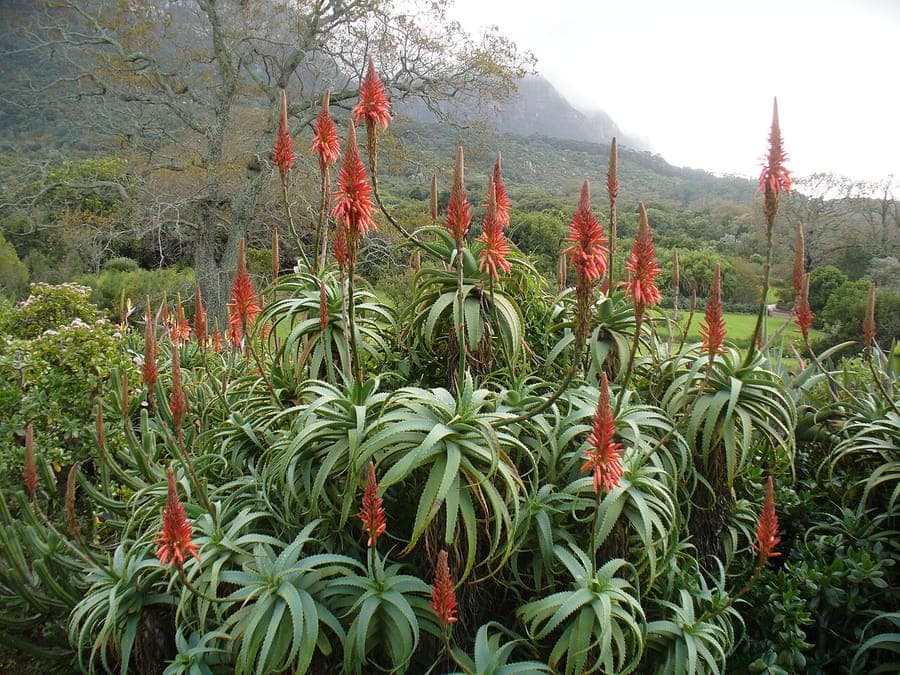
Andrew massyn / Public domain, via Wikimedia Commons
Candelabra aloe: complete guide
Aloe arborescens
Want to see Candelabra aloe: complete guide in your garden?
1 minute, no credit card
Overview
Aloe arborescens, commonly known as Candelabra aloe, is a striking succulent shrub that brings architectural form and vibrant winter blooms to gardens. Native to regions of southern Africa including South Africa, Zimbabwe, and Mozambique, this plant thrives in hot, dry climates but can be grown successfully in temperate zones with a little planning. Its upright, branching habit and torch-like flower spikes make it an excellent focal point in modern and Mediterranean-style gardens.
While not fully hardy in colder regions, Aloe arborescens can be cultivated outdoors in USDA zones 9–11 (down to -7°C). In cooler areas, growing it in containers is the most practical solution. This way, you can move it to shelter before the first frosts hit. At gardenworld.app, you can design a seasonal garden layout that accounts for container mobility and microclimate placement.
Appearance & bloom cycle
This succulent grows in a tree-like form, reaching heights of up to 1.5 meters with multiple branching stems that create its distinctive candelabra shape. The fleshy, gray-green leaves are arranged in tight rosettes at the ends of the branches, edged with small reddish-brown teeth. The plant develops fast in spring and summer, producing new offsets and strengthening its trunk.
Flowering occurs in winter, typically from December to February, when clusters of bright orange to red tubular flowers emerge on 30–40 cm tall inflorescences. These attract sunbirds and other pollinators, making the plant ecologically valuable. In cooler climates, flowering is more reliable when the plant is overwintered in a bright, cool greenhouse or sunroom.
Ideal location
Full sun is non-negotiable for Aloe arborescens. Plant it where it receives at least 6 hours of direct sunlight daily – a south-facing wall, rock garden, or patio container works best. The plant thrives in hot, reflective environments, so a spot next to stone or brick can boost its performance by radiating warmth.
If you're gardening in a wetter region, avoid low-lying or shaded areas. Instead, elevate the plant in a raised bed or container to prevent moisture buildup. Many garden centres carry Aloe arborescens in late spring and summer. Look for healthy specimens with firm leaves and no signs of rot.
Soil requirements
Well-draining soil is essential. Use a gritty, sandy mix with low organic content. A blend of 2 parts potting mix, 1 part coarse sand, and 1 part perlite or gravel works well for containers. In garden beds, amend heavy clay soils with sharp sand and crushed rock to improve drainage.
Avoid moisture-retentive composts or rich garden soils, as these promote root rot. The ideal pH range is 6.0 to 7.5. Aloe arborescens doesn't need fertile soil – in fact, poor soil encourages compact growth and better flowering.
Free design
Want to see Candelabra aloe: complete guide in your garden? Make a free design now.
Watering
This aloe is highly drought-tolerant. During the growing season (April to September), water every 2–3 weeks, only when the soil is completely dry. In winter, reduce watering to once a month or less, especially if the plant is kept cool and dormant.
Overwatering is the most common cause of failure. Always check the soil moisture with your finger before watering. Use rainwater when possible, as tap water can leave lime deposits on leaves. Potted plants dry out faster, so monitor them closely in summer heat.
Pruning
Pruning is rarely necessary, but you may want to remove old, lower leaves or damaged stems to keep the plant tidy. Use clean, sharp shears and cut just above a leaf rosette. Never cut into the main stem unless propagating.
You can also remove offsets (pups) that form around the base. Let them grow to at least 10 cm, then carefully separate and plant them in a well-draining mix. Roots usually form within 4–6 weeks.
Maintenance calendar
- January: Keep dry. No watering.
- February: Check for pests on indoor plants.
- March: Begin acclimatising to outdoor conditions.
- April: Move outdoors after last frost (above 5°C).
- May: Water every 2–3 weeks if dry.
- June: Watch for sun scorch after sudden exposure.
- July: Inspect for mealybugs or scale.
- August: Final pest check before autumn.
- September: Begin bringing potted plants indoors.
- October: Place in bright, cool room (5–10°C).
- November: Reduce watering to monthly.
- December: Keep cool and dry; protect from frost.
Winter hardiness
Aloe arborescens is rated for USDA zone 9, tolerating brief dips to -7°C if dry. However, prolonged wet and cold conditions are deadly. In zones 7–8, it must be grown in containers or under a protective structure. Wet winter soil leads to root rot, even if temperatures stay above freezing.
For outdoor survival, plant in a raised bed with gravel mulch and a south-facing wall for heat retention. Alternatively, overwinter in a frost-free greenhouse or bright windowsill. Avoid heating, as this disrupts dormancy.
Companion plants
Pair with other drought-tolerant plants like Agave parryi, Echeveria, Sedum, or Yucca. Lavender and Russian sage (Perovskia) provide colour contrast and similar water needs. Avoid moisture-loving plants like hostas or ferns.
Use gravel, stone, or decomposed granite as mulch to reflect heat and reduce evaporation. The sharp textures of succulents contrast beautifully with soft grasses or architectural stonework.
Closing
Aloe arborescens is a bold, low-maintenance plant that adds year-round structure and winter colour. With proper siting and drainage, it can thrive even in cooler regions. Growing in containers offers flexibility and protection.
Explore gardenworld.app to plan your succulent garden layout and track seasonal care. Whether you're starting with one plant or designing a full xeriscape, the right setup makes all the difference. Available at garden centres nationwide, often in 3–5 litre pots during warmer months.
Want to see Candelabra aloe: complete guide in your garden? Make a free design now.
Upload a photo, pick a style, and get a photorealistic design with plant list in under a minute.
No credit card required


Similar plants
Aloe castanea: complete guide
Aloe castanea
Discover Chestnut aloe, a South African succulent. Growth, nutrition, and garden integration for warm climates and container culture.
Aloe pratensis: complete guide
Aloe pratensis
Learn how to grow Meadow aloe, a South African succulent. Nutrition, propagation, and front yard integration for warm climates or containers.
Pretoria aloe: complete guide
Aloe pretoriensis
Discover Aloe pretoriensis, an elegant South African succulent with striking red blooms. Learn care tips, ideal conditions, and companion planting for this hardy, drought-tolerant plant.