
Skrod / CC BY-SA 3.0, via Wikimedia Commons
Caucasian alder: complete guide
Alnus subcordata
Want to see Caucasian alder: complete guide in your garden?
1 minute, no credit card
Overview
Alnus subcordata, commonly known as the Caucasian alder, is a fast-growing deciduous tree native to the moist mountain forests of Iran and the Transcaucasus. It's become a popular choice in temperate gardens, especially where soil stays wet for long periods. Reaching up to 20 meters tall with a spread of 8–10 meters, this tree offers year-round structure and seasonal interest. It's not just decorative – its root system hosts nitrogen-fixing bacteria, enriching the soil naturally. If you're dealing with a soggy corner in your garden, this could be your solution. Use gardenworld.app to visualise how a Caucasian alder fits into your space, whether as a specimen tree or part of a wetland planting scheme.
Appearance & bloom cycle
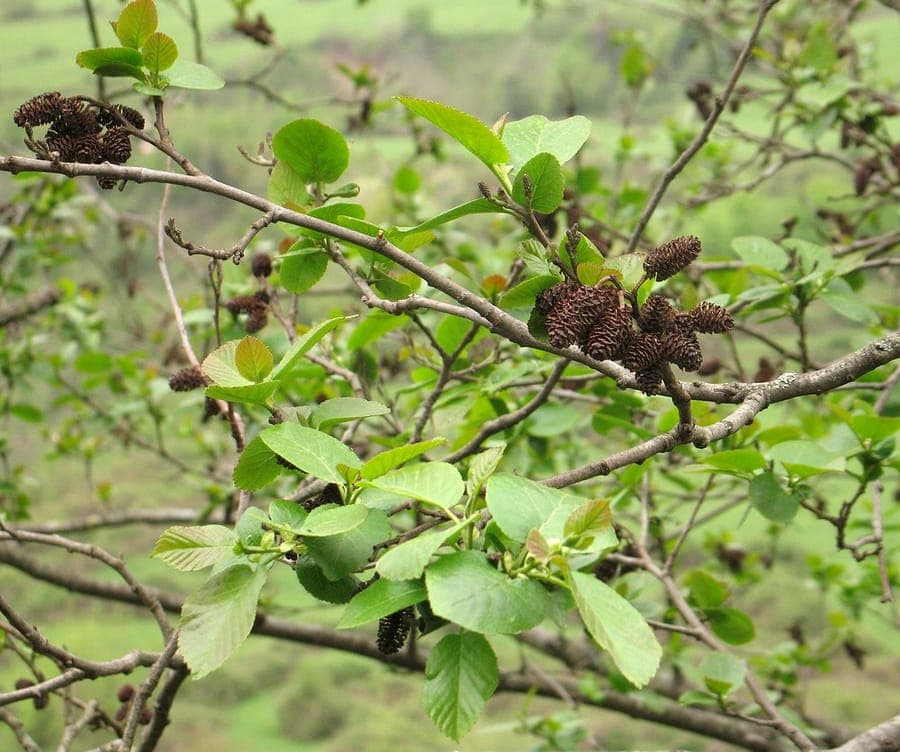
The Caucasian alder develops a straight trunk with smooth, silvery-grey bark that darkens slightly with age. The leaves are heart-shaped, 6–10 cm wide, dark green above and paler beneath with fine hairs along the veins. In late winter to early spring, male catkins appear – long, pendulous, and yellow-brown – followed by shorter, dark red female catkins. After pollination, the female catkins mature into small, woody cones that persist through winter, adding visual texture. Full leaf canopy develops by late April and stays lush until October, when leaves turn a soft yellow before falling.
Ideal location
Plant in full sun to light shade. While it tolerates partial shade, full sun ensures the densest foliage and strongest growth. This tree thrives in damp, poorly drained areas – perfect for pond margins, stream banks, or low-lying spots that collect water. It's excellent as a screening tree or in naturalised plantings. Avoid planting within 4 meters of buildings or underground utilities due to its vigorous root system. Give it room to breathe. You can use gardenworld.app to map out spacing and sunlight exposure for optimal placement.
Soil requirements
The Caucasian alder loves moisture-retentive soils: heavy clay, silt, or loam are ideal. It tolerates periodic flooding, making it rare among ornamental trees. The pH should be slightly acidic to neutral (5.5–7.5). Do not add nitrogen-rich fertiliser – the tree forms symbiotic nodules with Frankia bacteria, fixing its own nitrogen. Avoid dry, sandy soils; they will stress the tree. If planting in a garden with average drainage, amend the hole with compost and ensure consistent moisture.
Free design
Want to see Caucasian alder: complete guide in your garden? Make a free design now.
Watering
Young trees need regular watering in their first two growing seasons. Supply 20 litres per week during dry spells, ideally using a slow-release watering spike or drip system to encourage deep root development. Once established, the tree draws moisture from deeper soil layers and rarely needs supplemental watering unless facing prolonged drought. Mature trees are resilient, but young ones suffer quickly in dry conditions.
Pruning
Minimal pruning is required. Remove broken, diseased, or crossing branches in late winter (January to early March). Avoid heavy pruning, as it disrupts the tree's natural, elegant form. Use clean, sharp tools and cut just outside the branch collar. Never prune in deep winter when sap flow is high. If clearance is needed, raise the crown gradually by removing lower limbs over several years, maintaining at least 1.5 meters clearance from the ground.
Maintenance calendar
- January: inspect for damage, light pruning
- February: final pruning window before bud break
- March: check soil moisture, apply mulch if needed
- April: new growth begins, catkins develop
- May: foliage full, female cones form
- June–August: low maintenance, water only in drought
- September: monitor leaf colour and drop
- October: leaves fall, leave debris as natural mulch
- November: check root zone for compaction
- December: winter inspection, watch for snow load
Winter hardiness
Hardy in USDA zones 7–9, the Caucasian alder withstands temperatures down to -15°C. Young trees benefit from a 5–10 cm mulch layer around the base to insulate roots during harsh winters. Mature trees are self-sufficient and require no winter protection. Persistent cones add winter interest, and the silvery bark stands out in frosty light.
Companion plants
Pair with moisture-loving perennials like meadowsweet (Filipendula ulmaria), golden loosestrife (Lysimachia punctata), or carex species such as Carex elata 'Aurea'. Underplant with hellebores (Helleborus spp.) or wood anemone (Anemone nemorosa) for spring interest. Avoid invasive groundcovers that compete for root space. For design inspiration, gardenworld.app offers planting combinations tailored to wet, shaded areas.
Closing
The Caucasian alder is a resilient, low-maintenance tree that excels where others struggle. It's ideal for wet soils, erosion control, and natural-looking landscapes. With its rapid growth and soil-enriching roots, it's a smart long-term investment. Buy a young tree (80–120 cm) from garden centres like Wyevale or local independents, plant it in a suitable spot, and let it grow. Whether you need screening, habitat, or a statement tree, Alnus subcordata delivers. Let gardenworld.app help you integrate it into a balanced, thriving garden design.
Want to see Caucasian alder: complete guide in your garden? Make a free design now.
Upload a photo, pick a style, and get a photorealistic design with plant list in under a minute.
10,000+ gardens designed already
No credit card required


Similar plants
Heart-leaf birch: complete guide
Betula cordifolia
Heart-leaf birch is an attractive North American birch tree for large gardens. Discover growth, white papery bark and winter hardiness.
Tropical hornbeam: complete guide
Carpinus tropicalis
Everything about Carpinus tropicalis, the tropical hornbeam from Central America. Growing tips, location, care, and garden use explained.
Japanese Alder (Alnus firma): complete guide
Alnus firma
Learn everything about Japanese Alder in our complete guide. Discover care, growth, and applications for larger gardens.