
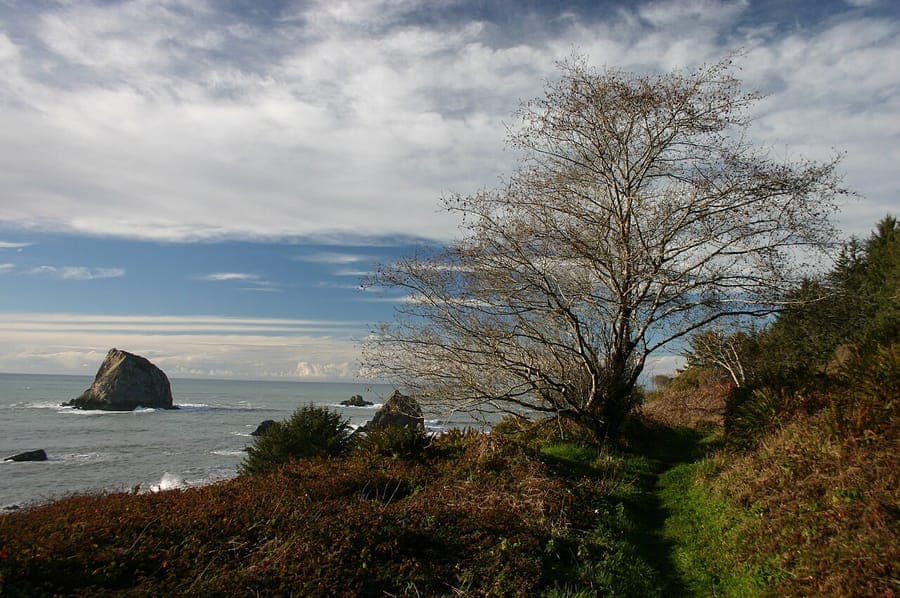
Wing-Chi Poon / CC BY-SA 3.0, via Wikimedia Commons
Red alder: complete guide
Alnus rubra
Want to see Red alder: complete guide in your garden?
1 minute, no credit card
Overview
Red alder (Alnus rubra) is a fast-growing deciduous tree native to the Pacific Northwest, stretching from Alaska to northern California. It's most at home in moist, nitrogen-poor soils and is often one of the first trees to colonize disturbed or wet ground. In the UK and parts of northern Europe, it's gaining attention for its ecological benefits and rapid growth, reaching 15–25 meters in height with a spread of 10–12 meters. While not a typical garden tree, it's perfect for large-scale natural plantings, riparian zones, or reclamation projects. It thrives in USDA hardiness zones 6–9 and adapts well to cool, damp climates.
On gardenworld.app, you can design a garden layout that integrates red alder seamlessly, balancing its size, shade, and root spread with surrounding plants.
Appearance & bloom cycle
Red alder has a straight trunk and an open, rounded crown. Young bark is smooth and grey-green, often with white lenticels; as it matures, it becomes rougher and may develop reddish fissures - hence the name. Leaves are oval to elliptical, 5–12 cm long, with finely serrated edges and a matte green surface. In autumn, they turn a soft yellow before dropping. The tree is monoecious: in early spring (March–April), male catkins (5–10 cm long) release pollen, while small red female flowers develop into woody, cone-like strobili (3–5 cm). These persist through winter, providing food for finches and other seed-eating birds.
Ideal location
Choose a site with full sun to partial shade. Red alder grows fastest in full sunlight, gaining up to 60 cm per year. It needs space - plant at least 6 meters from buildings, driveways, or underground utilities due to its aggressive, shallow root system. Best suited to damp areas: stream banks, pond edges, or low-lying zones that collect water. Avoid exposed, windy sites, as the tree can be prone to windthrow. It's not ideal for small urban gardens but excels in rural or semi-wild landscapes.
Soil requirements
Red alder thrives in moist, acidic to neutral soils (pH 4.5–6.5), particularly clay, loam, or organic-rich substrates. It's uniquely adapted to fix nitrogen via root nodules containing Frankia alni bacteria, improving soil fertility over time. This makes it excellent for rehabilitating poor or compacted soils. However, it struggles in dry, sandy, or well-drained soils. Consistent moisture is key - it tolerates temporary flooding but not prolonged drought.
Free design
Want to see Red alder: complete guide in your garden? Make a free design now.
Watering
Young trees need consistent watering in their first 2–3 years, especially during dry spells. Supply 10–15 liters weekly from May to September. Established trees draw moisture from deeper layers and rarely need supplemental watering unless in extended drought. Never let the root zone dry out completely, as this stresses the tree and reduces growth.
Pruning
Pruning is rarely needed. Red alder naturally sheds lower branches as it matures. Only prune to remove dead, damaged, or crossing limbs, and do so in late winter (January–February) when the tree is dormant. Avoid heavy cuts - the tree doesn't compartmentalize wounds well. Use clean, sharp tools to prevent disease. Coppicing is possible but not recommended for ornamental specimens.
Maintenance calendar
- Jan: Check for storm damage; minimal intervention
- Feb: Light pruning window; inspect for pests
- Mar: Catkins emerge; monitor for aphids on new growth
- Apr: Pollination period; avoid disturbance
- May-Aug: Peak growth; water young trees weekly
- Sep: Leaf color change begins; no fertilizing needed
- Oct: Leaf fall; leave debris as mulch to enrich soil
- Nov: Root development continues; avoid compaction
- Dec: Final inspection; protect young trunks from frost crack
Use gardenworld.app to generate a custom maintenance schedule tailored to your local weather and tree age.
Winter hardiness
Red alder is hardy in USDA zones 6–9. It tolerates winter lows down to -20°C but benefits from shelter in exposed areas. Young trees may suffer bark splitting in intense frost, especially on the south side of the trunk. Wrap the lower trunk with tree guard for the first 2–3 winters. Mature trees are resilient but remain vulnerable to strong winds due to shallow roots.
Companion plants
Pair red alder with moisture-loving, shade-tolerant species. Good choices include red osier dogwood (Cornus sericea), willow (Salix spp.), and western sword fern (Polystichum munitum). For ground cover, try native sedge (Carex vulpinoidea) or jewelweed (Impatiens capensis). Avoid drought-tolerant plants like lavender or sedum. The open canopy allows dappled light, making it suitable for woodland understory planting.
Closing
Red alder isn't a conventional garden tree, but for the right site, it's transformative. It builds soil, supports wildlife, and grows quickly with minimal input. While it demands space and moisture, its ecological payoff is unmatched. Plant it where it has room to breathe and where wet conditions limit other options. Look for healthy stock at garden centres across the UK, ensuring the root ball is moist and undamaged. With thoughtful placement and initial care, red alder becomes a long-term asset - and a statement of sustainable gardening.
Want to see Red alder: complete guide in your garden? Make a free design now.
Upload a photo, pick a style, and get a photorealistic design with plant list in under a minute.
No credit card required


Similar plants
Heart-leaf birch: complete guide
Betula cordifolia
Heart-leaf birch is an attractive North American birch tree for large gardens. Discover growth, white papery bark and winter hardiness.
Tropical hornbeam: complete guide
Carpinus tropicalis
Everything about Carpinus tropicalis, the tropical hornbeam from Central America. Growing tips, location, care, and garden use explained.
Japanese Alder (Alnus firma): complete guide
Alnus firma
Learn everything about Japanese Alder in our complete guide. Discover care, growth, and applications for larger gardens.