
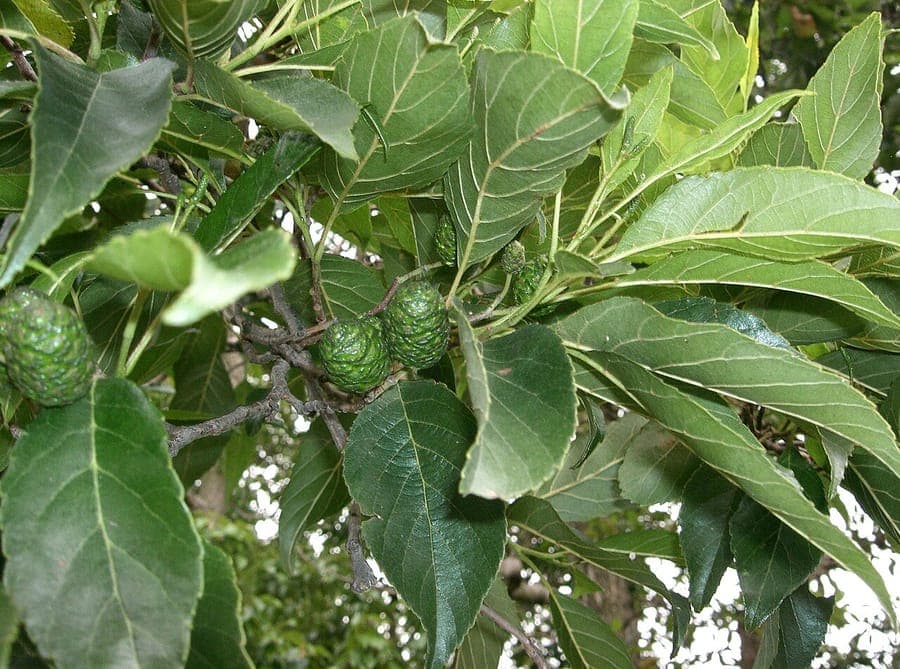
KENPEI / CC BY-SA 3.0, via Wikimedia Commons
Japanese alder: complete guide
Alnus japonica
Want to see Japanese alder: complete guide in your garden?
1 minute, no credit card
Overview
Alnus japonica, commonly known as Japanese alder, is a resilient deciduous tree that brings both structure and seasonal interest to gardens across temperate climates. Native to Japan, Korea, and parts of eastern China, this medium-sized tree typically reaches 10–15 meters in height with a spread of 6–8 meters, making it suitable for larger gardens or naturalized areas. It's particularly valued for its tolerance to wet soils - a trait that makes it a go-to choice for rain gardens, riparian zones, and low-lying spots where other trees struggle. Unlike some ornamental species, the Japanese alder thrives with minimal intervention, making it a practical favorite among gardeners who prefer low-maintenance landscapes.
Appearance & bloom cycle
The Japanese alder features ovate, coarsely toothed leaves that emerge bright green in spring and mature to a deep green by summer. The undersides are slightly paler, giving the canopy a soft texture in sunlight. In early spring, before the leaves fully unfurl, the tree produces delicate green catkins - the male and female flowers. Male catkins are slender and yellow-tinted, reaching 5–8 cm, while female ones are smaller, reddish, and develop into woody, cone-like fruits that persist through winter. These 'cones' release tiny winged seeds in late autumn, contributing to natural regeneration. In fall, the foliage turns a pleasing golden yellow, adding subtle warmth to the garden for about two to three weeks.
Ideal location
Plant Japanese alder in full sun to partial shade. While it tolerates full sun, it performs best in areas with morning sun and afternoon shade, especially in regions with hot summers. Choose a spot with ample space - allow at least 3 meters clearance from buildings or fences. This tree is ideal near water features: along stream banks, beside ponds, or in damp corners of the garden. If you're designing a moisture-prone area, consider using gardenworld.app to generate a layout that incorporates Alnus japonica with complementary water-loving plants and proper drainage planning.
Soil requirements
Japanese alder prefers moist, well-drained loam or sandy loam rich in organic matter. It thrives in slightly acidic to neutral soils (pH 5.5–7.0) but tolerates mildly alkaline conditions. The key is consistent moisture - avoid dry, sandy patches or compacted clay unless amended. At planting, mix in generous amounts of compost or well-rotted manure to boost soil fertility and water retention. This species can withstand periodic flooding, making it excellent for bioswales or retention basins.
Free design
Want to see Japanese alder: complete guide in your garden? Make a free design now.
Watering
Young trees require regular watering during their first two growing seasons. Supply 20 liters per week, splitting it into two deep soakings to encourage root development. Once established, Alnus japonica is moderately drought-tolerant but grows best with consistent soil moisture. Apply a 5 cm layer of wood chip or leaf mulch to reduce evaporation and suppress weeds.
Pruning
Pruning is generally minimal. Remove dead, damaged, or crossing branches in late winter or early spring before new growth starts. Avoid heavy pruning, as the tree may bleed sap excessively. Use clean, sharp tools to prevent disease transmission. For a tailored maintenance plan, gardenworld.app offers seasonal pruning schedules customized to your local climate and tree size.
Maintenance calendar
- Jan: Inspect for storm damage, light pruning
- Feb: Final pruning before bud break
- Mar: Check soil moisture, water young trees if dry
- Apr: Monitor for aphids or canker
- May: Mulch to retain moisture
- Jun: Observe leaf color and growth rate
- Jul: Supplemental watering during dry spells
- Aug: No routine tasks, occasional check for pests
- Sep: Prepare for leaf drop, avoid pruning
- Oct: Rake and compost fallen leaves
- Nov: Assess root zone stability
- Dec: Protect young trunks from rodents with guards
Winter hardiness
Japanese alder is hardy in USDA zones 5–8 (down to -23°C). Mature trees handle cold well, but young specimens may need protection from harsh winds or frost cracks. In colder zones, wrap the trunk with burlap or use tree guards. Avoid de-icing salts near the root zone, as they can cause root burn.
Companion plants
Pair Japanese alder with moisture-loving species like Carex vulpinoidea, Ligularia, or Rodgersia. For ground cover, try Dryopteris erythrosora or Hosta. Avoid drought-tolerant plants like lavender or sedum. Consider native ferns and wild ginger (Asarum canadense) for a woodland feel. Use gardenworld.app to explore pre-designed planting schemes that highlight seasonal contrasts and ecological harmony.
Closing
Alnus japonica is a dependable, attractive tree that excels in challenging wet areas. With its tidy form, seasonal color, and ecological benefits - including nitrogen fixation - it's a smart addition to any garden. Purchase young trees from reputable garden centres, where 100–150 cm specimens are commonly available. Look for a straight trunk and healthy root ball. With proper siting and care, Japanese alder will grow into a long-lived, low-maintenance focal point in your landscape.
Want to see Japanese alder: complete guide in your garden? Make a free design now.
Upload a photo, pick a style, and get a photorealistic design with plant list in under a minute.
No credit card required


Similar plants
Heart-leaf birch: complete guide
Betula cordifolia
Heart-leaf birch is an attractive North American birch tree for large gardens. Discover growth, white papery bark and winter hardiness.
Tropical hornbeam: complete guide
Carpinus tropicalis
Everything about Carpinus tropicalis, the tropical hornbeam from Central America. Growing tips, location, care, and garden use explained.
Japanese Alder (Alnus firma): complete guide
Alnus firma
Learn everything about Japanese Alder in our complete guide. Discover care, growth, and applications for larger gardens.