
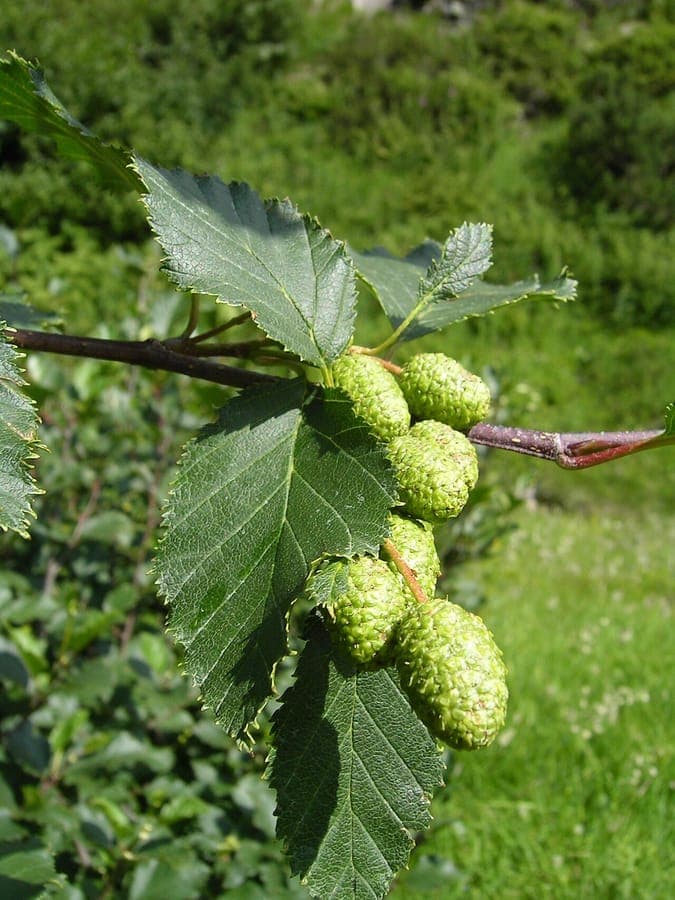
Simon Eugster --– Simon / ?! 07:52, 20 October 2006 (UTC) / CC BY-SA 3.0, via Wikimedia Commons
Green alder: complete guide
Alnus alnobetula
Want to see Green alder: complete guide in your garden?
1 minute, no credit card
Overview
Alnus alnobetula, commonly known as Green alder, is a hardy deciduous shrub native to cold temperate regions across Europe, Asia, and North America. Reaching 2 to 5 meters in height with a spread of up to 2.5 meters, it thrives in moist, acidic soils where few other woody plants succeed. Hardy to USDA zone 3, this shrub is ideal for wetlands, stream banks, and reclamation sites. It's also becoming a go-to choice for eco-conscious gardeners in the UK and US looking to support biodiversity.
Green alder forms dense thickets that stabilize soil and prevent erosion, making it a valuable plant for slope planting or damp corners of the garden. It's not just functional-its seasonal rhythm adds visual interest year-round. On gardenworld.app, you can map out where to place Green alder in your garden based on moisture levels and light exposure, ensuring optimal growth.
Appearance & bloom cycle
The Green alder features oval, dark green leaves 4–10 cm long with a coarsely toothed margin and a slightly hairy underside. New growth in spring is bright and glossy, turning deeper green by summer. In April through June, the plant produces wind-pollinated flowers: male catkins hang down, up to 5 cm long, in pale yellow-green, while female flowers appear as small red buds that mature into woody brown cones.
These cones persist through winter, offering structure and seed for birds like siskins and redpolls. The bark is smooth and gray-brown, often with patches of lichen, adding to its natural aesthetic. Unlike ornamental shrubs with flashy blooms, Green alder's appeal lies in its subtle textures and ecological role.
Ideal location
Green alder prefers full sun to partial shade, scoring a 7 on the light scale. It performs best in open, airy locations with at least 5–6 hours of direct sunlight. While it tolerates light shade, reduced light can lead to sparse growth and fewer catkins.
Ideal spots include pond margins, low-lying areas, or the edge of a woodland garden. It's also effective in rain gardens or bioswales designed to manage runoff. Avoid planting in hot, dry urban courtyards. If you're designing a damp garden, use gardenworld.app to visualize how Green alder fits into your layout alongside moisture-loving companions.
Soil requirements
This shrub demands acidic to slightly acidic soil with a pH between 5.5 and 6.5. It grows well in heavy clay, loam, or silt as long as the soil stays consistently moist. Do not plant in chalky or alkaline soils-these will cause leaf chlorosis and stunted growth.
Green alder improves poor soils through a symbiotic relationship with Frankia bacteria in its root nodules, fixing atmospheric nitrogen. This makes it excellent for rehabilitating degraded land. At planting, avoid lime and instead use pine needle mulch or ericaceous compost to maintain acidity.
Free design
Want to see Green alder: complete guide in your garden? Make a free design now.
Watering
During the first two growing seasons, water weekly during dry spells. Once established, the shrub is moderately drought-tolerant but thrives in wet conditions. In prolonged droughts, deep watering every 10–14 days helps prevent leaf drop.
Use rainwater when possible-Green alder is sensitive to lime in tap water. Never let the root zone dry out completely, especially in sandy soils. A thick layer of organic mulch helps retain moisture and suppress weeds.
Pruning
Pruning is rarely needed. Green alder naturally forms a bushy, rounded shape. If required, prune in late winter or early spring before bud break. Remove dead, damaged, or crossing branches to maintain airflow.
Avoid pruning in spring or summer to prevent excessive bleeding. Use clean, sharp tools to minimize disease risk. For a formal hedge, light trimming is possible, but it's not necessary and may reduce flowering.
Maintenance calendar
- Jan: Inspect for winter damage. Light pruning if needed.
- Feb: Apply ericaceous compost around the base.
- Mar: Final pruning window before growth resumes.
- Apr: New leaves emerge. Watch for aphids.
- May: Peak flowering. Male catkins release pollen.
- Jun: Female cones begin to develop.
- Jul: Monitor for drought stress. Water if needed.
- Aug: Minimal care. No pruning.
- Sep: Growth slows. Stop fertilizing.
- Oct: Leaves drop. Leave fallen foliage as mulch.
- Nov: Mulch root zone to retain moisture.
- Dec: Winter check. No action required.
Winter hardiness
Green alder is extremely cold-hardy, surviving temperatures down to -40°C (USDA zone 3). It loses its leaves in autumn but retains its catkins and cones through winter, providing structure and food for wildlife. No winter protection is needed in the UK or northern US.
It tolerates wind and snow load well, making it suitable for exposed sites. Young plants may benefit from a mulch layer in their first winter, but mature shrubs are self-sufficient.
Companion plants
Pair Green alder with moisture-loving species like Meadowsweet (Filipendula ulmaria), Marsh marigold (Caltha palustris), or Purple moor grass (Molinia caerulea). For shade, consider Hazel (Corylus avellana), Elder (Sambucus nigra), or Wood anemone (Anemone nemorosa).
These combinations create a layered, naturalistic planting scheme that supports insects, birds, and soil health. Avoid planting near lime-loving species like lavender or clematis.
Closing
Green alder is an unsung hero in sustainable gardening. It fixes nitrogen, stabilizes soil, and supports wildlife with minimal care. It's not flashy, but it's resilient and quietly effective. Find it at garden centres across the UK or order online with confidence. Whether you're restoring a wet area or designing a native hedge, this shrub earns its place. And remember, gardenworld.app helps you plan where to plant Green alder for maximum impact and harmony with your garden's ecosystem.
Want to see Green alder: complete guide in your garden? Make a free design now.
Upload a photo, pick a style, and get a photorealistic design with plant list in under a minute.
No credit card required


Similar plants
Heart-leaf birch: complete guide
Betula cordifolia
Heart-leaf birch is an attractive North American birch tree for large gardens. Discover growth, white papery bark and winter hardiness.
Tropical hornbeam: complete guide
Carpinus tropicalis
Everything about Carpinus tropicalis, the tropical hornbeam from Central America. Growing tips, location, care, and garden use explained.
Japanese Alder (Alnus firma): complete guide
Alnus firma
Learn everything about Japanese Alder in our complete guide. Discover care, growth, and applications for larger gardens.