
Wikimedia Commons / Public domain, via Wikimedia Commons
Field garlic: complete guide
Allium vineale
Want to see Field garlic: complete guide in your garden?
1 minute, no credit card
Overview
Allium vineale, commonly known as Field garlic, is a resilient herbaceous perennial that's often mistaken for a weed. Native to parts of Eastern and Central Europe, it's now naturalised across the UK and much of North America. While it can be invasive in lawns and flower beds, it has earned a place in wildflower meadows and low-maintenance garden designs. The plant spreads through both seeds and small aerial bulblets, making it fast to colonise open ground. If you're planning a naturalistic border, consider using gardenworld.app to design a layout that integrates Field garlic without letting it dominate.
Appearance & bloom cycle
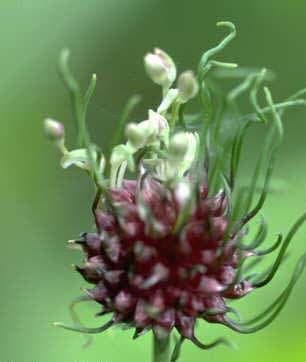
Field garlic grows between 30–60 cm tall, with hollow, cylindrical leaves that emit a distinct garlic scent when crushed. From late May through June, round umbels of small purple-grey flowers appear above the foliage. These flower heads rarely produce viable seed, instead forming clusters of tiny bulblets that dangle from the stem. These bulblets drop easily and root where they land, which explains the plant's quick spread. The overall effect is airy and textural, perfect for adding movement to a border. The leaves die back by late summer, and the plant remains dormant until the following spring.
Ideal location
Field garlic thrives in full sun to light shade, scoring around 8/10 on the light scale. It performs best in open, sunny spots such as dry borders, gravel gardens, or within native grass meadows. It struggles in dense shade, becoming leggy and weak. For optimal growth, aim for at least 6 hours of direct sunlight daily. If your garden has variable light conditions, use gardenworld.app to simulate plant performance and choose the best microclimate for Allium vineale.
Soil requirements
This plant is adaptable but prefers well-drained soil with a pH between 7.5 and 8.0 - slightly to moderately alkaline. It tolerates poor soils and low fertility, making it ideal for chalky or limestone-rich grounds. Avoid heavy clay unless amended with grit or sand to improve drainage. Waterlogged soil leads to bulb rot, especially in winter. A mix of loam, compost, and sharp sand works well in raised beds or containers. It's not fussy about organic matter, so avoid over-enriching the soil.
Watering
Once established, Field garlic is highly drought-tolerant. During active growth (March to June), water sparingly - only when the top 2–3 cm of soil feels dry. In average UK or US climates, rainfall is usually sufficient. Reduce watering significantly from July onwards. Overwatering, especially in autumn and winter, increases the risk of fungal diseases and rot. In containers, ensure pots have drainage holes and avoid saucers that trap water.
Free design
Want to see Field garlic: complete guide in your garden? Make a free design now.
Pruning
Minimal pruning is needed. Wait until foliage turns yellow and dies back completely before cutting it down, usually by late July. This allows the plant to reabsorb nutrients into the bulb for next year. Remove flower stalks if you want to prevent bulblet spread - snip them off just after blooming. Do not cut green leaves, as this weakens the plant. For lawns, mow before bulblets form to reduce spread.
Maintenance calendar
- Jan: Dormant. No action.
- Feb: Check for emerging shoots. Remove any winter debris.
- Mar: Growth begins. Light top dressing of compost if needed.
- Apr: Active growth. Keep soil lightly moist.
- May: Blooms appear. Monitor for bulblet development.
- Jun: Peak bloom. Deadhead if preventing spread.
- Jul: Foliage yellows. Cut back after dieback.
- Aug: Dormancy deepens. No watering.
- Sep: Watch for volunteer seedlings.
- Oct: Remove unwanted plants. Leave healthy ones.
- Nov: Protect bulbs with leaf litter if in containers.
- Dec: Fully dormant. No care required.
Winter hardiness
Field garlic is hardy in USDA zones 4–9. It survives temperatures down to -20°C and doesn't need winter protection in the ground. The bulbs remain viable under frost. In colder zones, a light mulch helps, especially in containers where roots are more exposed. It's fully hardy across the UK and most of the US, returning reliably each spring.
Companion plants
Pair Field garlic with drought-tolerant perennials like Sedum spectabile, Echinacea, or ornamental grasses such as Stipa tenuissima. Its purple-grey blooms contrast well with bright yellows (Rudbeckia) or whites (Achillea). Avoid moisture-loving plants like hostas or astilbes, which need richer, wetter soil. In wild meadow schemes, it blends naturally with selfheal, yarrow, and oxeye daisy. It also repels some pests, so planting near roses or carrots may offer mild protection.
Closing
Field garlic isn't for every garden - its aggressive spread can frustrate neat gardeners. But in the right setting, like a cottage garden edge or a wildlife-friendly meadow, it adds charm and resilience. It asks for little: sun, sharp drainage, and patience. Control its spread by deadheading and monitoring seedlings. Available at most garden centres in spring, including major chains like B&Q, Wyevale, or local independents. If you're unsure how to balance it with other plants, try designing a custom layout on gardenworld.app to visualise the long-term impact.
Want to see Field garlic: complete guide in your garden? Make a free design now.
Upload a photo, pick a style, and get a photorealistic design with plant list in under a minute.
No credit card required


Similar plants
Douglas' Onion: complete guide
Allium douglasii
Douglas' onion is a compact ornamental allium with purple flowers, perfect for rock gardens and sunny borders. Learn care, siting and hardiness.
Oblique onion: complete guide
Allium obliquum
The oblique onion is a hardy ornamental allium with chartreuse flower heads and blue-green foliage. Location, soil and care explained.
False hooded garlic: complete guide
Allium pseudocalyptratum
Discover false hooded garlic (Allium pseudocalyptratum): a rare ornamental onion from Lebanon for rock gardens and alpine troughs.