
Krzysztof Ziarnek, Kenraiz / CC BY-SA 4.0, via Wikimedia Commons
Chinese chives: complete guide
Allium tuberosum
Want to see Chinese chives: complete guide in your garden?
1 minute, no credit card
Overview
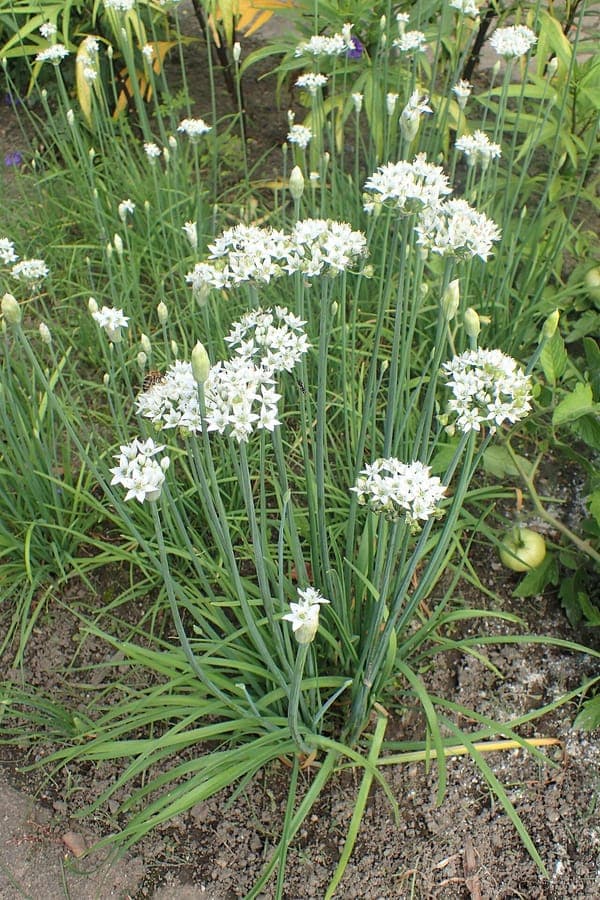
Chinese chives (Allium tuberosum) are a dependable perennial herb native to Assam, North-Central China, Nepal, and the West Himalaya. Unlike common chives, they have flat, grass-like leaves and a richer, garlic-onion flavour that holds up well in cooking. These plants grow 30–40 cm tall and spread slowly via underground rhizomes, forming dense clumps over time. They bloom from late summer into early autumn, producing round clusters of small white flowers on stiff, leafless stalks. These flowers are not only attractive but also draw in pollinators like bees and hoverflies. Chinese chives are reliable in USDA zones 4–9, making them a solid choice for gardens across much of Europe and North America.
On gardenworld.app you can design a kitchen garden layout that integrates Chinese chives with companion vegetables and herbs for better pest control and space use.
Appearance & bloom cycle
The leaves of Chinese chives are flat, about 4–6 mm wide and 30 cm long, with a soft green hue and a distinct garlicky scent when crushed. They emerge in early spring and remain lush through most of the growing season. Flowering begins in August and can last through September, sometimes into early October in mild climates. The flower stalks rise above the foliage, reaching 30–45 cm, and display tight, pom-pom-like clusters of star-shaped white flowers. After blooming, seed heads form and can be left for ornamental interest or harvested for propagation. Deadheading prevents self-seeding if you want to keep the plant contained.
It's easy to confuse Chinese chives with common chives (Allium schoenoprasum), which have hollow, cylindrical leaves and a milder onion flavour. The flat leaves and stronger taste make Chinese chives better suited for stir-fries, dumplings, and soups.
Ideal location
Plant Chinese chives in full sun to partial shade. For best growth and flavour, aim for at least 6 hours of direct sunlight daily. In deep shade, the leaves become weak and pale. They thrive in vegetable beds, herb gardens, or even in containers on a sunny patio. Space plants 20–25 cm apart to allow room for clump expansion. Avoid overcrowding, which can lead to fungal issues.
Soil requirements
Chinese chives prefer rich, well-drained soil with a pH between 6.0 and 7.5. Amend heavy clay soils with compost or well-rotted manure to improve aeration and fertility. Sandy soils benefit from added organic matter to retain moisture. Poor drainage leads to root rot, so avoid waterlogged areas. A 2–3 cm mulch layer of straw or compost helps retain moisture and suppress weeds.
Free design
Want to see Chinese chives: complete guide in your garden? Make a free design now.
Watering
Keep the soil consistently moist but not soggy. During dry spells, water deeply once a week, more often in containers. Let the top inch of soil dry slightly between waterings. Overwatering, especially in winter, increases rot risk. Mulching reduces evaporation and keeps roots cool in summer.
Pruning
Regular harvesting acts as pruning and encourages new growth. Cut leaves 5–8 cm above the soil using sharp scissors. Avoid cutting too low, as this can damage the crown. Harvest throughout the growing season, but stop in late autumn to let the plant store energy. Remove old or yellowing foliage in spring to make room for fresh growth.
Maintenance calendar
- January–February: Dormant. Check for pests or fungal spots.
- March: Clear dead leaves. Apply compost around the base.
- April: Begin light harvesting. Keep soil moist.
- May–July: Regular trimming. Monitor for slugs and aphids.
- August–September: Flowers appear. Deadhead if needed.
- October: Reduce watering. Cut back flower stalks.
- November–December: Dormancy. No action required.
Winter hardiness
Chinese chives are hardy in USDA zones 4–9. In zone 8 and above, they often stay semi-evergreen. Foliage dies back in colder zones but regrows from resilient rhizomes in spring. No winter protection is needed, though a light mulch in zone 4 helps prevent frost heaving in wet soils.
Companion plants
Grow Chinese chives near tomatoes, carrots, or peppers - they help repel aphids and nematodes. Pair with herbs like thyme, oregano, or parsley. Avoid planting near legumes, as alliums may inhibit their growth. Their clumping habit makes them ideal for edging vegetable plots.
On gardenworld.app you can explore companion planting suggestions and generate a seasonal garden plan that includes Chinese chives as a functional and edible border.
Closing
Chinese chives are a low-maintenance, long-lived herb that pays off year after year. With their bold flavour, attractive flowers, and pest-repelling traits, they earn a permanent spot in any productive garden. Whether grown in a raised bed, pot, or herb spiral, they're easy to care for and rewarding to harvest. You'll find them at garden centres across the UK and US, often sold as potted plants in spring. Just give them sun, decent soil, and an occasional trim, and you'll enjoy fresh chives from late spring through autumn - and beyond.
Want to see Chinese chives: complete guide in your garden? Make a free design now.
Upload a photo, pick a style, and get a photorealistic design with plant list in under a minute.
No credit card required


Similar plants
Douglas' Onion: complete guide
Allium douglasii
Douglas' onion is a compact ornamental allium with purple flowers, perfect for rock gardens and sunny borders. Learn care, siting and hardiness.
Oblique onion: complete guide
Allium obliquum
The oblique onion is a hardy ornamental allium with chartreuse flower heads and blue-green foliage. Location, soil and care explained.
False hooded garlic: complete guide
Allium pseudocalyptratum
Discover false hooded garlic (Allium pseudocalyptratum): a rare ornamental onion from Lebanon for rock gardens and alpine troughs.