
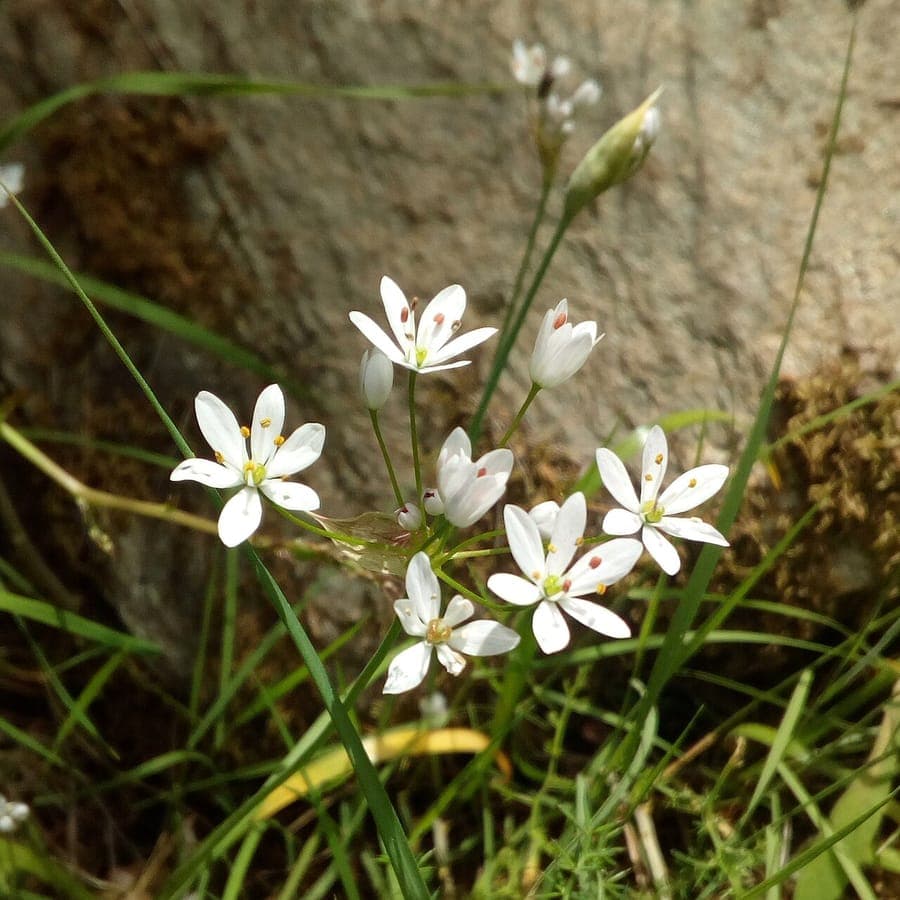
Ανώνυμος Βικιπαιδιστής / CC BY 3.0, via Wikimedia Commons
Hairy garlic: complete guide
Allium subhirsutum
Want to see Hairy garlic: complete guide in your garden?
1 minute, no credit card
Overview
Hairy garlic (Allium subhirsutum) is a striking, hardy bulbous perennial from the Amaryllidaceae family, native to Mediterranean regions including Greece, southern Italy, Cyprus, and parts of North Africa. Standing 25–35 cm tall with a spread of about 15 cm, it's ideal for small gardens, rockeries, or the front of sunny borders. Hardy to USDA zone 7 (-10°C), it handles most UK and northern European winters without issue. What sets it apart is its silvery, hairy foliage and compact, deep purple flower heads that bloom in late spring. Unlike many alliums, it doesn't spread aggressively and has a subtle scent, making it garden-friendly.
This plant stays attractive from early spring emergence through to seed head maturity. It's completely dormant by late summer, but the dried stems add structure. The foliage dies back naturally, so no messy cleanup. On gardenworld.app, you can design a low-maintenance, drought-resilient garden where Hairy garlic fits perfectly among other sun-loving perennials.
Appearance & bloom cycle
Hairy garlic forms dense clumps from small bulbs, pushing through the soil in late winter (February–March). The leaves are narrow, grey-green, and densely covered in fine hairs, giving them a soft, silvery appearance. They grow close to the ground, forming a low mat. From mid-May, sturdy 30 cm stems rise, each topped with a tight, spherical flower head 2–3 cm across. The buds start almost black-purple, opening to deep violet, and fading slightly as they age. Bloom time lasts 3–4 weeks, usually from late May to mid-June.
After flowering, the seed heads dry into papery, ornamental capsules that persist into late summer. Though technically edible, the flavour is strong and not typically used in cooking. These seed heads add winter interest if left standing, but can be trimmed if desired. The plant fully retreats by August, entering dormancy until the next cycle.
Ideal location
Plant in full sun-minimum 6 hours of direct light. This allium thrives in hot, dry conditions and needs excellent drainage. Perfect spots include south-facing rock gardens, gravel beds, raised beds, or sunny borders with free-draining soil. Avoid shaded, damp areas where bulbs may rot. It grows well in containers too, provided the pot has drainage holes and isn't oversized-15 cm depth is sufficient. On gardenworld.app, explore garden layouts that pair Hairy garlic with drought-tolerant companions like Eryngium or dwarf Sedum.
Free design
Want to see Hairy garlic: complete guide in your garden? Make a free design now.
Soil requirements
Well-drained soil is non-negotiable. Sandy, gritty, or chalky soils are ideal. pH can range from 6.0 to 8.0. Heavy clay soils must be improved with horticultural grit or coarse sand (at least 30% by volume). In pots, use a mix of two parts multipurpose compost to one part perlite or pumice. Avoid rich, moist soils-this plant prefers lean conditions and actually performs better in poor soil.
Watering
Water only after planting or during prolonged droughts once established. During active growth (March–June), natural rainfall is usually sufficient. In dry summers, water once every two weeks sparingly. Overwatering causes bulb rot. In containers, let the top 3–5 cm of soil dry out between waterings. Once dormant (July onward), stop watering completely.
Pruning
No pruning is needed. Allow foliage to yellow and die back naturally-this feeds energy back into the bulb for next year. Cut flower stems only after they've fully browned, or leave them for winter texture. Never remove green leaves, as this weakens the plant.
Maintenance calendar
- January: Check potted bulbs for rot. No action needed in garden.
- February: New foliage emerges. No watering.
- March: Active growth begins. Optional: light application of bone meal.
- April: Flower spikes form. Keep soil dry.
- May: Blooming starts. Avoid overhead wetting.
- June: Flowers fade. Leave seed heads for display.
- July: Plant dies back. Stop watering.
- August: Fully dormant. No care needed.
- September: Plant new bulbs 10 cm deep, 10 cm apart.
- October: Let plants settle. No feeding.
- November–December: Dormant. Protect potted bulbs from excessive moisture.
Winter hardiness
Hardy to -10°C (USDA zone 7). In-ground bulbs survive most winters without protection. In heavy soils or containers, add a gravel mulch or move pots to a sheltered spot. Avoid wet winter conditions-good drainage is key.
Companion plants
Pair with plants that share its needs: full sun, dry soil, and good drainage. Excellent choices include Thymus vulgaris, Sedum 'Matrona', Eryngium planum, and dwarf Lavandula. The silvery foliage contrasts beautifully with spiky grasses or blue-flowering perennials like Nepeta. Avoid moisture-loving plants such as Heuchera or Astilbe.
Closing
Hairy garlic is an underrated gem-ornamental, tough, and low-effort. It's perfect for modern, water-wise gardens. Plant bulbs in autumn for spring foliage and late spring blooms. Available at garden centres across the UK and Europe, often under its botanical name. Look for firm, plump bulbs at stores like garden centres or online suppliers. With minimal care, it will self-complement over time, forming small clumps that brighten dry corners. For inspiration, browse Hairy garlic in action on gardenworld.app, where smart design meets practical planting.
Want to see Hairy garlic: complete guide in your garden? Make a free design now.
Upload a photo, pick a style, and get a photorealistic design with plant list in under a minute.
No credit card required


Similar plants
Douglas' Onion: complete guide
Allium douglasii
Douglas' onion is a compact ornamental allium with purple flowers, perfect for rock gardens and sunny borders. Learn care, siting and hardiness.
Oblique onion: complete guide
Allium obliquum
The oblique onion is a hardy ornamental allium with chartreuse flower heads and blue-green foliage. Location, soil and care explained.
False hooded garlic: complete guide
Allium pseudocalyptratum
Discover false hooded garlic (Allium pseudocalyptratum): a rare ornamental onion from Lebanon for rock gardens and alpine troughs.