
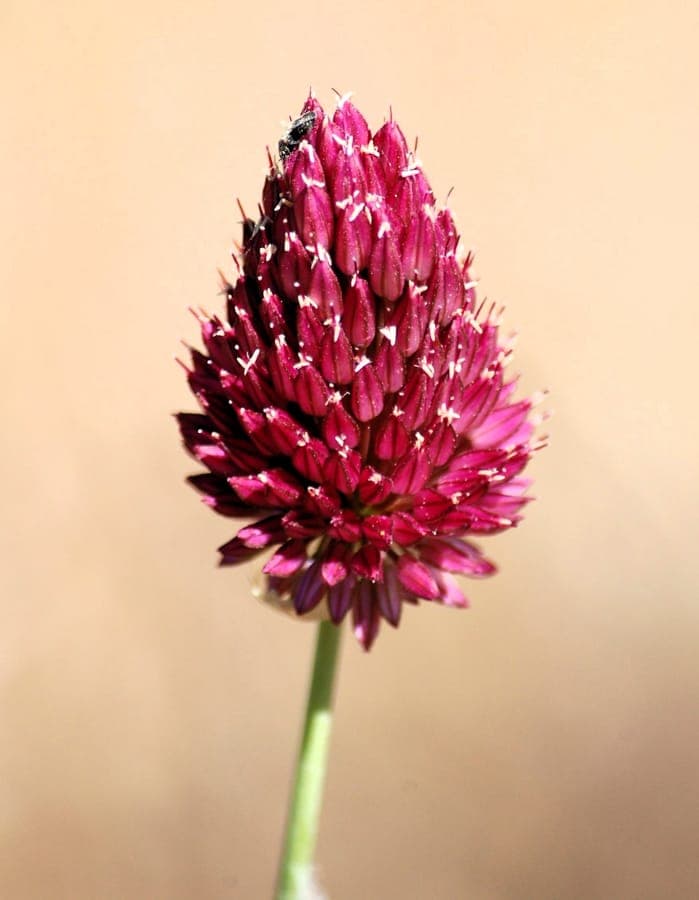
Raimundo Pastor / CC BY-SA 4.0, via Wikimedia Commons
Ball-head onion: complete guide
Allium sphaerocephalon
Want to see Ball-head onion: complete guide in your garden?
1 minute, no credit card
Overview
Allium sphaerocephalon, commonly known as Ball-head onion, is a standout among ornamental alliums. Unlike its garlic-scented relatives, this species keeps a low olfactory profile while delivering bold visual drama. Native to southern Europe and parts of North Africa-Albania, Cyprus, the Balearic Islands, and Algeria-it thrives in hot, dry conditions and is perfectly suited for modern, low-water gardens. It's not just pretty; it's tough, persistent, and rewards minimal effort with reliable annual blooms.
Gardeners in temperate zones love it for its architectural presence and long-lasting cut appeal. On gardenworld.app, you can design a border scheme where Ball-head onion adds vertical interest among silvery foliage and late-summer perennials.
Appearance & bloom cycle
From late June through mid-August, Ball-head onion sends up slender, hollow stems reaching 70 to 90 cm in height. At the top, a tight, spherical inflorescence forms-3 to 5 cm wide-starting green, then deepening to a rich maroon-purple, almost black at peak. Each globe contains dozens of tiny star-shaped flowers, densely packed and attractive to bees, hoverflies, and butterflies.
The foliage is narrow, grass-like, and fades by blooming time, so don't expect lush greenery. After flowering, the seed heads dry naturally and remain ornamental well into autumn. These can be left for winter texture or harvested for dry arrangements. The plant dies back completely by late autumn and re-emerges from dormant bulbs the following spring.
Ideal location
Full sun is non-negotiable. This plant needs at least 6 hours of direct sunlight daily to produce strong stems and richly colored flowers. In partial shade, it stretches, flops, and blooms poorly. Ideal spots include front to mid-border positions, gravel gardens, rockeries, or large terracotta pots on a sunny patio.
Plant in groups of 5 to 10 bulbs for best impact. It looks stunning when contrasted with golden yarrow, upright verbascum, or fluffy astilbe. Avoid overcrowding with aggressive spreaders like mint or morning glory. Use gardenworld.app to preview spacing and companion pairings before planting.
Soil requirements
Well-drained soil is critical. Heavy clay or water-retentive soils will rot the bulbs, especially in winter. Sandy or loamy soils work best. If your garden has compacted soil, amend with grit, perlite, or coarse sand to improve drainage. A pH between 6.0 and 7.5 is ideal, but the plant tolerates slight variations.
For container growing, use a mix of two parts multipurpose compost and one part horticultural grit. Ensure pots have drainage holes. Elevate them slightly off the ground to prevent waterlogging. Raised beds also work well, especially in wetter regions.
Free design
Want to see Ball-head onion: complete guide in your garden? Make a free design now.
Watering
Once established, Ball-head onion is highly drought-tolerant. Water sparingly in spring if rainfall is below average. During summer bloom, reduce watering significantly-overwatering at this stage invites fungal issues. Let the soil dry out between waterings.
In containers, check the top 5 cm of soil; water only when dry. Use rainwater if possible, as tap water with high lime content can affect soil pH over time. Avoid wetting the foliage to prevent mildew.
Pruning
No pruning needed. Never cut back foliage while it's green-the leaves feed the bulb for next year's bloom. Wait until stems turn completely brown and wither, usually by late August, before removing them at soil level.
If you want to divide or relocate bulbs, do so in summer when the plant is dormant. Lift carefully, clean off excess soil, and store in a cool, dry place until replanting in autumn. Don't remove the papery tunic unless damaged.
Maintenance calendar
- Jan: No action. Ensure soil isn't waterlogged.
- Feb: Check drainage; clear debris if needed.
- Mar: Keep area weed-free. No fertilizing yet.
- Apr: Apply a balanced, low-nitrogen feed as foliage emerges.
- May: Monitor for drought; water lightly if needed.
- Jun: Bloom begins. Stake only if winds are strong.
- Jul: Peak bloom. Enjoy pollinators and leave seed heads.
- Aug: Flowers fade. Stop watering. Cut stems when dry.
- Sep: Replant or divide bulbs. Ideal time for new plantings.
- Oct: Plant new bulbs 10–15 cm deep, 10 cm apart.
- Nov: Let plant debris decompose naturally.
- Dec: Dormant period. Protect containers from freeze-thaw cycles.
Winter hardiness
Hardy in USDA zones 5 to 9. In most of the UK, Ireland, and northern US, bulbs survive winter without protection-provided the soil drains well. In cold, wet areas, lift bulbs from containers or heavy soils and store in dry sand or peat-free mix.
Mulching isn't necessary, but a thin layer of gravel around the base can prevent moisture buildup. Avoid organic mulches like bark, which retain too much damp.
Companion plants
Pair with drought-loving perennials: lavender, Russian sage (Perovskia), sedum, echinacea, and nepeta. The dark purple spheres contrast beautifully with yellow coreopsis, white daisies, or silver-foliaged plants like artemisia.
Avoid moisture-hungry plants like hostas or astilbes in the same bed. Also steer clear of invasive ground covers that might smother emerging shoots.
Closing
Ball-head onion is a low-maintenance, high-impact plant that earns its place in any sun-drenched garden. It blooms when many spring bulbs have faded, bridging the gap into late summer. With no serious pests or diseases, it's a reliable performer year after year.
Buy bulbs in autumn from reputable garden centres-look for firm, plump specimens without mold. Reputable suppliers include OBI and Hornbach in Germany, Truffaut and Jardiland in France, and general garden centres across the UK and US.
Whether you're designing a wildlife-friendly border or a modern gravel garden, Ball-head onion delivers structure and intrigue. Use gardenworld.app to map out bulb density and companion height for a balanced, eye-catching display.
Want to see Ball-head onion: complete guide in your garden? Make a free design now.
Upload a photo, pick a style, and get a photorealistic design with plant list in under a minute.
No credit card required


Similar plants
Douglas' Onion: complete guide
Allium douglasii
Douglas' onion is a compact ornamental allium with purple flowers, perfect for rock gardens and sunny borders. Learn care, siting and hardiness.
Oblique onion: complete guide
Allium obliquum
The oblique onion is a hardy ornamental allium with chartreuse flower heads and blue-green foliage. Location, soil and care explained.
False hooded garlic: complete guide
Allium pseudocalyptratum
Discover false hooded garlic (Allium pseudocalyptratum): a rare ornamental onion from Lebanon for rock gardens and alpine troughs.