
Wikimedia Commons / Public domain, via Wikimedia Commons
Garlic: complete guide
Allium sativum
Want to see Garlic: complete guide in your garden?
1 minute, no credit card
Overview
Garlic (Allium sativum) is a staple in both kitchen and garden, prized for its bold flavour and natural pest-repelling properties. Native to Central Asia - specifically Iran, Kazakhstan, and Kyrgyzstan - it thrives in temperate climates and adapts well to UK and North American gardens (USDA zones 5–9). As a herbaceous forb, it grows annually from cloves planted in autumn or early spring, depending on your region. I've found garlic to be one of the most forgiving crops, needing little fuss once established.
In cooler zones, I plant garlic in late autumn, usually between October and November, so it can develop roots before winter dormancy. It requires a light level of 7 out of 10, meaning it performs best in full sun but tolerates light shade. The plant stays relatively compact, reaching 45–60 cm in height, making it ideal for raised beds, borders, or intercropping.
Using gardenworld.app, you can design a seasonal garden layout that integrates garlic with companion crops like tomatoes or carrots for natural pest control.
Appearance & bloom cycle
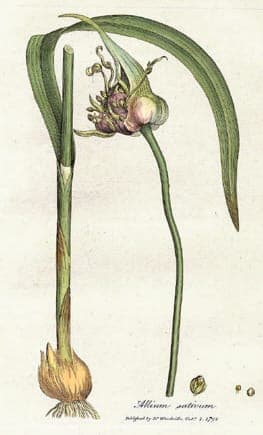
Garlic forms upright, flat, blue-green leaves that grow from a central stem. In early summer - typically June to August - it sends up a stiff central scape topped with a round umbel of purple star-shaped flowers. While most gardeners remove the scape to boost bulb size, I sometimes leave a few for pollinators. The flowers attract bees and hoverflies, adding life to the garden.
The bulb develops underground, consisting of 8–20 cloves wrapped in a papery skin. Depending on variety, bulbs can reach 4–6 cm in diameter. Rocambole types, for instance, have fewer but larger cloves with rich, complex flavour.
Ideal location
Garlic loves sun. Choose a spot with at least 6–8 hours of direct sunlight daily. South- or southwest-facing beds work best. Space cloves 15 cm apart in rows 30 cm apart to allow airflow and reduce fungal pressure. In smaller gardens, garlic fits well between lettuce, peppers, or strawberries.
Avoid shady corners or areas prone to puddling. If you're dealing with heavy clay, consider raised beds. I've seen great results in urban gardens using grow bags filled with loamy compost. For custom garden planning, gardenworld.app offers smart spacing tools that help maximise yield in tight spaces.
Free design
Want to see Garlic: complete guide in your garden? Make a free design now.
Soil requirements
Well-drained soil is non-negotiable. Garlic rots easily in soggy conditions. Aim for a light loam with a pH of 7.5–8.0. If your soil is acidic, add garden lime in autumn to raise pH. Avoid fresh manure - it encourages leafy growth over bulb development. Instead, amend the soil with well-rotted compost or aged chicken manure before planting.
For sandy soils, boost moisture retention with organic matter. For clay, mix in coarse sand or perlite to improve drainage. A friable, crumbly texture gives garlic the best start.
Watering
Water consistently in spring, especially during dry spells. About 2.5 cm per week is ideal. Reduce watering in mid-summer as leaves begin to yellow - this signals bulb maturation. Stop watering completely 2–3 weeks before harvest to prevent rot and improve storage life.
Use drip irrigation or water at soil level to keep foliage dry. Wet leaves invite fungal diseases like white rot or downy mildew.
Pruning
Garlic doesn't need traditional pruning, but I always pinch off the scape on hardneck varieties around late May. This redirects energy into bulb formation. The tender scapes are delicious sautéed or grilled. Softneck types don't produce scapes, so no action needed.
Maintenance calendar
- Sept–Nov: Plant cloves 5 cm deep, pointed end up
- Mar–Apr: Weed regularly, apply potassium-rich feed
- May: Remove scapes on hardneck garlic
- Jun–Jul: Reduce watering, monitor for yellowing leaves
- Jul–Aug: Harvest when ⅔ of leaves are brown
- Aug–Sep: Clean bed, prepare for next crop
Winter hardiness
Garlic is cold-hardy in USDA zones 5–9. Cloves need a period of cold (vernalization) to trigger bulb formation. Mulch with straw or leaves after planting to insulate roots and suppress weeds. In milder zones, you can plant in early spring, though bulbs may be smaller.
Companion plants
Garlic is a natural ally in the garden. Plant near tomatoes, roses, or cabbage to deter aphids and fungal diseases. It also repels carrot flies and Japanese beetles. Avoid planting near legumes like beans and peas - garlic can inhibit their growth. Pairing with herbs like sage or thyme boosts biodiversity.
I've noticed fewer powdery mildew outbreaks on squash when garlic is planted nearby.
Closing
Garlic is a low-maintenance, high-reward crop. Whether you're planting in a backyard plot or rotating in a larger vegetable garden, it delivers reliable results. Source cloves from reputable suppliers - avoid supermarket garlic, as it may be treated or unsuited to your climate. Garden centres like those across the UK stock fresh, regionally adapted varieties. For optimal layout and rotation planning, try the seasonal planner on gardenworld.app.
Want to see Garlic: complete guide in your garden? Make a free design now.
Upload a photo, pick a style, and get a photorealistic design with plant list in under a minute.
No credit card required


Similar plants
Douglas' Onion: complete guide
Allium douglasii
Douglas' onion is a compact ornamental allium with purple flowers, perfect for rock gardens and sunny borders. Learn care, siting and hardiness.
Oblique onion: complete guide
Allium obliquum
The oblique onion is a hardy ornamental allium with chartreuse flower heads and blue-green foliage. Location, soil and care explained.
False hooded garlic: complete guide
Allium pseudocalyptratum
Discover false hooded garlic (Allium pseudocalyptratum): a rare ornamental onion from Lebanon for rock gardens and alpine troughs.