
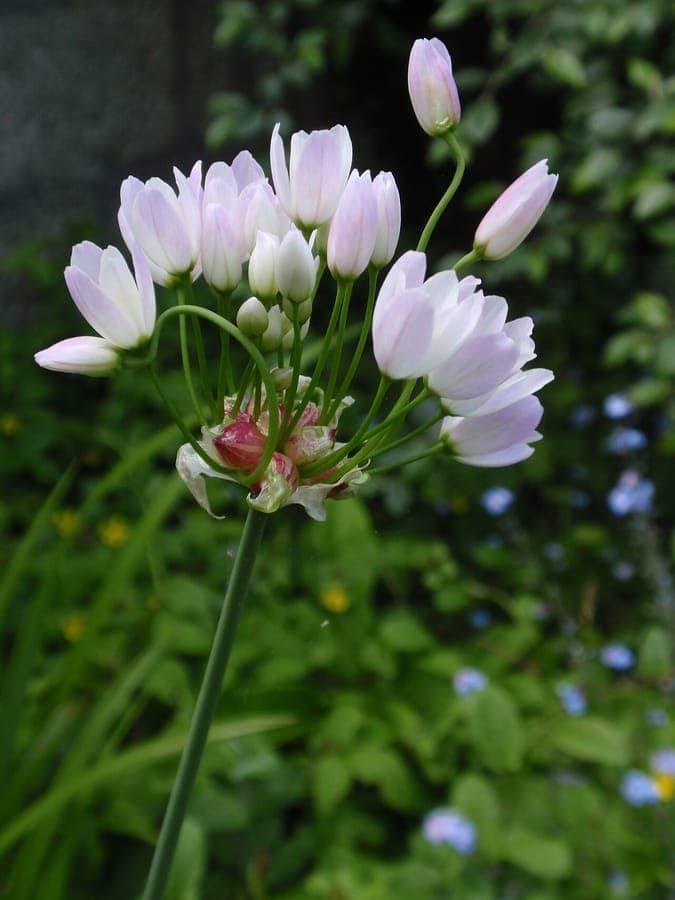
Acélan / CC BY-SA 4.0, via Wikimedia Commons
Rosy garlic: complete guide
Allium roseum
Want to see Rosy garlic: complete guide in your garden?
1 minute, no credit card
Overview
Rosy garlic (Allium roseum) is a graceful perennial bulb from the Amaryllidaceae family, native to regions around the Mediterranean, including southern France, Greece, and parts of North Africa. Standing 20–30 cm tall, it forms a neat clump of narrow, grass-like green leaves that emerge early in spring. By late May, it sends up slender stems topped with fluffy, spherical flower heads in a delicate rose-pink hue. It's a plant that brings subtle charm to any garden without demanding much in return.
Perfect for naturalistic planting schemes, Rosy garlic works well in gravel gardens, rockeries, or the front of sunny borders. Because of its compact size and airy blooms, it's also popular in container arrangements. On gardenworld.app, you'll often see it featured in minimalist or Mediterranean-inspired garden designs, where its soft texture balances more structured plants.
Appearance & bloom cycle
The bloom period for Rosy garlic runs from late May to mid-June, lasting about three weeks. Each flower head is 3–5 cm in diameter and made up of dozens of tiny, star-shaped florets in a soft pink. The flowers have a faint, sweet scent that attracts bees and hoverflies. As they fade, the seed heads form papery, silvery structures that remain attractive into midsummer.
The foliage yellows and dies back by late July, leaving the bulb dormant through summer and autumn. To maintain visual interest, pair it with late-emerging perennials like Echinacea or Salvia which will fill the space once Rosy garlic retreats.
Ideal location
Plant Rosy garlic in full sun-ideally six or more hours of direct sunlight per day. It thrives in hot, dry spots where many other plants struggle. A south-facing slope, rock garden, or gravel path edge are all ideal. Avoid shaded or damp areas, as these increase the risk of bulb rot.
In urban gardens or on balconies, it grows well in containers. Use a pot with drainage holes and a gritty compost mix. On gardenworld.app, you can create a custom garden layout that positions Rosy garlic where it'll get maximum sun and complement neighbouring drought-tolerant species.
Soil requirements
Well-drained soil is essential. Heavy clay soils should be amended with sharp sand, grit, or perlite to improve drainage. A neutral to slightly alkaline pH (6.5–7.5) is preferred. Rosy garlic actually performs better in poor soils-rich, fertile mixes encourage leafy growth at the expense of flowers.
Avoid adding compost or manure. Instead, use a commercial bulb mix or a sandy loam. You can find suitable growing mediums at garden centres like those stocking specialty bulb supplies.
Free design
Want to see Rosy garlic: complete guide in your garden? Make a free design now.
Watering
Once established, Rosy garlic is highly drought tolerant. Water only during prolonged dry spells in the first growing season. After that, natural rainfall is usually sufficient. Overwatering is the main cause of failure-boggy soil leads to rot.
In containers, check moisture levels during dry summers. Water sparingly-once every few weeks should be enough. Let the soil dry out completely between waterings.
Pruning
No pruning is required. Allow the flower stems to remain until they wither naturally so the plant can reabsorb nutrients into the bulb. If you prefer a tidier look, snip off spent flower heads after blooming, but leave the foliage intact.
Never cut back the leaves while they're still green. Wait until they turn fully yellow, usually by late July. Removing foliage too early weakens the bulb and reduces flowering in subsequent years.
Maintenance calendar
- February–March: Prepare planting areas. Loosen compacted soil with a fork. Plant new bulbs now if you missed autumn.
- April: Watch for emerging shoots. No feeding needed.
- May–June: Peak bloom. Monitor for extreme drought, especially in pots.
- July: Foliage yellows. Stop watering. Let bulbs go dormant.
- August–September: Dormant period. Soil should remain dry.
- October–November: Prime time to plant new bulbs. Set them 8–10 cm deep, spaced 10–15 cm apart.
Winter hardiness
Rosy garlic is hardy in USDA zones 5 to 8. In most of the UK and northern Europe, it survives winter without protection, provided the soil drains well. Heavy winter wet is more dangerous than cold.
In containers, move pots to a sheltered spot or wrap them in hessian or bubble wrap during harsh freezes to prevent bulb damage.
Companion plants
Pair Rosy garlic with other sun-loving, drought-tolerant plants. Good companions include Sedum spectabile, Thymus vulgaris, Eryngium, and Nepeta. The soft pink blooms contrast nicely with silver-foliaged plants like Artemisia or Stachys byzantina.
It also works well with lavender, dwarf iris, or small ornamental grasses. Avoid planting near vigorous spreaders that could overcrowd the bulbs.
Closing
Rosy garlic is a low-effort, high-reward plant that brings delicate beauty to sunny gardens. It's perfect for beginners and seasoned gardeners alike. Plant in groups of 5–10 bulbs for a natural, drift-like effect.
Whether you're designing a rock garden or sprucing up a patio container, this allium adds a touch of Mediterranean grace. Plan your layout on gardenworld.app to see how Rosy garlic fits into your space, and pick up bulbs at local garden centres in autumn for spring blooms.
Want to see Rosy garlic: complete guide in your garden? Make a free design now.
Upload a photo, pick a style, and get a photorealistic design with plant list in under a minute.
No credit card required


Similar plants
Douglas' Onion: complete guide
Allium douglasii
Douglas' onion is a compact ornamental allium with purple flowers, perfect for rock gardens and sunny borders. Learn care, siting and hardiness.
Oblique onion: complete guide
Allium obliquum
The oblique onion is a hardy ornamental allium with chartreuse flower heads and blue-green foliage. Location, soil and care explained.
False hooded garlic: complete guide
Allium pseudocalyptratum
Discover false hooded garlic (Allium pseudocalyptratum): a rare ornamental onion from Lebanon for rock gardens and alpine troughs.