
Botaurus-stellaris / Public domain, via Wikimedia Commons
Few-flowered garlic: complete guide
Allium paradoxum
Want to see Few-flowered garlic: complete guide in your garden?
1 minute, no credit card
Overview
Few-flowered garlic, or Allium paradoxum, is a perennial bulb plant from the Amaryllidaceae family. Native to Iran, the North Caucasus, Transcaucasus, and Turkmenistan, it's now found in parts of Western Europe, including the UK, where it sometimes establishes in woodlands and hedgerows. Despite its delicate appearance, this plant can be vigorous in the right conditions-spreading via bulb offsets and self-seeding freely. It's not as aggressive as some invasive alliums, but it does need watching if you don't want it popping up everywhere.
The name "few-flowered" comes from its sparse flower clusters-typically just 3 to 10 nodding white blooms per stem, which sets it apart from showier alliums like Allium giganteum. It's a plant for gardeners who appreciate understated elegance, especially in early spring when little else is in bloom.
On gardenworld.app, you can design a woodland edge layout that integrates Few-flowered garlic without encouraging unwanted spread. It's a smart way to balance beauty and control.
Appearance & bloom cycle
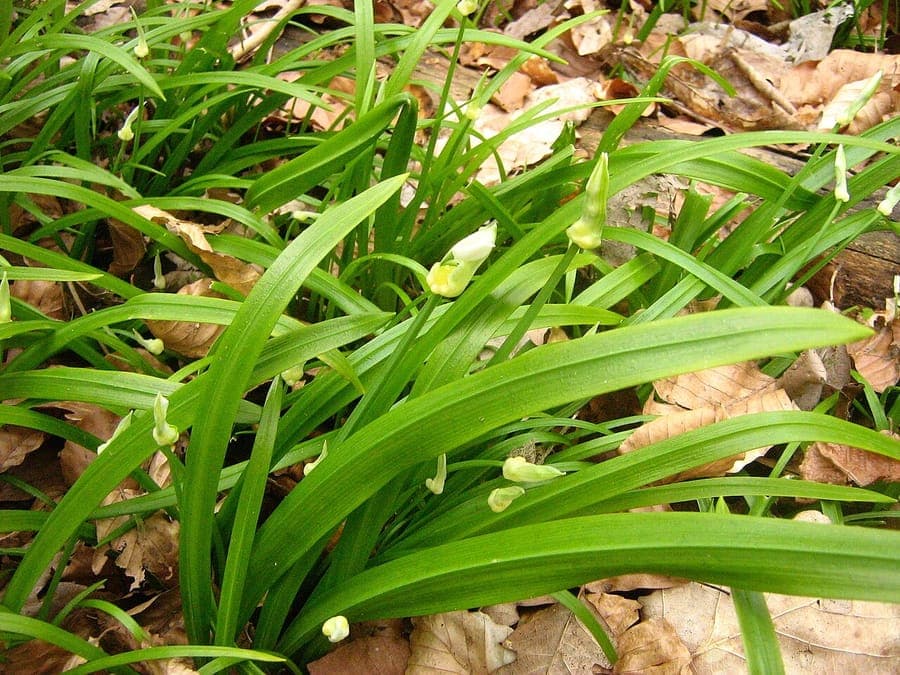
This allium reaches 20–40 cm in height and sends up slender, slightly arching stems in March or April. The narrow, grass-like leaves are bright green and about 30 cm long. Flowers appear from late March to mid-May, depending on local climate and winter severity. Each bloom is small, star-shaped, and hangs downward, with a pale green stripe down the center of each tepal. The scent is faint-more garlicky when crushed, but not strong in the garden.
After flowering, seed heads form and the stems bend further, helping the seeds reach the soil. By June, the foliage yellows and dies back completely. The bulb remains dormant underground until the next spring, surviving on stored energy.
Ideal location
Few-flowered garlic thrives in partial to full shade. It's ideal for planting under deciduous trees, along shaded borders, or in woodland gardens. It tolerates morning sun but struggles in hot afternoon sun, especially on dry soils. In southern UK gardens (USDA zone 8), a north-facing spot or dappled shade under shrubs like hazel or hawthorn works best.
Choose a spot where you can monitor seedlings in spring. If left unchecked, it can produce dozens of new plants in a single season. On gardenworld.app, you can map your planting zones and track spread year to year, helping you stay ahead of self-seeding.
Soil requirements
It prefers moist, well-drained, humus-rich soil but adapts to heavier clay as long as it doesn't stay waterlogged. Avoid sandy soils that dry out too fast. A pH between 6.0 and 7.5 is ideal. Before planting, work in compost or well-rotted manure to improve moisture retention and soil structure.
If your soil is compacted, loosen it to 15 cm deep. Plant bulbs 5–8 cm deep and 10 cm apart. Mulch with leaf mould in autumn to mimic forest floor conditions.
Free design
Want to see Few-flowered garlic: complete guide in your garden? Make a free design now.
Watering
Keep the soil consistently moist during active growth-from March to June. During dry springs, water once a week if rainfall is below 25 mm. Once the foliage starts dying back in June, stop watering completely. The dormant bulbs need a dry summer rest to prevent rot.
Young seedlings in summer may need light watering if they appear during a drought, but established plants don't require summer irrigation.
Pruning
No pruning is needed for flowering, but deadheading before seeds form helps control spread. Cut flower stems just above the foliage after blooming, but leave at least two-thirds of the leaves to photosynthesize and feed the bulb for next year.
Pull up unwanted seedlings by hand in April or May when the soil is moist. This is more effective than cutting, which can leave roots behind.
Maintenance calendar
- January: Check bulbs haven't been heaved by frost. Replant if necessary.
- February: No action needed. Watch for early shoots.
- March: New growth appears. Weed around emerging plants.
- April: Peak bloom. Monitor for slugs and dry conditions.
- May: Deadhead to prevent seeding. Watch for seedling clusters.
- June: Remove dead foliage. Pull up excess seedlings.
- July–September: Dormant period. No care needed.
- October: Plant new bulbs or relocate overcrowded clumps.
- November: Loosen soil gently around bulbs. No feeding.
- December: Apply a light mulch in wet areas to prevent waterlogging.
Winter hardiness
Few-flowered garlic is hardy to USDA zone 5 (-15°C). It needs a cold winter period to trigger spring growth. The bulbs remain in the ground year-round and tolerate snow cover well. However, prolonged wet soil in winter can cause bulb rot, especially in unimproved clay.
In heavy soils, plant on a slight mound or mix in grit to improve drainage.
Companion plants
Pair it with early spring bloomers like Erythronium, Anemone blanda, or dwarf narcissus. It also works well with hostas, epimediums, and barrenwort, which leaf out later and won't compete for light. Avoid planting near aggressive spreaders like mint or ground elder.
Its shade tolerance makes it a good fit under shrubs such as witch hazel or viburnum.
Closing
Few-flowered garlic brings quiet charm to shaded corners in early spring. It asks for little but rewards with delicate blooms and easy growth. The catch? It spreads. Not destructively, but persistently. Plant it with intent, manage seed heads, and enjoy its fleeting beauty without letting it take over.
Buy bulbs from garden centres in autumn, ideally from reputable suppliers who propagate sustainably. Avoid wild-collected stock. With thoughtful placement and a bit of follow-up, this allium earns its place in a naturalistic garden scheme.
Want to see Few-flowered garlic: complete guide in your garden? Make a free design now.
Upload a photo, pick a style, and get a photorealistic design with plant list in under a minute.
No credit card required


Similar plants
Douglas' Onion: complete guide
Allium douglasii
Douglas' onion is a compact ornamental allium with purple flowers, perfect for rock gardens and sunny borders. Learn care, siting and hardiness.
Oblique onion: complete guide
Allium obliquum
The oblique onion is a hardy ornamental allium with chartreuse flower heads and blue-green foliage. Location, soil and care explained.
False hooded garlic: complete guide
Allium pseudocalyptratum
Discover false hooded garlic (Allium pseudocalyptratum): a rare ornamental onion from Lebanon for rock gardens and alpine troughs.