
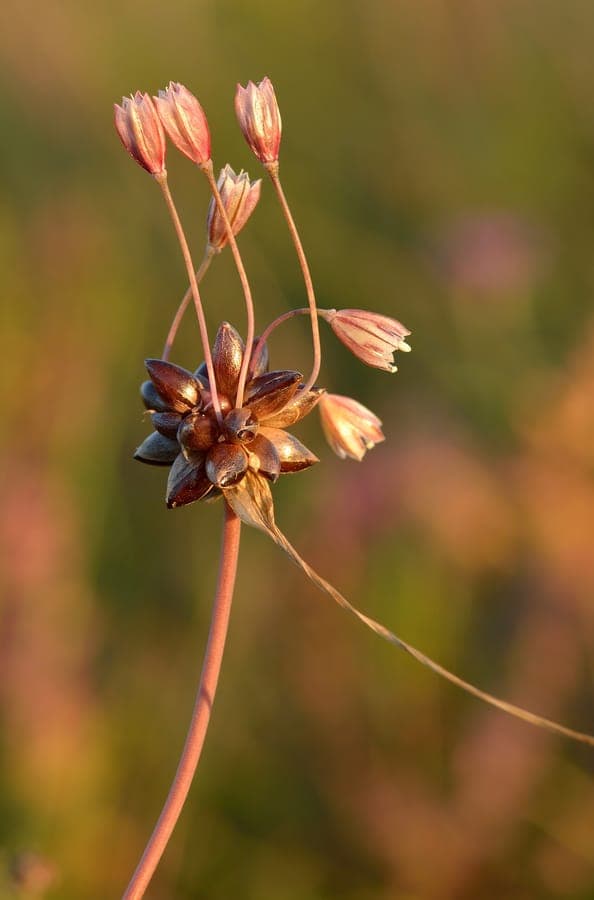
Ivar Leidus / CC BY-SA 3.0, via Wikimedia Commons
Field garlic: complete guide
Allium oleraceum
Want to see Field garlic: complete guide in your garden?
1 minute, no credit card
Overview
Allium oleraceum, commonly known as field garlic, is a resilient perennial that brings both charm and function to the garden. Native to much of Central and Eastern Europe, including Austria, Belarus, and the Baltic States, this member of the Amaryllidaceae family thrives in temperate zones and adapts well to cultivated landscapes. Standing at a modest 20–30 cm tall, it's a subtle presence compared to its flashier allium cousins, but don't underestimate its appeal. The plant returns year after year, slowly forming small colonies through self-seeding, and offers a delicate garlic flavour in its young leaves.
Field garlic is perfect for gardeners who appreciate understated beauty and multi-purpose plants. The foliage emerges in early spring, followed by spherical, soft pink to pale purple flower heads in late spring to early summer. These blooms are not just decorative-they're magnets for pollinators. If you're designing a pollinator-friendly or edible border, field garlic fits right in. On gardenworld.app, you can create a custom garden plan that integrates Allium oleraceum with complementary plants based on height, bloom time, and soil needs.
Appearance & bloom cycle
The slender, hollow leaves of field garlic resemble chives but have a more relaxed, arching habit. They grow in clumps and stay green through much of the growing season. From late May to mid-June, depending on your region, round umbels appear on slender stems. Each flower head contains dozens of tiny star-shaped florets in shades of rose-pink. The bloom lasts about two to three weeks and gradually fades to tan, remaining ornamental into late summer.
After flowering, the seed heads dry and can be left for winter interest or removed to prevent excessive spreading. While not invasive, it can pop up in nearby cracks or borders if conditions are favourable. The plant dies back in late summer, and the bulb enters dormancy until the next spring.
Ideal location
Field garlic grows best in full sun to light shade. In full sun, you'll get the most compact growth and abundant flowering. In dense shade, the stems may stretch and flop. A spot at the front of a border, tucked between ornamental grasses or near creeping thyme, works well. It also suits rock gardens, herb spirals, and gravel beds.
Space bulbs about 15 cm apart when planting. This gives them room to expand without overcrowding. It's also a solid choice for urban gardens or containers, provided drainage is excellent. Use gardenworld.app to model how field garlic will look in your space across seasons, helping you avoid overcrowding and spot-light clashes.
Soil requirements
Allium oleraceum isn't fussy but prefers well-drained, loamy to sandy soil. It struggles in heavy, waterlogged clay. If your soil retains too much moisture, amend it with grit or composted bark. A pH between 6.0 and 7.5 is ideal. Avoid overly rich soils or fresh manure-these promote leafy growth at the expense of flowers.
In containers, use a mix of two parts potting soil to one part horticultural sand. Ensure the pot has drainage holes. For green roofs, a substrate depth of 10–15 cm with good drainage is sufficient. The plant tolerates poor soils but won't thrive in constantly soggy conditions.
Free design
Want to see Field garlic: complete guide in your garden? Make a free design now.
Watering
During active growth (March to August), keep the soil lightly moist but never soggy. Water when the top inch of soil feels dry. Established plants are moderately drought-tolerant and can survive dry spells, though flowering may be reduced. In wet springs or autumns, no additional watering is needed.
Reduce watering in late summer as the foliage yellows. The dormant bulb stores enough energy and moisture to survive winter without irrigation. In pots, water sparingly during dormancy to prevent bulb rot.
Pruning
No regular pruning is required. You can deadhead spent blooms to prevent self-seeding if you'd rather control placement. Otherwise, leaving the seed heads adds texture to the late-season garden. Cut back dead foliage in autumn or late winter, but avoid trimming green leaves-they feed the bulb for next year's growth.
Use clean, sharp shears to avoid spreading fungal diseases. Never pull leaves from the base, as this can damage the bulb.
Maintenance calendar
- February–March: Check for emerging shoots. Plant new bulbs in early spring if missed in autumn.
- April: Water during dry spells. Keep soil weed-free.
- May–June: Peak bloom. Maintain light moisture. Avoid disturbing roots.
- July: Flowers fade. Deadhead if desired. Begin reducing water.
- August–September: Foliage dies back. Stop watering. No maintenance needed.
- October–November: Ideal time to plant bulbs. Divide clumps if overcrowded.
- December–January: Dormant period. Protect potted plants from prolonged freeze.
Winter hardiness
Field garlic is hardy in USDA zones 5 to 9. It reliably survives winters in most of the UK, northern US, and central Europe. Planted at 5–8 cm depth, the bulbs are protected from frost. In zone 5, a light mulch of straw or leaf litter helps in harsh winters, especially in containers.
Potted plants are more vulnerable. Move them to a sheltered spot or insulate with bubble wrap if temperatures drop below -10°C. Avoid wet, frozen soil, which is the main threat.
Companion plants
Pair field garlic with yarrow, catmint, lavender, or lady's mantle for a cottage garden feel. Its soft pink blooms complement white daisies, golden coreopsis, and silvery foliage plants like artemisia. In an edible garden, it grows well with chives, thyme, and oregano.
Avoid aggressive spreaders like mint or bindweed. Also, don't plant near shallow-rooted vegetables that compete for moisture.
Closing
Field garlic is a quiet achiever-unassuming, tough, and full of quiet rewards. It's edible, bee-friendly, and blends seamlessly into both formal and wild planting schemes. Buy bulbs from reputable garden centres in autumn, or look for established plants in spring. With proper placement and minimal care, it'll return faithfully each year. For visual planning, use gardenworld.app to simulate growth patterns and companion pairings, so your garden evolves exactly as you imagine.
Want to see Field garlic: complete guide in your garden? Make a free design now.
Upload a photo, pick a style, and get a photorealistic design with plant list in under a minute.
No credit card required


Similar plants
Douglas' Onion: complete guide
Allium douglasii
Douglas' onion is a compact ornamental allium with purple flowers, perfect for rock gardens and sunny borders. Learn care, siting and hardiness.
Oblique onion: complete guide
Allium obliquum
The oblique onion is a hardy ornamental allium with chartreuse flower heads and blue-green foliage. Location, soil and care explained.
False hooded garlic: complete guide
Allium pseudocalyptratum
Discover false hooded garlic (Allium pseudocalyptratum): a rare ornamental onion from Lebanon for rock gardens and alpine troughs.