
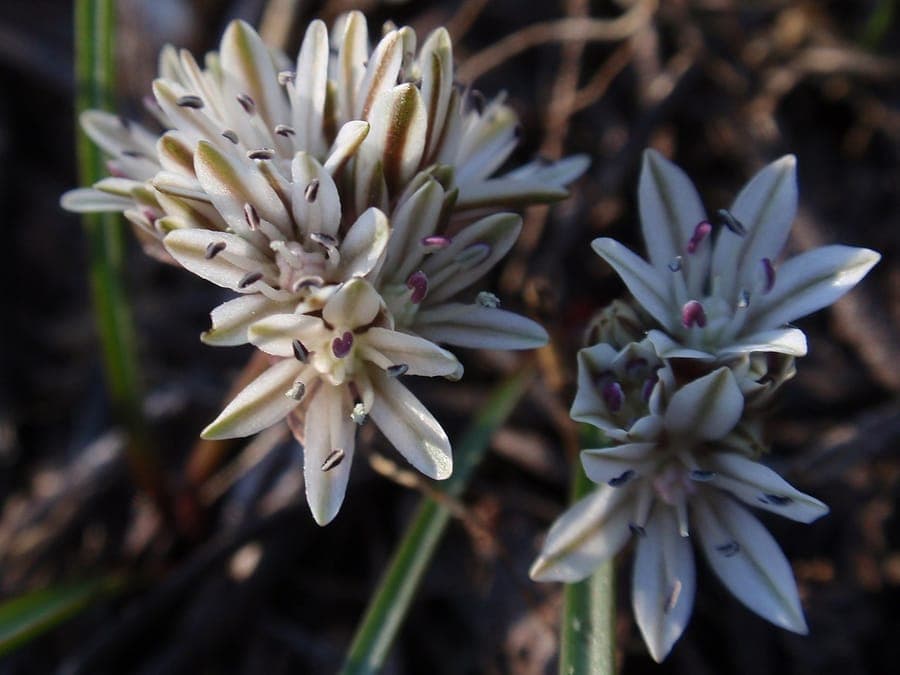
tomhilton / CC BY 2.0, via Wikimedia Commons
Allium obtusum: complete guide
Allium obtusum
Want to see Allium obtusum: complete guide in your garden?
1 minute, no credit card
Overview
Allium obtusum, commonly known as the Red Sierra onion, is an elegant alpine plant native to California and Nevada. This unique onion species distinguishes itself through refined flowers and robust growth habits. It is an ideal choice for gardens requiring drought-tolerant plants or for those interested in native North American plant species.
This plant belongs to the Amaryllidaceae family, the same family as many popular bulb flowers. With its compact growth form and extended blooming period, the Red Sierra onion brings lasting value to any garden design.
Appearance and bloom
The Red Sierra onion is a compact plant characterized by slender, dark green leaves densely packed together. The flowers are small and soft pink to white, grouped in elegant flower clusters that rise above the foliage.
The bloom appears in early spring through mid-spring, depending on local climate conditions. Each tiny flower is delicate and refined, attractive to pollinators. After flowering, small seed pods form, useful for further propagation.
The plant reaches a modest height of 20 to 30 centimeters and spreads to approximately the same width, making it an ideal candidate for borders, rock gardens, or containers.
Ideal location
The Red Sierra onion blooms best in full sun to light filtered shade. At least 6 hours of direct sunlight daily is required for optimal flower production. In shadier locations, the plant will produce fewer flowers.
This plant excels in high, dry spots in your garden - think slopes, rock garden settings, or raised beds where water drains quickly. It is also an excellent choice for coastal locations where drought and wind are prevalent.
Soil
The Red Sierra onion is not particular about soil but thrives in well-draining ground. Heavy clay soils can be problematic as they cause water stagnation, which can lead to bulb rot.
Ideal is a mixture of standard garden soil supplemented with coarse sand and some compost. Add grit or gravel to further improve drainage. A pH between neutral and slightly acidic (pH 6-7) is best, though the plant is reasonably adaptable.
The soil should not be overly fertile - the plant actually thrives on poor soils, as you would expect from an alpine plant.
Watering
Once established, the Red Sierra onion is highly drought-tolerant. During the growing season, especially if significantly dry, you may water sparingly. However, once the plant is in bloom and certainly after flowering ends, you must reduce watering substantially.
In winter, the plant needs minimal water - just enough to keep the soil lightly moist. Ensure water never pools around the plant base.
The bulbs store energy for next season, and winter moisture can lead to rot. If you live in an area with regular winter rains, you may not need supplemental watering at all.
Free design
Want to see Allium obtusum: complete guide in your garden? Make a free design now.
Pruning
Pruning is minimal for this plant. Once flowers fade, you can gently remove them if you prefer to keep the plant neat. If you wish to collect seeds, leave a few flower clusters until they brown and seed pods dry.
Then completely remove withered foliage and flowers. The plant will naturally die back in fall. Leave the dry leaf alone until completely dead, as it protects the bulbs beneath.
Any dead foliage can be gently removed once thoroughly brown, usually in August or September.
Maintenance calendar
FEBRUARY-MARCH: First growth burst, water during drought APRIL-MAY: Blooming period, minimal watering JUNE-JULY: Plant dies back, no water needed AUGUST-SEPTEMBER: Remove dead foliage, prepare for dormancy OCTOBER-JANUARY: Dormancy, no maintenance needed
Winter hardiness
The Red Sierra onion is excellent for cold climates and can tolerate temperatures well below freezing. In warm, dry climates, however, the plant may struggle with summer rain or high humidity.
In temperate zones, including northern European regions, this plant grows well provided drainage is assured. If your winters are very wet, consider removing mulch around bulbs to prevent excessive moisture.
Protection is generally unnecessary, but ensure bulbs do not sit in stagnant water.
Companion plants
The Red Sierra onion combines well with other alpine and drought-tolerant species. Consider:
Lavandula (lavender) - strong textural and color contrast Sedum species - will follow the same growth pattern Santolina - silvery foliage against pink blooms Artemisia - finely divided foliage provides elegant background Heuchera - indigo leaves create visual contrast Geranium species - friendly companion combinations
Closing
The Red Sierra onion is an underrated garden gem, perfect for those who love Mediterranean or alpine plants. With minimal maintenance requirements and refined blooms, this plant brings remarkable character to small spaces.
You will find this species through specialized seed companies and nurseries. At gardenworld.app, you can find more inspiration for designing drought-tolerant borders. Local garden centers also stock similar Allium species suitable for your region. Try this plant and experience the benefit of low-maintenance elegance in your garden!
Want to see Allium obtusum: complete guide in your garden? Make a free design now.
Upload a photo, pick a style, and get a photorealistic design with plant list in under a minute.
No credit card required


Similar plants
Douglas' Onion: complete guide
Allium douglasii
Douglas' onion is a compact ornamental allium with purple flowers, perfect for rock gardens and sunny borders. Learn care, siting and hardiness.
Oblique onion: complete guide
Allium obliquum
The oblique onion is a hardy ornamental allium with chartreuse flower heads and blue-green foliage. Location, soil and care explained.
False hooded garlic: complete guide
Allium pseudocalyptratum
Discover false hooded garlic (Allium pseudocalyptratum): a rare ornamental onion from Lebanon for rock gardens and alpine troughs.