
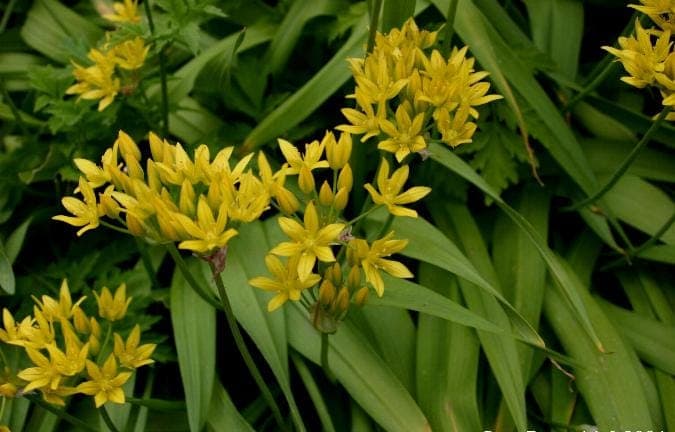
Sten Porse / CC BY-SA 3.0, via Wikimedia Commons
Lily leek: complete guide
Allium moly
Want to see Lily leek: complete guide in your garden?
1 minute, no credit card
Overview
Allium moly, commonly known as Lily leek, is a cheerful little bulb that brings a burst of golden sunshine to the garden every summer. Native to southern Europe and North Africa, this hardy perennial reaches just 25–30 cm in height and blooms in early summer with star-shaped yellow flowers. It's a quiet achiever-unassuming yet reliable, thriving where other plants struggle, especially in dry, sunny spots.
Perfect for cottage gardens, rockeries, or the front of sunny borders, Lily leek is low-maintenance and returns year after year. On gardenworld.app, you can design a garden layout that highlights its bright blooms alongside complementary plants like lavender or catmint, ensuring visual harmony and seasonal interest.
Appearance & bloom cycle
From June to July, Allium moly produces dense, globe-like clusters of bright yellow flowers, each about 4–6 cm wide. The blooms sit atop slender green stems, rising above narrow, strap-like leaves that appear in early spring. These leaves, bluish-green in tone, start to yellow and die back as flowering begins-so don't mistake it for poor health.
The flowers are rich in nectar and highly attractive to bees, hoverflies, and other pollinators. Once blooming ends, the seed heads dry naturally, adding subtle texture to the garden through late summer. While the plant isn't showy in autumn or winter, its reliable summer display makes it a staple in pollinator-friendly gardens.
Ideal location
Plant Lily leek in full sun-aim for at least 6 hours of direct sunlight daily. It performs best in dry, open areas where moisture doesn't linger. Ideal spots include rock gardens, gravel beds, or between paving stones in a sunny courtyard. It also works well at the base of south-facing walls or in raised beds.
Avoid heavy shade or areas prone to waterlogging. In cooler, damper gardens, poor drainage can cause the bulbs to rot. Use gardenworld.app to assess sun exposure in your yard and pinpoint the best microclimates for planting Allium moly.
Soil requirements
This allium thrives in well-drained, sandy or gravelly soils. A pH between 6.0 and 7.5 is ideal. If you're dealing with heavy clay, amend the soil with coarse grit or horticultural sand to improve drainage. Avoid overly rich soils-excessive nutrients can lead to lush foliage but fewer flowers.
In containers, use a mix of two parts loam-based compost and one part grit. Ensure pots have drainage holes. Over time, Lily leek adapts well to poor soils, making it perfect for low-fertility urban gardens or sloped areas with shallow topsoil.
Free design
Want to see Lily leek: complete guide in your garden? Make a free design now.
Watering
Water moderately during active growth-from planting in autumn through spring emergence. Once established, Allium moly is highly drought-tolerant. In average UK or US summer conditions, rainfall is usually sufficient.
Potted plants may need weekly watering during prolonged dry spells in June and July. Always allow the top 2–3 cm of soil to dry between waterings. Overwatering is the most common cause of failure-this plant hates soggy roots.
Pruning
No pruning is required for Lily leek. After flowering, leave the stems and foliage intact until they've fully yellowed and dried-usually by late August. This allows the bulb to absorb nutrients for next year's growth.
Cut back the dead stems at soil level with clean secateurs. Never pull the leaves-they're attached to the bulb and can cause damage. If you want to propagate, collect dry seed heads in late summer and scatter them in desired locations.
Maintenance calendar
- September–October: Plant bulbs 10 cm deep and 10 cm apart in well-drained soil.
- November–February: Minimal care needed. Protect from excessive winter wetness in heavy soils.
- March–April: Foliage emerges. Watch for slugs on young shoots.
- May: Plant prepares to flower. No feeding required.
- June–July: Peak bloom period. Enjoy the flowers and pollinator activity.
- August: Cut back dried stems. Harvest seeds if desired.
- September: Divide overcrowded clumps if needed.
Winter hardiness
Lily leek is fully winter-hardy in USDA zones 5–9. It tolerates temperatures down to -20°C. In colder zones, a dry mulch can help prevent freeze-thaw cycles in wet soil. However, in most temperate climates, no protection is needed-the bulbs survive frost easily as long as the ground doesn't stay waterlogged.
Companion plants
Pair Allium moly with drought-tolerant, sun-loving plants. Excellent companions include lavender, sedum 'Autumn Joy', thyme, nepeta, and Eryngium. Its yellow flowers contrast beautifully with silver-foliage plants or deep purple blooms.
Avoid planting near moisture-loving perennials like hostas or ferns, which create competing conditions. In a mixed border, position Lily leek towards the front where its compact size won't get overshadowed.
Bulbs are widely available at garden centres in autumn. Look for firm, dry bulbs without mould or soft spots. Reputable suppliers often stock them from September onward.
Closing
Allium moly is a quiet gem in the garden-easy to grow, resilient, and full of charm. It asks for little: sun, sharp drainage, and a bit of space. In return, it delivers bright, pollinator-friendly blooms every summer.
Left undisturbed, it will slowly naturalise, forming small colonies that brighten dry corners year after year. Whether in a gravel garden or a cottage border, it's a plant that earns its place. For layout ideas, visit gardenworld.app and create a custom garden plan that makes the most of Lily leek's sunny disposition.
Want to see Lily leek: complete guide in your garden? Make a free design now.
Upload a photo, pick a style, and get a photorealistic design with plant list in under a minute.
No credit card required


Similar plants
Douglas' Onion: complete guide
Allium douglasii
Douglas' onion is a compact ornamental allium with purple flowers, perfect for rock gardens and sunny borders. Learn care, siting and hardiness.
Oblique onion: complete guide
Allium obliquum
The oblique onion is a hardy ornamental allium with chartreuse flower heads and blue-green foliage. Location, soil and care explained.
False hooded garlic: complete guide
Allium pseudocalyptratum
Discover false hooded garlic (Allium pseudocalyptratum): a rare ornamental onion from Lebanon for rock gardens and alpine troughs.