
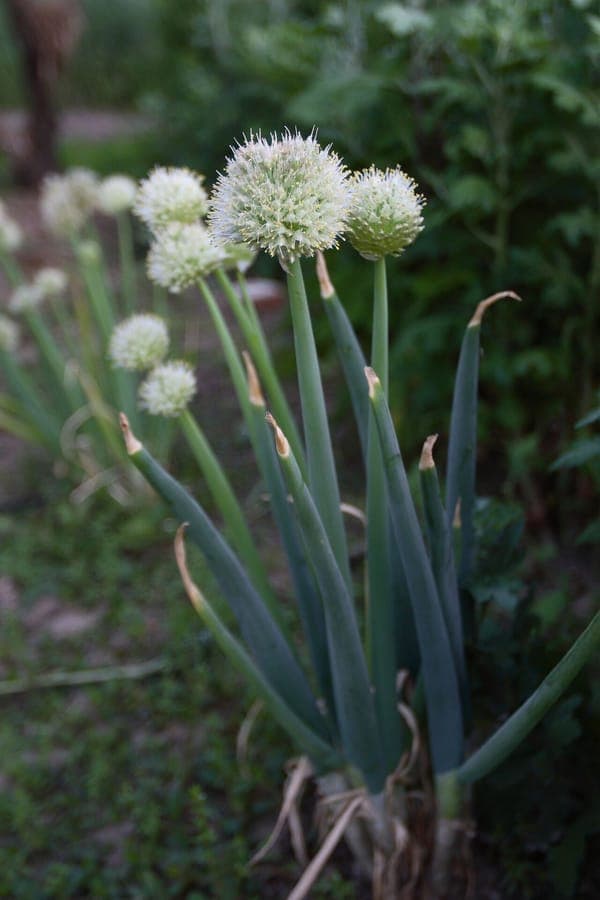
Farm / CC BY-SA 3.0, via Wikimedia Commons
Welsh onion: complete guide
Allium fistulosum
Want to see Welsh onion: complete guide in your garden?
1 minute, no credit card
Overview
Allium fistulosum, commonly known as Welsh onion, isn't actually from Wales - it's native to central China. Don't let the name fool you; this resilient perennial has found a solid place in gardens across temperate zones. Unlike bulb-forming onions, Welsh onion grows in tight clumps with tall, hollow green stems that stay upright and crisp. It's a cut-and-come-again plant, meaning you can harvest leaves regularly and it'll keep producing. That makes it a favorite among kitchen gardeners and permaculture enthusiasts alike.
What sets it apart isn't just its culinary use - it's also stunning in borders. The plant blooms from July to September with fluffy white flower heads that attract bees and hoverflies. And unlike some ornamentals, it doesn't take over. On gardenworld.app, you can design a kitchen garden layout that integrates Welsh onion with compatible crops based on height, harvest cycles, and root depth. Plus, the plant database on gardenworld.app helps you track growth patterns and ideal spacing.
Appearance & bloom cycle
Welsh onion grows 30 to 60 cm tall, with cylindrical, hollow stems that snap cleanly when bent. The leaves are bright green, slightly waxy, and grow vertically from the base. From mid-summer to early autumn, flower stalks rise above the foliage, topped with dense, spherical umbels of small white flowers. Each flower head measures 3–5 cm across and looks like a soft puff of snow.
The blooms last 4–6 weeks and don't produce a strong scent, so they won't overwhelm nearby seating areas. After flowering, the seed heads dry in place and can be left for winter texture. This plant rarely self-seeds aggressively, so you won't end up with unwanted volunteers.
Ideal location
Plant in full sun - a 9 out of 10 on the light scale. That means at least 8 to 9 hours of direct sunlight daily. South- or southeast-facing beds work best. In partial shade, the stems become leggy and weak. If you're growing in containers, use pots at least 25 cm deep with drainage holes. Welsh onion thrives in raised beds, herb spirals, and even balcony planters.
Avoid spots with strong wind exposure - tall flower stalks can snap in gusts. If you're planting in a windy garden, consider placing it behind a low hedge or shrub for shelter.
Soil requirements
Welsh onion prefers well-drained soil with a pH between 7.0 and 7.5. It tolerates a range of soil types but performs best in loamy or sandy loam with added compost. Heavy clay soils should be amended with grit or perlite to prevent waterlogging. Root rot is the main risk in soggy conditions.
Before planting, mix in 3–5 cm of well-rotted compost or manure. Avoid high-nitrogen fertilizers - they promote leafy growth but reduce flavor intensity. A light top-dressing in spring is sufficient.
Free design
Want to see Welsh onion: complete guide in your garden? Make a free design now.
Watering
Keep the soil consistently moist but never waterlogged, especially during dry spells in spring and early summer. Water at the base to prevent fungal issues on leaves. Once established, Welsh onion is moderately drought-tolerant thanks to its deep root system.
Check soil moisture by inserting your finger 5 cm into the ground. If it feels dry, it's time to water. Drip irrigation works well for rows, while container plants may need watering every 2–3 days in hot weather.
Pruning
No formal pruning needed. Harvest outer stems at 15 cm above the soil line using sharp scissors. Never remove more than one-third of the plant at once - this allows for quick regrowth. Trim off any brown or damaged leaves to keep the clump tidy.
After flowering, cut back spent flower stalks to 5 cm above the ground to redirect energy to the roots. If you want to collect seed, leave one or two stalks intact until seeds turn brown.
Maintenance calendar
- January: Check for winter damage; remove any collapsed foliage
- February: Prepare new beds; add compost
- March: Divide clumps or plant new stock; apply light feed
- April: Begin regular watering in dry periods
- May: Top up with compost; monitor for aphids
- June: Start harvesting; support weak stems if needed
- July: Flowers appear; pollinators active
- August: Peak bloom; harvest stems freely
- September: Flowers fade; seeds mature
- October: Replant or divide overcrowded clumps
- November: Leave some flower heads for winter interest
- December: Minimal care; no pruning
Winter hardiness
Welsh onion is hardy in USDA zones 3 to 9. It remains evergreen in milder winters and dies back in colder regions, regrowing in early spring. No mulch is required in most climates, though a light layer of straw can help in zone 3. The plant reliably returns year after year with little intervention.
Companion plants
Grow Welsh onion alongside carrots, lettuce, and potatoes. Its strong scent deters aphids and slugs. Avoid planting near beans or peas, as alliums may inhibit their growth. It pairs well with chives, lavender, and ornamental grasses in mixed borders.
On gardenworld.app, you can generate a companion planting map that shows ideal neighbors and spacing. The platform also suggests seasonal care reminders based on your local climate.
Closing
Welsh onion is a low-maintenance, high-reward plant. It's edible, ornamental, and resilient. Whether you're growing it in a veg patch or a flower bed, it earns its keep. Buy seedlings or seeds from garden centres in early spring or autumn. Plant in full sun with well-drained soil, and enjoy fresh harvests for years. With its upright form and airy blooms, it adds both structure and softness to the garden. Let gardenworld.app help you place it right in your design.
Want to see Welsh onion: complete guide in your garden? Make a free design now.
Upload a photo, pick a style, and get a photorealistic design with plant list in under a minute.
No credit card required


Similar plants
Douglas' Onion: complete guide
Allium douglasii
Douglas' onion is a compact ornamental allium with purple flowers, perfect for rock gardens and sunny borders. Learn care, siting and hardiness.
Oblique onion: complete guide
Allium obliquum
The oblique onion is a hardy ornamental allium with chartreuse flower heads and blue-green foliage. Location, soil and care explained.
False hooded garlic: complete guide
Allium pseudocalyptratum
Discover false hooded garlic (Allium pseudocalyptratum): a rare ornamental onion from Lebanon for rock gardens and alpine troughs.