
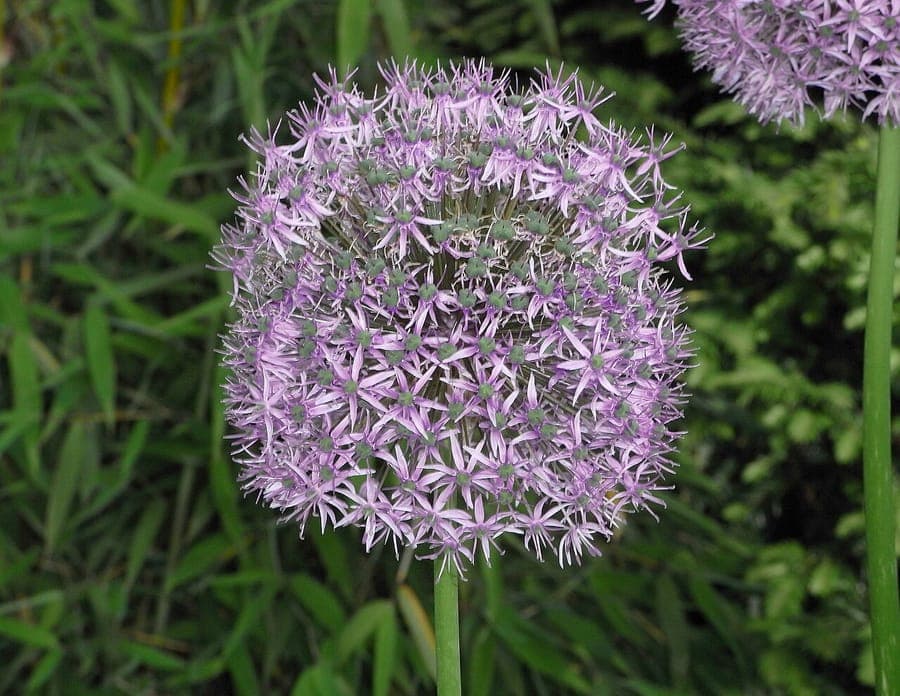
Vulkano Uwe Horst Friese , Bremerhaven / CC BY-SA 3.0, via Wikimedia Commons
Persian onion: complete guide
Allium cristophii
Want to see Persian onion: complete guide in your garden?
1 minute, no credit card
Overview
Allium cristophii, commonly known as Persian onion, is a striking bulbous plant that brings bold structure and summer drama to any garden. Native to the rocky slopes of Iran, Turkey, and Turkmenistan, it thrives in dry, sunny conditions and is perfectly suited to USDA hardiness zones 5 through 8. In the garden, it delivers a one-of-a-kind floral display from late May to early June, making it a standout addition to borders, rock gardens, or gravel schemes.
What sets Allium cristophii apart is its enormous, spherical flower head - up to 25 cm wide - composed of dozens of star-shaped florets radiating outward in a silvery-pink to deep amethyst hue. It's not just eye-catching; it's also deer-resistant, rodent-proof, and adored by bees and hoverflies. If you're designing a low-maintenance, wildlife-friendly garden, this allium should be on your shortlist. On gardenworld.app, you can create a custom planting plan that highlights the best spots for this bold performer in your outdoor space.
Appearance & bloom cycle
The bloom of Allium cristophii is nothing short of spectacular. The flower head resembles a fireworks burst caught mid-explosion, with slender, pointed florets spreading in all directions. Each floret is silvery-lavender when it opens, deepening to a rich violet as it matures. The entire inflorescence sits atop a sturdy, hollow stem that reaches 50–60 cm in height.
Foliage emerges in early spring - narrow, strap-like leaves with a grey-green tint. These begin to yellow and die back just as the flower stem rises, which is completely normal. The plant draws energy from its large bulb, so there's no need to worry about the fading leaves. The flower itself remains attractive for weeks, even after petal drop, and can be left standing for winter interest.
Ideal location
Full sun is non-negotiable for Allium cristophii. It needs at least 6–8 hours of direct sunlight daily to produce strong stems and full blooms. Choose a spot in a sunny border, rockery, or gravel garden where it won't be shaded by taller perennials. Planting in groups of 5 to 7 bulbs creates the most dramatic visual impact.
Spacing is key - allow 20–25 cm between bulbs to prevent overcrowding and ensure good air circulation. This also helps the flower heads develop without getting flattened by rain. When planning your layout, use gardenworld.app to visualise spacing and companion planting options before you put bulb to soil.
Free design
Want to see Persian onion: complete guide in your garden? Make a free design now.
Soil requirements
Well-drained soil is essential. Allium cristophii hates wet feet, especially in winter, so avoid heavy clay unless you amend it with grit or sand. A sandy loam or gritty soil with a pH between 6.5 and 7.5 is ideal. Do not enrich the soil with compost or manure - too much fertility leads to lush foliage but weak flowering.
Plant bulbs in autumn, from September to November, at a depth of 10–15 cm. Pointy end up. You can find quality bulbs at garden centres like those in the UK and US, often sold in packs of 5 or 10. Look for firm, plump bulbs without signs of mould or soft spots.
Watering
Once planted, Allium cristophii needs little watering. During dry spells in spring, a weekly soak helps support stem development, but avoid overhead watering to prevent fungal issues. In summer and winter, the plant is dormant and requires no supplemental moisture. Overwatering is the most common cause of failure, especially in poorly drained soils.
Pruning
No pruning is needed. After flowering, let the foliage die back naturally - it's recharging the bulb for next year. Cut back only when leaves turn completely brown, usually by late July. The dry flower head can be left for texture or clipped off for tidiness.
Maintenance calendar
- September: Plant bulbs 10–15 cm deep, 20 cm apart
- October–November: Finish planting; water lightly if soil is dry
- March–April: Foliage emerges; no feeding required
- May–June: Bloom period; enjoy the show
- July–August: Foliage yellows; leave to die back
- September–February: Dormant; no action needed
Winter hardiness
Hardy in USDA zones 5–8, Allium cristophii handles winter cold down to -29°C. In zone 5, a light mulch of grit or gravel can help prevent moisture buildup. In milder zones, no protection is needed. Just ensure the soil drains well - that's the real key to survival.
Companion plants
Pair Allium cristophii with plants that offer contrast. Try it with dark-leaved Salvia 'Black Taffeta' or fine-textured grasses like Deschampsia cespitosa. It also works beautifully with late-spring bloomers like Euphorbia characias or Nepeta 'Walker's Low', which hide the dying foliage.
Avoid aggressive spreaders like mint or goldenrod, which can overcrowd the bulbs. Instead, opt for clump-forming perennials that respect boundaries.
Closing
Allium cristophii is a low-effort, high-impact plant that brings drama and structure to the summer garden. Its starburst flowers attract pollinators and photographers alike, and its resilience makes it a reliable performer year after year. Whether you're designing a modern gravel garden or refreshing a traditional border, this allium earns its place. For layout ideas and planting combos, visit gardenworld.app and build a garden plan that puts Allium cristophii centre stage.
Want to see Persian onion: complete guide in your garden? Make a free design now.
Upload a photo, pick a style, and get a photorealistic design with plant list in under a minute.
No credit card required


Similar plants
Douglas' Onion: complete guide
Allium douglasii
Douglas' onion is a compact ornamental allium with purple flowers, perfect for rock gardens and sunny borders. Learn care, siting and hardiness.
Oblique onion: complete guide
Allium obliquum
The oblique onion is a hardy ornamental allium with chartreuse flower heads and blue-green foliage. Location, soil and care explained.
False hooded garlic: complete guide
Allium pseudocalyptratum
Discover false hooded garlic (Allium pseudocalyptratum): a rare ornamental onion from Lebanon for rock gardens and alpine troughs.