
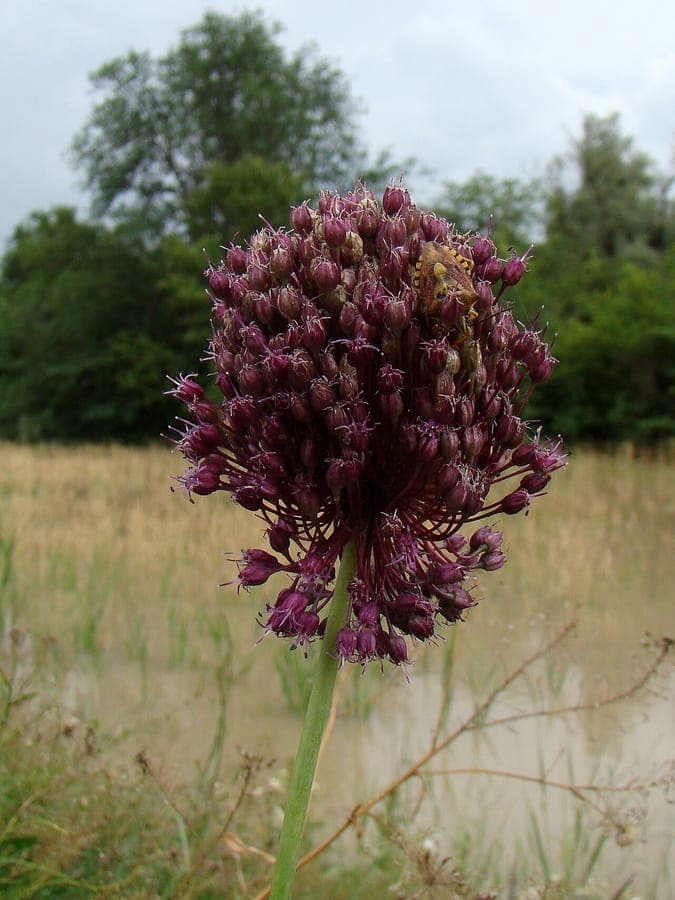
Юрий Данилевский / CC BY-SA 4.0, via Wikimedia Commons
Broadleaf wild leek: complete guide
Allium atroviolaceum
Want to see Broadleaf wild leek: complete guide in your garden?
1 minute, no credit card
Overview
Allium atroviolaceum, commonly known as Broadleaf wild leek, is a bold and architectural perennial that brings drama to any garden. Native to regions stretching from Greece to Iran, this member of the Amaryllidaceae family thrives in sunny spots across USDA hardiness zones 4 to 8. It's not just another ornamental onion - it's a statement plant that delivers height, colour, and ecological benefit in one compact package.
What sets this species apart is its towering flower heads and wide, lush foliage that emerges early in spring. It works especially well in cottage gardens, modern borders, or as a focal point in gravel beds. If you're planning a new planting scheme, gardenworld.app lets you visualise how Allium atroviolaceum fits into your garden's structure, from height layering to seasonal colour flow.
Appearance & bloom cycle
Expect mature plants to reach 80–120 cm in height. The bloom period runs from late June to late July, starting with tightly closed, almost black-purple buds that open into star-shaped, deep violet flowers. Each flower head measures 5–8 cm across and is held on sturdy, hollow stems.
The broad, glossy green leaves appear in April and form a lush basal rosette. However, they tend to yellow and die back by the time flowering peaks - this is normal. Don't panic; the plant stores energy in the bulb for next year. The dried flower heads remain upright well into autumn, adding texture and interest to the winter garden.
Ideal location
Full sun is essential - aim for at least 6 hours of direct sunlight daily. In shaded areas, stems become weak and flop over, and flowering diminishes. This plant excels at the middle or back of a border, where its height can be appreciated without overwhelming lower-growing neighbours.
It also grows well in containers, provided the pot is at least 30 cm deep and has excellent drainage. Terra cotta or fibreglass pots work best. Use a mix of loam-based compost and perlite or grit. If you're designing a container scheme, try the planner on gardenworld.app to test bulb density and companion choices before planting.
Soil requirements
Well-drained soil is non-negotiable. Heavy clay soils must be amended with sharp sand and compost to prevent bulb rot. A sandy loam with a pH of 6.5 to 7.5 is ideal. Avoid overly rich soils - too much organic matter encourages leafy growth at the expense of flowers.
When planting bulbs in autumn, place them 12–15 cm deep and space them 15–20 cm apart. Add a sprinkle of bone meal to the planting hole to support root and flower development, but skip nitrogen-heavy fertilisers.
Free design
Want to see Broadleaf wild leek: complete guide in your garden? Make a free design now.
Watering
Water regularly during active growth (March to July), especially in dry springs. Aim for 10–15 litres per square metre once a week if there's no rain. Once flowering finishes in late summer, reduce watering significantly. By September, stop watering altogether unless the autumn is unusually dry.
Mature plants are highly drought tolerant. Overwatering, particularly in winter, is the leading cause of failure.
Pruning
No pruning is required. Do not cut back the foliage until it has fully yellowed and withered - usually by August. The leaves photosynthesise and feed the bulb for next year's bloom. Removing them too early results in weaker flowering the following season.
You can remove spent flower heads if you prefer a tidier look, but leaving them intact adds winter structure and provides food for birds.
Maintenance calendar
- February: Check for early leaf emergence; protect from late frosts if needed.
- March: Apply a light top dressing of compost; begin watering if soil is dry.
- April: Monitor for aphids and fungal issues in wet weather.
- May: Stake weak stems if windy; keep weeds under control.
- June: Peak bloom; enjoy the flowers and pollinators they attract.
- July: Flowers fade; leave stems standing.
- August: Cut back dead foliage; stop watering.
- September–November: Ideal time to divide or relocate bulbs.
- December: Dormant period; no action required.
Winter hardiness
Hardy in USDA zones 4–8, Allium atroviolaceum survives winter temperatures down to -25°C. In most UK and US climates, no mulch is needed. However, in areas with heavy, waterlogged soils, a light winter mulch of straw or leaf mould can help prevent rot.
Companion plants
Pair with plants that bloom at the same time and share similar growing conditions. Excellent companions include Salvia nemorosa, Echinacea purpurea, and Verbascum. The purple tones contrast beautifully with yellow coreopsis or white shasta daisies.
Avoid overcrowding with vigorous spreaders like mint or goldenrod. Stick to clump-forming perennials that won't compete for space. Lavender and nepeta are ideal partners, offering repeated bloom and shared drought tolerance.
Closing
Allium atroviolaceum is a resilient, low-effort plant that pays off with dramatic blooms and long-term garden structure. With its tall stems and bold colour, it adds vertical interest where most perennials fall short. Plant the bulbs in autumn at garden centres or online retailers, and you'll reap the rewards each summer. Whether you're refreshing a border or designing a pollinator-friendly space, this ornamental onion earns its place. Plan your layout smartly - gardenworld.app helps you map out spacing, sunlight, and seasonal transitions so your Alliums shine every year.
Want to see Broadleaf wild leek: complete guide in your garden? Make a free design now.
Upload a photo, pick a style, and get a photorealistic design with plant list in under a minute.
No credit card required


Similar plants
Douglas' Onion: complete guide
Allium douglasii
Douglas' onion is a compact ornamental allium with purple flowers, perfect for rock gardens and sunny borders. Learn care, siting and hardiness.
Oblique onion: complete guide
Allium obliquum
The oblique onion is a hardy ornamental allium with chartreuse flower heads and blue-green foliage. Location, soil and care explained.
False hooded garlic: complete guide
Allium pseudocalyptratum
Discover false hooded garlic (Allium pseudocalyptratum): a rare ornamental onion from Lebanon for rock gardens and alpine troughs.