
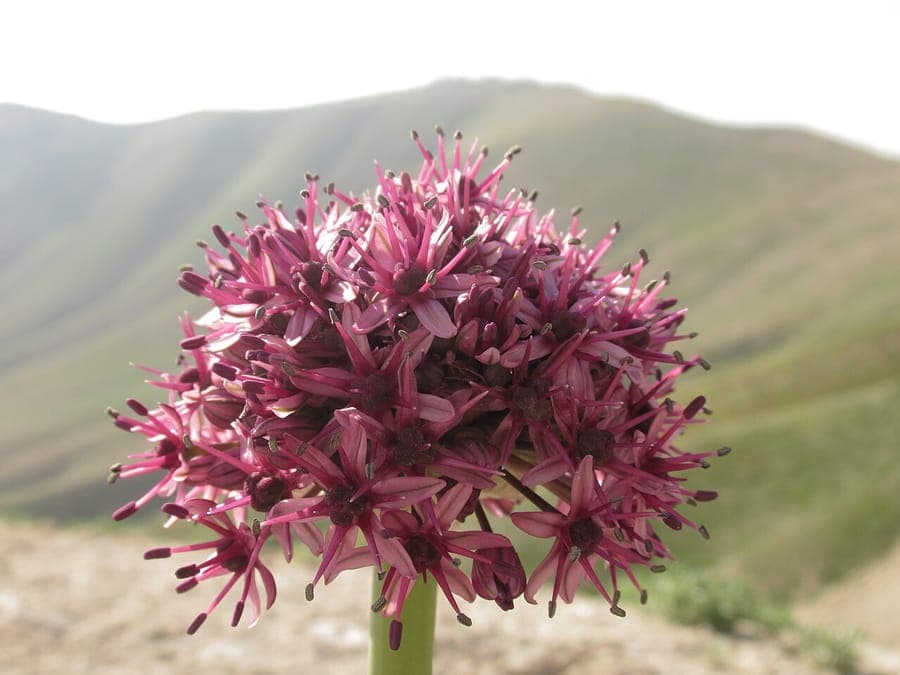
בן דורסאי / CC BY-SA 4.0, via Wikimedia Commons
Black Garlic (Allium aschersonianum): complete guide
Allium aschersonianum
Want to see Black Garlic (Allium aschersonianum): complete guide in your garden?
1 minute, no credit card
Overview
Allium aschersonianum, commonly known as Black Garlic, is a fascinating ornamental onion from the Amaryllidaceae family. Native to Turkey, Israel, and northeastern Libya, this plant thrives in dry, rocky habitats. It belongs to the Allium genus, which also includes culinary onions and other aromatic plants. Black Garlic stands out for its unique dark coloring and distinctive structure, offering both visual and aromatic benefits to your garden.
Although not edible, this plant is highly valuable for wildlife gardens and pollinators. The flowers attract butterflies and bees, making it an excellent choice for natural gardens. The plant is relatively low-maintenance and can grow well in various climate conditions, especially in temperate to warm regions.
Appearance and Bloom
Black Garlic is a remarkable plant with characteristic dark purple to black flowers. The flowers grow in dense, spherical flower clusters that can reach up to 5 centimeters in diameter. Each individual flower is tiny, but together they form a spectacular flowering display that appears from July to August.
The leaves are linear and greenish, creating a beautiful contrast with the dark flowers. The plant typically reaches 20-40 centimeters in height with a compact growth habit. The scent is subtly aromatic, with the characteristic onion-like aroma typical of the Allium genus.
Ideal Location
Black Garlic thrives best in full sun. The plant needs at least 6 hours of direct sunlight daily for optimal blooming. In warmer climates, some afternoon shade is welcome, especially in very hot regions. The plant is highly tolerant of windy conditions, making it suitable for gardens exposed to strong winds.
Use Black Garlic along borders, in rock gardens, or in gravel gardens where it can stand out with its unique flowers. The plant combines well with other Mediterranean plants and drought-tolerant garden plants. It also works well in pots, making it suitable for balconies and terraces.
Soil
Black Garlic is not demanding regarding soil requirements. The plant thrives in virtually all soil types as long as drainage is good. Very well-draining, sandy, or gravelly soils are ideal. Add organic matter if your soil is heavy and clayey. A light addition of grit or sand helps improve water drainage.
The soil pH should be neutral to slightly alkaline. Heavy, water-retaining soils can lead to bulb rot, so ensure water doesn't accumulate. In containers, use well-draining potting soil mixed with sand or perlite.
Watering
Although Black Garlic is drought-tolerant, water regularly until the plant is well-established. Once established, it has minimal water needs. Water only when the soil feels dry, especially in summer. Avoid overwatering, as this can cause bulb rot.
During the growing season (spring and summer), some extra water can help with blooming, but the plant thrives without daily watering. In winter, when the plant goes dormant, you can reduce watering almost entirely. In very hot or dry climates, you may need to water more, but always ensure good drainage.
Free design
Want to see Black Garlic (Allium aschersonianum): complete guide in your garden? Make a free design now.
Pruning
Black Garlic requires minimal pruning. Remove spent flowers to encourage continued blooming and keep the plant neat. Cut back the stems after flowering. Leave the foliage intact until it yellows completely, as it transports nutrients back to the bulb.
Seed pods can be removed to stimulate more blooms, although you can leave them if you want to collect seeds. After winter, when foliage has completely died back, gently remove old leaf debris to make room for new spring growth.
Maintenance Calendar
In spring (March-April), the first signs of growth appear. This is when to add any feeding. In May-June, blooming begins. Keep the plant maintained by removing spent flowers. July to August is peak blooming season.
In September-October, leaves begin to yellow naturally. This is normal. Allow the above-ground parts to wither without removing them. From November to February, the plant is dormant. Gently remove dead foliage and provide frost protection in very cold climates.
Winter Hardiness
Black Garlic has moderate winter hardiness, depending on your region. In temperate climates down to -10°C, the plant can stay outdoors, although mulch protection is recommended. In very cold areas (below -15°C), it's better to dig up the bulbs after foliage dies and store them cool and dry until spring.
In frost-free regions, Black Garlic can remain outdoors without protection. In temperate zones, apply a mulch layer around the plant in October to protect bulbs from extreme frost.
Companion Plants
Black Garlic works well with other Mediterranean drought-tolerant plants like Lavender, Salvia, Santolina, and Nepeta. This combination creates a vibrant, pollinator-friendly garden with a long blooming season. Rock cress and sedums are also good neighbors due to their similar requirements.
The plant also combines well with grass-like plants such as Festuca glauca and other ornamental blue grasses. Avoid wet soils and moisture-loving plants, as these would require increased watering.
Final Thoughts
Black Garlic is a beautiful addition to drought-tolerant gardens and Mediterranean plant combinations. With its striking dark flowers and minimal maintenance needs, it's a plant that demands little attention but offers great rewards. The plant is available at garden centers, where you can get expert advice.
Whether creating a rock garden, Mediterranean border, or drought-tolerant landscape, Black Garlic is a special choice. Visit gardenworld.app and gardenworld.app for more inspiration and plant combinations.
Want to see Black Garlic (Allium aschersonianum): complete guide in your garden? Make a free design now.
Upload a photo, pick a style, and get a photorealistic design with plant list in under a minute.
No credit card required


Similar plants
Douglas' Onion: complete guide
Allium douglasii
Douglas' onion is a compact ornamental allium with purple flowers, perfect for rock gardens and sunny borders. Learn care, siting and hardiness.
Oblique onion: complete guide
Allium obliquum
The oblique onion is a hardy ornamental allium with chartreuse flower heads and blue-green foliage. Location, soil and care explained.
False hooded garlic: complete guide
Allium pseudocalyptratum
Discover false hooded garlic (Allium pseudocalyptratum): a rare ornamental onion from Lebanon for rock gardens and alpine troughs.