
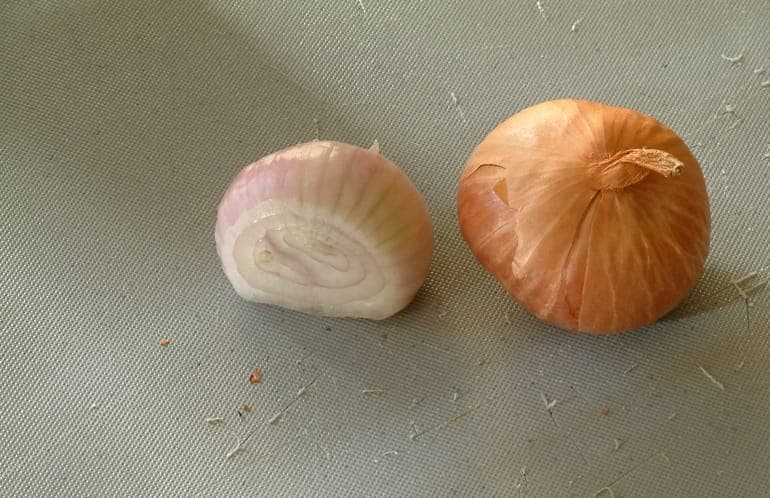
No machine-readable author provided. Charles P. assumed (based on copyright claims). / Public domain, via Wikimedia Commons
Shallot: complete guide
Allium ascalonicum
Want to see Shallot: complete guide in your garden?
1 minute, no credit card
Overview
Shallot (Allium ascalonicum) isn't the flashiest garden plant, but it's one of the most rewarding. A close relative of onions and garlic, this perennial member of the Amaryllidaceae family forms clusters of small, elongated bulbs with a delicate, sweet flavour prized in kitchens worldwide. Native to regions like Egypt, Turkey, and Lebanon, it thrives in warm, dry climates but adapts well to temperate gardens when given the right start. Unlike common onions, shallots multiply by forming bulbils - making them ideal for saving your own stock year after year.
In home gardens, they work well in vegetable plots, raised beds, or even tucked into herb borders. They're compact, low-lying, and don't shade out neighbouring plants. If you're planning a new kitchen garden, use gardenworld.app to map out your shallot rows alongside companion crops like carrots and salad greens. The platform helps visualise spacing, sun exposure, and crop rotation - essential for healthy bulb development.
Appearance & bloom cycle
Shallots grow in clumps of slender, hollow green leaves that reach 30 to 45 cm in height. In late spring to early summer (typically May to June), they send up flowering scapes topped with dense, rounded umbels. The flowers are usually pale purple or greenish-white and attract pollinators like hoverflies and native bees. While attractive, allowing the plant to flower diverts energy from bulb formation. For maximum yield, pinch off flower stalks as soon as they appear.
The bulbs mature over 7 to 9 months. When the foliage turns yellow and flops over - usually in July or early August - it's time to harvest. The bulbs will have divided into clusters of 3 to 6 individual shallots, each measuring 3 to 5 cm in length. If left in the ground, some may regrow the following season, but for best quality, rotate their position every two years.
Ideal location
Shallots demand full sun - at least 6 to 8 hours of direct daylight daily. Choose a spot with unobstructed southern exposure. Avoid low-lying areas where water pools or under tree canopies that block sunlight. They grow best in open beds or raised plots where air circulates freely, reducing fungal pressure.
Because they're shallow-rooted, they fit well at the front of vegetable beds or in containers at least 20 cm deep. Pair them with low-growing herbs or lettuces to maximise space. Use gardenworld.app to design a layered planting scheme where tall plants don't shade your shallots during peak growing months.
Soil requirements
Well-drained, light sandy loam is ideal. Heavy clay soils retain too much moisture and increase the risk of bulb rot. If your soil is dense, amend it with grit, composted bark, or well-rotted manure to improve structure. The pH should be between 6.0 and 7.0 - slightly acidic to neutral. Test your soil with a kit from local garden centres.
Prepare the bed by forking in a balanced organic fertiliser in early spring. Avoid high-nitrogen feeds, which promote leafy growth at the expense of bulb size. Plant individual sets 2 cm deep, spaced 15 cm apart in rows 30 cm apart. Ensure the pointed end faces up.
Free design
Want to see Shallot: complete guide in your garden? Make a free design now.
Watering
Keep the soil consistently moist during establishment - especially in dry springs. Once rooted, shallots are fairly drought-tolerant. Water deeply once a week during dry spells, but stop irrigation entirely three weeks before harvest. This helps bulbs dry down and form protective outer skins, improving storage life.
Avoid wetting the foliage - use a soaker hose or water at soil level to prevent fungal diseases like downy mildew or onion white rot. Mulching with straw helps retain moisture and suppress weeds, but remove it before the drying-off period to prevent rot.
Pruning
No pruning is needed for foliage, but remove flowering stalks promptly. Let the leaves grow until they naturally wither - this process feeds the developing bulbs. Cutting leaves early results in smaller, less flavourful bulbs.
After harvest, you can trim the tops once the bulbs are fully cured. Never cut greens before the plant has finished its growth cycle.
Maintenance calendar
- March–April: Plant shallot sets in well-prepared, frost-free soil. Choose firm, disease-free bulbs.
- May–June: Monitor for flower stalks and remove them. Keep beds weed-free.
- July: Begin drying-off process. Stop watering. Watch for yellowing foliage.
- August: Harvest when 80% of leaves have fallen. Lift carefully with a fork.
- September: Cure bulbs in a dry, airy space for 2–3 weeks. Store in mesh bags in a cool, dark place (4–10°C).
- October–February: Plan next season's crop. Order new sets if needed.
Winter hardiness
Shallots are hardy in USDA zones 6 to 9. They can survive winter temperatures down to -10°C when planted in autumn. However, wet winter soils are more dangerous than cold. If planting in fall (September–October), ensure excellent drainage. In colder zones, a light mulch of straw can help, but remove it in early spring to prevent mould.
For best results, many gardeners in cooler regions prefer spring planting to avoid rot in prolonged wet conditions.
Companion plants
Good companions include carrots, lettuce, spinach, and strawberries. Their root systems don't compete, and the allium scent deters carrot flies and aphids. Avoid planting near legumes like beans and peas, which dislike growing near alliums. Herbs like thyme, rosemary, and sage also make excellent neighbours - they share similar soil and sun needs.
Closing
Shallots are a low-fuss, high-reward crop that every kitchen gardener should try. They take up little space, store well, and elevate everyday dishes with their subtle taste. Start with quality sets from reputable garden centres - look for firm, dry bulbs without sprouting or soft spots. Whether you plant in autumn or spring, timing and drainage are key. And when planning your layout, don't overlook digital tools: gardenworld.app lets you simulate planting density and harvest windows so you know exactly how many shallots you'll get per square metre. Once you grow your own, you'll never go back to store-bought.
Want to see Shallot: complete guide in your garden? Make a free design now.
Upload a photo, pick a style, and get a photorealistic design with plant list in under a minute.
No credit card required


Similar plants
Douglas' Onion: complete guide
Allium douglasii
Douglas' onion is a compact ornamental allium with purple flowers, perfect for rock gardens and sunny borders. Learn care, siting and hardiness.
Oblique onion: complete guide
Allium obliquum
The oblique onion is a hardy ornamental allium with chartreuse flower heads and blue-green foliage. Location, soil and care explained.
False hooded garlic: complete guide
Allium pseudocalyptratum
Discover false hooded garlic (Allium pseudocalyptratum): a rare ornamental onion from Lebanon for rock gardens and alpine troughs.