
Magnus Manske / CC BY-SA 2.5, via Wikimedia Commons
Mouse garlic: complete guide
Allium angulosum
Want to see Mouse garlic: complete guide in your garden?
1 minute, no credit card
Overview
Allium angulosum, commonly known as mouse garlic, is a modest yet resilient bulbous perennial in the Amaryllidaceae family. Native to central and eastern Europe - from Austria and Germany through Belarus and into western Russia - it thrives in dry grasslands, roadside verges, and calcareous meadows. Unlike the flamboyant ornamental alliums, mouse garlic stays low-key, but its ecological value and ease of care make it a hidden gem for naturalistic gardens. Reaching just 8 to 12 inches (20–30 cm), it's perfect for the front of borders, rock gardens, or weaving through gravel paths.
On gardenworld.app you can design a planting scheme that integrates mouse garlic seamlessly with other drought-tolerant species for year-round structure.
Appearance & bloom cycle
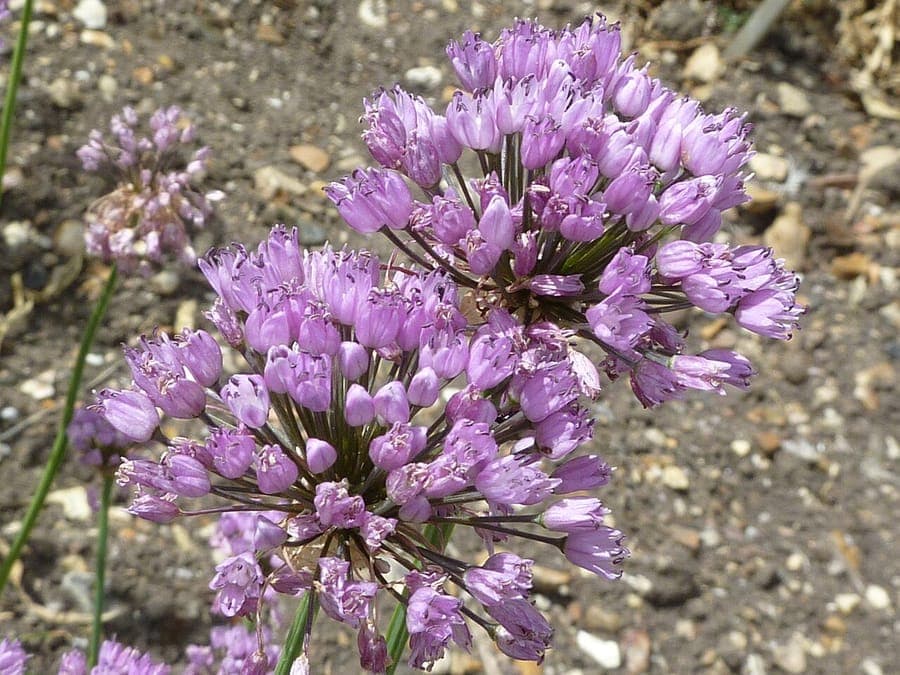
Mouse garlic forms slender, hollow leaves that resemble chives but release a faint garlic scent when crushed. From July to August, it sends up delicate umbels of small white to pale pink flowers. Each cluster contains 10–20 tiny star-shaped blooms with finely toothed edges, arranged in loose, rounded heads about 1 inch (2.5 cm) across. The flowers attract pollinators like hoverflies and native bees, enhancing biodiversity. After blooming, the seed heads persist into autumn, adding ornamental interest and providing food for seed-eating birds.
The plant grows from a small bulb and spreads slowly via seed. It's not invasive, but it can self-seed in ideal conditions, especially in well-drained, open soil.
Ideal location
Mouse garlic performs best in full sun to light shade. It flourishes in open, airy spots with at least 6 hours of direct sunlight per day. Avoid dense shade, which leads to weak, leggy growth and poor flowering. Ideal spots include sunny rock gardens, dry stone walls, or herbaceous borders with similar moisture needs. It also works well in gravel gardens or naturalised草坪 areas where low competition allows it to settle.
Soil requirements
This species prefers well-drained, slightly alkaline to neutral soil (pH 6.5–7.8). It tolerates poor, sandy, or loamy soils but struggles in heavy clay or waterlogged conditions, where bulbs may rot. If your soil is dense, amend it with horticultural grit or coarse sand to improve drainage. Avoid rich compost or manure - mouse garlic blooms better in lean soils. Over-fertilisation encourages leafy growth at the expense of flowers.
Watering
Once established, mouse garlic is highly drought-tolerant. During its active growing season (April to August), natural rainfall is usually sufficient. Only water during prolonged dry spells, especially in the first year after planting. When watering, aim at the base to keep foliage dry and prevent fungal diseases. Never allow the soil to remain soggy.
Free design
Want to see Mouse garlic: complete guide in your garden? Make a free design now.
Pruning
Pruning isn't necessary for mouse garlic. Leave the flower stems intact after blooming if you want to encourage self-seeding or support wildlife. Cut back spent stems in September if a tidier look is preferred. Do not remove the foliage until it has fully yellowed and died back - this allows the bulb to store energy for next year's growth.
Maintenance calendar
- January: Check for frost heave or rodent damage
- February: No action needed
- March: Loosen compacted soil gently; prepare for spring growth
- April: Plant new bulbs; watch for emerging shoots
- May: Weed lightly; avoid disturbing young foliage
- June: Monitor soil moisture; ensure good airflow
- July–August: Peak bloom; observe pollinator activity
- September: Collect seeds or trim stems
- October: Allow foliage to die back naturally
- November: Leave plant debris for winter structure
- December: Minimal care; check for snow compaction
Winter hardiness
Mouse garlic is fully hardy in USDA zones 5 to 8. The bulbs survive freezing temperatures without protection. In areas with wet winters, a light mulch of straw or pine needles can help prevent rot, but it's rarely essential. The plant returns reliably each spring, forming small colonies over time.
Companion plants
Pair mouse garlic with late-summer bloomers like Echinacea, Aster novae-angliae, or Sedum 'Autumn Joy'. It also complements fine-textured grasses such as Deschampsia cespitosa or Festuca ovina. Avoid aggressive spreaders like mint or goldenrod. For a low-maintenance combo, try planting with oregano (Origanum vulgare) or thyme (Thymus vulgaris).
Mouse garlic bulbs may be available at garden centres in autumn, especially those specialising in native or naturalising plants. Always buy cultivated stock - wild collection is ecologically damaging and often illegal. On gardenworld.app you can visualise how mouse garlic fits into your garden layout over time, helping you plan for seasonal shifts and plant maturity.
Closing
Mouse garlic is an underrated yet practical choice for gardeners seeking understated beauty and ecological function. Its compact size, hardiness, and pollinator appeal make it ideal for small gardens, rockeries, or wildlife-friendly spaces. With minimal care and the right conditions, it will return year after year, quietly enhancing your garden's rhythm. If you value plants that blend in rather than stand out, Allium angulosum deserves a spot in your planting scheme.
Want to see Mouse garlic: complete guide in your garden? Make a free design now.
Upload a photo, pick a style, and get a photorealistic design with plant list in under a minute.
No credit card required


Similar plants
Douglas' Onion: complete guide
Allium douglasii
Douglas' onion is a compact ornamental allium with purple flowers, perfect for rock gardens and sunny borders. Learn care, siting and hardiness.
Oblique onion: complete guide
Allium obliquum
The oblique onion is a hardy ornamental allium with chartreuse flower heads and blue-green foliage. Location, soil and care explained.
False hooded garlic: complete guide
Allium pseudocalyptratum
Discover false hooded garlic (Allium pseudocalyptratum): a rare ornamental onion from Lebanon for rock gardens and alpine troughs.