
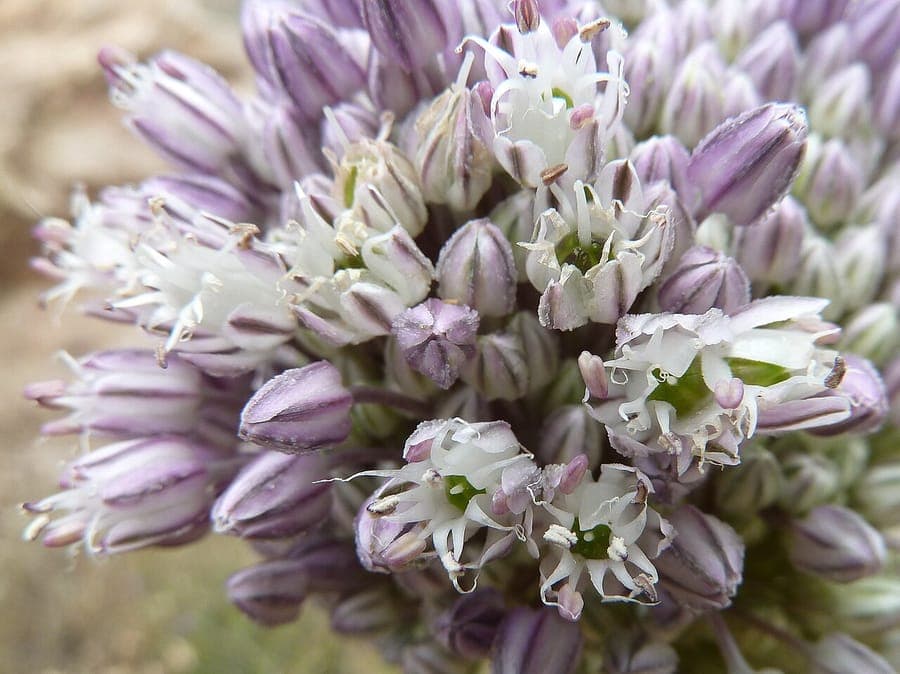
Philmarin / CC BY-SA 3.0, via Wikimedia Commons
Broadleaf wild leek: complete guide
Allium ampeloprasum
Want to see Broadleaf wild leek: complete guide in your garden?
1 minute, no credit card
Overview
Allium ampeloprasum, commonly known as broadleaf wild leek, is a striking perennial that brings both beauty and utility to the garden. Native to southern Europe, North Africa, and the eastern Mediterranean, this hardy plant thrives in sunny, dry conditions and adapts well to temperate climates. It belongs to the Amaryllidaceae family and grows between 100 and 150 cm tall, making it a standout in mid- to back-border positions.
Unlike cultivated leeks, this wild relative offers bold ornamental appeal with minimal upkeep. The plant forms clumps of broad, blue-green leaves that emerge in early spring, followed by sturdy flower scapes that rise dramatically in early summer. Its culinary value shouldn't be overlooked-both the young leaves and bulbs are edible, with a mild garlic-leek flavour.
On gardenworld.app, you can design a custom garden layout that highlights the bold structure of Allium ampeloprasum, especially in a Mediterranean-inspired or edible border.
Appearance & bloom cycle
Broadleaf wild leek starts growing in April, with foliage reaching 60–80 cm before flowering. The flower stalks shoot up quickly in late May, culminating in large, spherical flower heads between 10 and 15 cm in diameter. Blooming occurs from late June through August, depending on local conditions. In warmer microclimates, flowering may begin as early as mid-June.
The flowers are a rich purple-pink, composed of dozens of star-shaped florets. They attract pollinators like bees and hoverflies. After blooming, seed heads form and persist into autumn, adding architectural interest. If left untrimmed, the plant can self-seed moderately, so deadheading is recommended if you want to control spread.
Ideal location
Full sun is essential-aim for at least 6 to 8 hours of direct sunlight daily. Choose an open site with good air circulation to prevent fungal issues. Avoid shady or damp corners. South- or southwest-facing borders work best in temperate regions like the UK or the northern US.
This plant excels in gravel gardens, rockeries, or herb gardens. Its upright form makes it ideal for creating vertical emphasis. Use it as a focal point or in clusters for a naturalistic look.
Soil requirements
Allium ampeloprasum prefers well-drained, sandy or loamy soil. It tolerates poor fertility but struggles in heavy clay that stays wet. Ideal pH ranges from 6.0 to 7.5. If your soil is compacted, amend it with coarse sand or fine grit before planting.
Plant bulbs 10–15 cm deep and space them 25–30 cm apart. In containers, use a mix of potting soil and perlite (2:1) to ensure proper drainage. Raised beds are another excellent option for improving drainage.
Free design
Want to see Broadleaf wild leek: complete guide in your garden? Make a free design now.
Watering
Once established, this allium is highly drought-tolerant. During the first growing season, water weekly during dry spells to help roots establish. After that, natural rainfall is usually sufficient. Overwatering is a common mistake-soggy soil leads to bulb rot.
Water at the base to keep foliage dry and reduce disease risk. In prolonged droughts, give a deep soak every 10–14 days rather than light daily watering.
Pruning
Pruning is minimal. Cut back spent flower stalks just above the leaf line if you want to prevent self-seeding. Leave some seed heads through winter for visual interest and to feed birds.
Never cut back the foliage until it has completely yellowed and died back, usually by late summer. The leaves feed the bulb for next year's growth.
Maintenance calendar
- March–April: Check bulbs for rot after winter. Top-dress with compost or well-rotted manure.
- May: Water during dry periods. Stake tall stems if needed in exposed areas.
- June–July: Peak bloom. Monitor for aphids on flower buds; spray with water if infestation is light.
- August–September: Deadhead or collect seeds. Divide overcrowded clumps every 3–4 years in early autumn.
- October–November: No active care needed. Mulch lightly in colder zones (USDA 5–6) if winters are wet.
- December–February: Dormant period. Avoid disturbing the soil around bulbs.
Winter hardiness
Hardy in USDA zones 5 to 9. In zone 5, ensure good drainage and consider a light mulch in wet winters. In zones 7–9, no protection is needed. The plant dies back completely in winter and re-emerges in spring.
Avoid planting in areas prone to waterlogging. In containers, move pots to a sheltered spot or wrap with burlap in colder regions.
Companion plants
Pair with drought-tolerant perennials like Nepeta, Echinacea, Sedum, and Salvia. These share similar sun and soil needs and extend the blooming season. The vertical form of Allium ampeloprasum contrasts beautifully with mounding or spreading plants.
Avoid moisture-loving species such as Astilbe or Ligularia. Instead, integrate herbs like thyme or oregano for a functional, fragrant edge.
Use the visual planning tool on gardenworld.app to preview how broadleaf wild leek fits into your existing planting scheme.
Closing
Allium ampeloprasum is a resilient, low-maintenance plant that rewards with bold blooms and edible parts. It's perfect for gardeners seeking beauty with function. Once settled, it requires little beyond seasonal tidying and the occasional division.
Available at garden centres in spring, often labelled simply as 'wild leek' or 'ornamental allium'. Look for firm, plump bulbs and plant in autumn for best results.
Want to see Broadleaf wild leek: complete guide in your garden? Make a free design now.
Upload a photo, pick a style, and get a photorealistic design with plant list in under a minute.
No credit card required


Similar plants
Douglas' Onion: complete guide
Allium douglasii
Douglas' onion is a compact ornamental allium with purple flowers, perfect for rock gardens and sunny borders. Learn care, siting and hardiness.
Oblique onion: complete guide
Allium obliquum
The oblique onion is a hardy ornamental allium with chartreuse flower heads and blue-green foliage. Location, soil and care explained.
False hooded garlic: complete guide
Allium pseudocalyptratum
Discover false hooded garlic (Allium pseudocalyptratum): a rare ornamental onion from Lebanon for rock gardens and alpine troughs.