
Aiwok / CC BY-SA 3.0, via Wikimedia Commons
Water-plantain: complete guide
Alisma plantago-aquatica
Want to see Water-plantain: complete guide in your garden?
1 minute, no credit card
Overview
Alisma plantago-aquatica, commonly known as water-plantain, is a robust aquatic perennial that thrives in shallow water and saturated soils. Native across much of Europe and parts of Asia, it's a familiar sight along pond margins, ditches, and marshy banks. If you've got a soggy corner in your garden or a natural pond, this plant is a low-maintenance, wildlife-friendly option that adds structure and seasonal interest. Hardy to USDA zones 5–9, it handles cold winters and warm summers with ease.
On gardenworld.app, you can design a custom pond layout that incorporates water-plantain alongside other moisture-loving species. It's a smart way to visualise plant spacing and sunlight needs before you start digging.
Appearance & bloom cycle
Water-plantain forms a rosette of broad, lance-shaped leaves that emerge from the base, typically 10–25 cm long. Young foliage often has a reddish or purplish tinge, adding subtle colour in spring. The leaves are waxy and held above water or moist soil, creating a lush, ground-hugging presence.
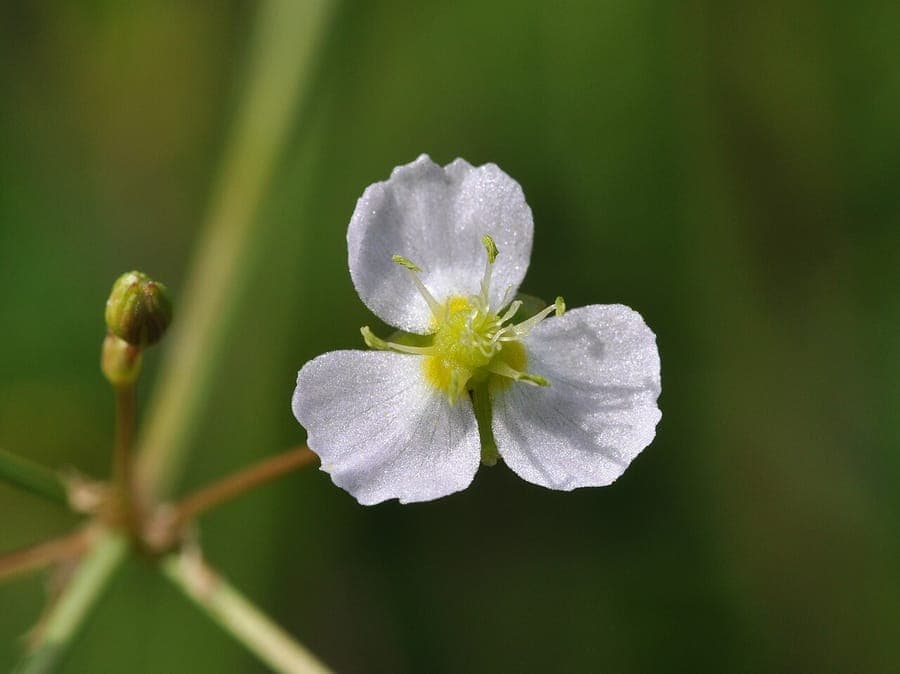
From June to August, slender flower stalks rise 30–70 cm tall, bearing loose panicles of small, three-petaled flowers. Each flower is creamy white to pale pink, about 5–8 mm wide, arranged in whorls of three along branching stems. They attract small pollinators like hoverflies and midges. After blooming, the plant produces clusters of tiny green achenes that mature to brown, and may self-seed in damp areas.
Ideal location
Plant water-plantain in shallow water, 5–15 cm deep, along the margins of ponds, bog gardens, or wet ditches. It prefers full sun but tolerates light afternoon shade. In deep shade, growth becomes leggy and flowering diminishes. Avoid windy spots-tall flower stalks can snap in strong gusts.
For container planting, use a heavy soil mix of loam and clay in a submersible basket, topped with gravel to prevent floatation. Position the basket on a shelf in your pond where the crown sits just below or at water level. If planting directly in soil, ensure the site stays consistently wet.
Soil requirements
This plant isn't fussy about soil type as long as it's rich in organic matter and permanently moist. Ideal substrates include silty clay, peaty loam, or garden soil amended with compost. Avoid nutrient-poor sandy soils unless you're able to retain moisture. Over-fertilising, especially with nitrogen, leads to excessive leaf growth at the expense of flowers.
When using planting baskets, mix two parts garden soil with one part clay. Never use lightweight potting compost-it's too buoyant and doesn't anchor roots properly.
Free design
Want to see Water-plantain: complete guide in your garden? Make a free design now.
Watering
In pond settings, no additional watering is needed. Out of water, in bog gardens or damp borders, keep the soil evenly moist. During dry spells in summer, water deeply 1–2 times per week. Young plants are especially vulnerable to drying out, so monitor them closely in their first season.
If your garden experiences prolonged drought, consider installing a rainwater collection system. A simple barrel connected to a downpipe can provide all the water you need for moisture-loving plants like water-plantain.
Pruning
Pruning is minimal. Remove spent flower stalks in late summer to tidy up the plant and discourage excessive self-seeding. Cut back yellowing or damaged leaves with sharp shears, taking care not to disturb new growth. Don't cut everything down in autumn-leaving some foliage provides cover for overwintering insects and helps protect the crown.
Completely dead material can be cleared in early spring before new shoots emerge.
Maintenance calendar
- March–April: Clear away old leaves. Watch for new growth emerging.
- May: Plant new specimens in shallow water. Keep soil moist.
- June–July: Peak bloom period. Check for aphids or fungal spots in humid weather.
- August–September: Deadhead spent flowers. Divide clumps if overcrowded.
- October–November: Leave dead foliage in place for winter insulation.
- December–February: Dormant period. Ensure roots don't dry out or freeze solid.
Winter hardiness
Water-plantain is fully hardy in USDA zones 5–9. The plant dies back to the rootstock in winter, which survives underwater or in saturated soil. In deeper ponds, it remains protected from freezing. In shallow containers or bog gardens, mulch lightly with straw or leaf litter to prevent root desiccation.
Avoid letting the crown sit above water level in winter-if it freezes, the plant may not return.
Companion plants
Pair water-plantain with other marginal plants for a naturalistic look:
- Iris versicolor – for vibrant purple-blue flowers in early summer
- Carex vulpinoidea – for soft, arching seed heads
- Eutrochium maculatum – for tall, pink flower clusters that attract butterflies
- Menyanthes trifoliata – for unique white, fringed blooms
Avoid aggressive spreaders like reed canary grass (Phalaris arundinacea), which can overwhelm slower-growing species.
Closing
Water-plantain isn't flashy, but it's a dependable, ecologically valuable plant for wet areas. It supports pollinators, provides cover for amphibians, and integrates seamlessly into natural pond designs. With minimal care, it returns year after year, adding quiet beauty to your garden's damp corners.
Find Alisma plantago-aquatica at local garden centres in spring and early summer. For planting inspiration and garden planning, visit gardenworld.app to create a tailored layout that includes water-plantain and its ideal companions.
Want to see Water-plantain: complete guide in your garden? Make a free design now.
Upload a photo, pick a style, and get a photorealistic design with plant list in under a minute.
No credit card required


Similar plants
California damsonium: complete guide
Damasonium californicum
Full guide to Damasonium californicum (California damsonium): shallow water, bog soil, care and companion plants for this rare western aquatic.
Yellow water lily: complete guide
Limnocharis flava
Discover the yellow water lily. Everything you need to know about cultivation, care and water placement.
Sagittaria subulata: complete guide
Sagittaria subulata
Discover narrow-leaf arrowhead (Sagittaria subulata), an aquatic plant for ponds and water gardens. Complete cultivation and care guide.