
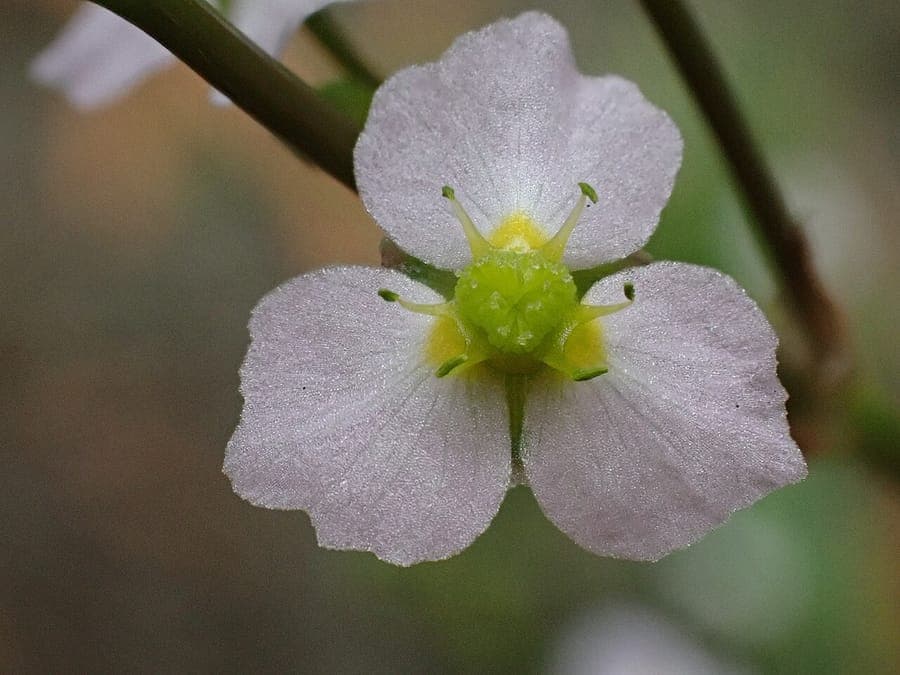
Chloe and Trevor Van Loon / CC BY 4.0, via Wikimedia Commons
Narrow-leaf water-plantain: complete guide
Alisma lanceolatum
Want to see Narrow-leaf water-plantain: complete guide in your garden?
1 minute, no credit card
Overview
Narrow-leaf water-plantain, or Alisma lanceolatum, is a graceful marginal pond plant native across much of Europe and parts of Asia. It thrives in shallow water at the edges of ponds, ditches, and marshes, bringing a delicate vertical accent to waterside planting schemes. Unlike its broader-leaved relative Alisma plantago-aquatica, this species has thinner, lance-shaped leaves that give it a lighter, more elegant profile. If you're aiming for a naturalistic pond edge, this is one plant that earns its place.
It's a perennial in USDA hardiness zones 5–9 and grows 30–70 cm tall, making it ideal for mid-layer planting in small to medium ponds. The plant spreads slowly via creeping rhizomes but isn't invasive, so it won't take over your water feature. For gardeners designing pond layouts, gardenworld.app offers intuitive tools to map out plant spacing and depth zones tailored to species like Alisma lanceolatum.
Appearance & bloom cycle
The foliage forms a basal rosette of narrow, lanceolate leaves 10–25 cm long and about 1–2 cm wide. These emerge from short stems near the water's surface. From May through September, slender, upright flowering stalks rise above the foliage, bearing small flowers in loose panicles. Each flower is 1–1.5 cm wide, with three white to pale purple petals and a yellow central eye.
Bloom starts in early summer and continues in waves, giving you a long season of subtle interest. The flowers aren't flashy, but their persistence and airy structure make them perfect for cottage-style or wildlife ponds. As the season ends, seed heads form and persist into autumn, adding textural value and supporting pollinators.
Ideal location
This plant needs plenty of sunlight-aim for a 7 out of 10 on the light scale. A south- or west-facing pond margin is ideal, where it can receive at least 6–7 hours of direct sun daily. It grows best in shallow water, 5–20 cm deep, so plant it on a pond shelf or use a planting basket set at the right depth.
Avoid deep water or full submersion-Alisma lanceolatum is not a submerged species. The leaves must stay above water to photosynthesize properly. Also avoid heavily shaded spots; in low light, the plant becomes leggy and rarely blooms. For gardeners planning a new pond edge, gardenworld.app lets you preview plant combinations and simulate seasonal growth patterns.
Soil requirements
Use a heavy, loamy pond substrate with minimal organic enrichment. A mix of clay, silt, and a bit of composted leaf matter works well. Avoid light, sandy soils-they wash away too easily and don't anchor the roots. Plant in a 18–22 cm wide aquatic basket, and top with a thin layer of gravel to prevent fish from disturbing the soil.
The ideal pH range is neutral to slightly alkaline: 7.0–7.5. If your pond water runs acidic, test regularly and adjust with small amounts of limestone grit if needed. Over-fertilizing can lead to algae blooms, so skip liquid fertilizers entirely.
Free design
Want to see Narrow-leaf water-plantain: complete guide in your garden? Make a free design now.
Watering
As a true aquatic, it requires constantly saturated conditions. Keep the roots submerged at all times. In container ponds or water barrels, top up regularly-especially during hot, dry spells in July and August. Rainwater is best; tap water may contain chlorine or high mineral levels that stress the plant over time.
If your pond level drops significantly, reposition the basket to maintain water depth. Never let the crown dry out. This plant won't survive drought, even for short periods.
Pruning
Pruning isn't strictly necessary, but removing dead or damaged leaves and spent flower stalks improves appearance and discourages rot. Use clean, sharp snips from June through September. In late autumn, cut back all top growth to about 5 cm above the soil.
Leave some dried stems standing if you support overwintering insects-many beneficial bugs shelter in hollow stalks. Just be sure to clean your tools between cuts to prevent disease spread.
Maintenance calendar
- Jan: Dormant. Check basket integrity.
- Feb: Still dormant. Prepare for spring.
- Mar: Watch for new shoots.
- Apr: Divide rhizomes if overcrowded.
- May: Begin blooming. Monitor water depth.
- Jun: Peak bloom. Remove old flowers.
- Jul: Continue blooming. Top up water.
- Aug: Watch for aphids on new growth.
- Sep: Bloom tapers. No feeding.
- Oct: Cut back foliage if desired.
- Nov: Protect roots from frost.
- Dec: Full dormancy.
Winter hardiness
Hardy in USDA zones 5–9, Alisma lanceolatum survives winter as long as the rhizomes stay submerged below the frost line. In deeper ponds (minimum 30 cm depth), the plant overwinters with no extra care. In small containers or shallow ponds, insulate with pond fleece or move baskets to deeper water.
Avoid letting the surface ice over completely-keep a portion open for gas exchange. A floating de-icer can help in colder climates.
Companion plants
Pair with other marginal plants like Yellow Flag Iris (Iris pseudacorus), Brooklime (Veronica beccabunga), or Water Forget-me-not (Myosotis scorpioides). For height contrast, add Flowering Rush (Butomus umbellatus) or Soft Rush (Juncus effusus) behind it. On drier ground nearby, try Meadowsweet (Filipendula ulmaria) or Purple Loosestrife (Lythrum salicaria).
Avoid aggressive spreaders like Water Hyacinth or Parrot's Feather, which can smother slower growers.
Closing
Narrow-leaf water-plantain is a quiet achiever in the pond garden-unobtrusive but invaluable. Its long bloom season, low maintenance, and wildlife benefits make it a smart choice for naturalistic designs. Buy it from garden centres, or order online from specialist aquatic suppliers. Look for healthy rhizomes with fresh green shoots.
When planning your pond edge, use gardenworld.app to create a custom planting plan that accounts for water depth, light, and companion species. You can also generate a monthly care reminder tailored to your local climate zone.
Want to see Narrow-leaf water-plantain: complete guide in your garden? Make a free design now.
Upload a photo, pick a style, and get a photorealistic design with plant list in under a minute.
No credit card required


Similar plants
California damsonium: complete guide
Damasonium californicum
Full guide to Damasonium californicum (California damsonium): shallow water, bog soil, care and companion plants for this rare western aquatic.
Yellow water lily: complete guide
Limnocharis flava
Discover the yellow water lily. Everything you need to know about cultivation, care and water placement.
Sagittaria subulata: complete guide
Sagittaria subulata
Discover narrow-leaf arrowhead (Sagittaria subulata), an aquatic plant for ponds and water gardens. Complete cultivation and care guide.