
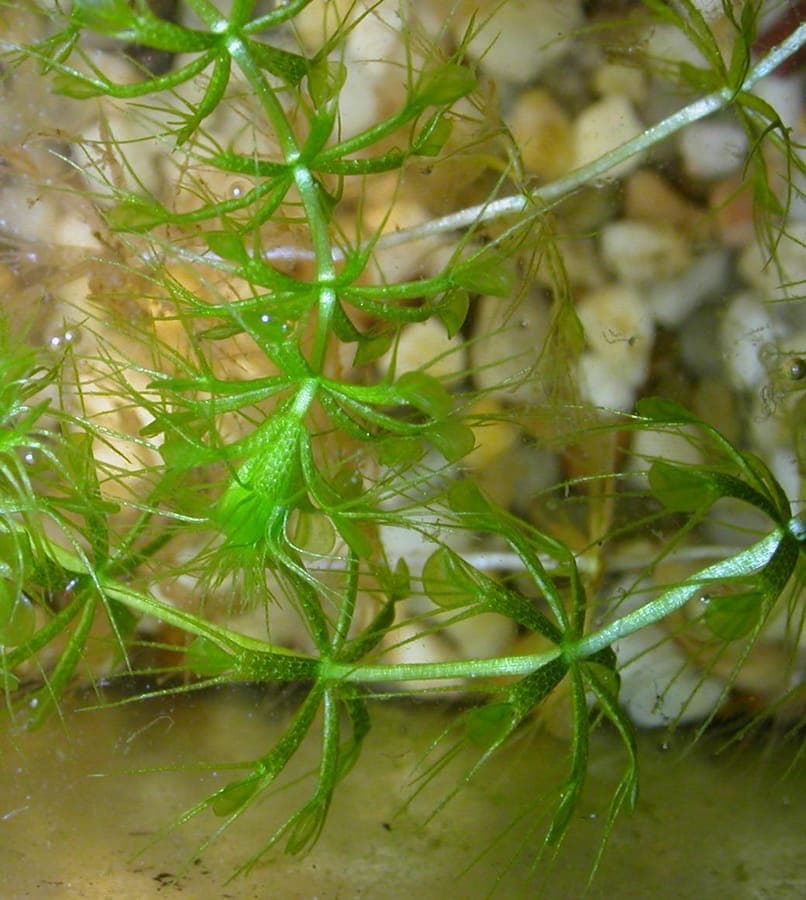
Wikimedia Commons / CC BY-SA 3.0, via Wikimedia Commons
Waterwheel plant: complete guide
Aldrovanda vesiculosa
Want to see Waterwheel plant: complete guide in your garden?
1 minute, no credit card
Overview
The waterwheel plant (Aldrovanda vesiculosa) is one of the most intriguing aquatic carnivores in the world. Native to scattered wetlands across Eastern Europe, Africa, and parts of Asia, it's a rootless, free-floating perennial that thrives in still, acidic waters. While rare in the wild and protected in many regions, it can be grown successfully in garden ponds, outdoor containers, or shallow aquariums - if you meet its exacting needs. On gardenworld.app, you can design a custom pond layout that suits the waterwheel plant's specific light and water depth requirements, so it doesn't get lost in a larger water feature.
A member of the Droseraceae family, Aldrovanda shares its snap-trap mechanism with the Venus flytrap. But instead of growing in soil, it drifts in water, capturing tiny aquatic organisms like mosquito larvae and daphnia. Its traps are incredibly fast, closing in under 100 milliseconds. Though delicate, this plant can multiply rapidly under the right conditions.
Appearance & bloom cycle
The waterwheel plant lives up to its name with a whorled arrangement of leaves radiating from a central stem, resembling a tiny watermill. Each stem grows 6–10 cm long and produces 6 to 9 pairs of modified leaves, each tipped with a small, toothed trap about 3–5 mm wide. These traps are sensitive to touch and snap shut when triggered.
Flowering is uncommon in cultivation. When it does occur, it produces a tiny white flower, about 4–6 mm across, on a short stalk rising from a leaf axil. Bloom time is typically in August. The flower rarely sets seed outside its native habitat, so propagation is usually vegetative - through stem fragmentation.
Ideal location
Aldrovanda needs high light: a 7 out of 10 on the intensity scale. Position it in full sun or very light shade, receiving at least 6 hours of direct sunlight daily. In a garden pond, place it in shallow water - no deeper than 30 cm - where it can get maximum light penetration. Use a floating mesh basket or a clear plastic container to keep it contained.
In an aquarium, opt for a wide, shallow tank (20–30 cm depth) with strong LED lighting on a 12–14 hour cycle. Avoid deep tanks, as light diminishes quickly in water. Position your setup in a bright spot, and use gardenworld.app to simulate sun exposure across your garden or patio to pinpoint the best microclimate for your aquatic carnivore.
Avoid strong water movement. Filters and fountains can damage the fragile traps or push the plant into darker zones. Still or very gently circulated water is best.
Soil requirements
Since Aldrovanda has no roots and floats freely, traditional soil is irrelevant. However, water chemistry is critical. The pH must be acidic: 5.0 to 5.5 is ideal. Use only rainwater, distilled water, or reverse osmosis water - never tap water, which contains minerals that will kill the plant over time.
Do not add fertilizers or nutrient-rich substrates. Aldrovanda gets all the nutrients it needs from captured prey. If you want to anchor it temporarily, use inert materials like clean quartz sand or peat moss, but keep them separate from direct contact with the plant.
Free design
Want to see Waterwheel plant: complete guide in your garden? Make a free design now.
Watering
Watering, in this case, means maintaining water quality. Keep the water clean, soft, and slightly acidic. Change 20–30% of the water every 1–2 weeks with fresh rainwater. Temperature is crucial: aim for 20–30°C during the growing season. Below 15°C, growth slows; above 35°C, the plant may die.
Never use chlorinated water or algaecides. These are toxic. If you must use tap water, let it sit for 48 hours to off-gas chlorine, but rainwater is always better. Monitor for algae - a thin film is normal, but thick growth blocks light and competes for oxygen.
Pruning
Pruning isn't usually necessary. You can trim dead or brown stem tips with sterilized scissors, but never cut more than 1–2 cm from the growing tip, as that's where new growth emerges. If the stem exceeds 15 cm, you can gently break it into 5–7 cm segments - each can grow into a new plant.
Wash your hands after handling. While not toxic, the plant's secretions may irritate sensitive skin.
Maintenance calendar
- January: Dormant phase. Keep cold (5–10°C). Minimal activity.
- February: Maintain cool temperatures. Check for rot.
- March: Gradually increase temperature and light (12 hours/day).
- April: Active growth begins. Water changes every 10 days.
- May: Use rainwater. Protect from intense midday sun if needed.
- June: Peak light exposure. Monitor for algae buildup.
- July: Rapid growth. Divide if overcrowded.
- August: Possible flowering. Keep water under 32°C.
- September: Growth slows. Reduce light gradually.
- October: Prepare for dormancy. Stop propagation.
- November: Lower temperature to around 10°C. Reduce water changes.
- December: Keep cool and dark. Turions survive in cold water.
Winter hardiness
Aldrovanda is not hardy in temperate climates. It survives winter as a turion - a tight, dormant bud that sinks and withstands cold (5–10°C). Store turions in a container of rainwater in an unheated garage or cold frame, away from freezing. Do not let the water dry out.
In USDA zones 9–10, overwintering in a deep pond is possible, but not recommended in most of the UK or northern US.
Companion plants
Choose companions that prefer low-nutrient, acidic water. Dwarf water lilies (Nymphaea spp.), small bladderworts (Utricularia), or bog moss (Sphagnum) work well. Avoid fish, snails, or tadpoles - they eat the prey or damage the plant.
In aquariums, Amano shrimp or small nerite snails are safe, as they don't disturb the traps.
Closing
The waterwheel plant isn't for casual gardeners, but it's rewarding for those who enjoy a challenge. Stick to pure water, high light, and stable temperatures. Purchase from reputable carnivorous plant nurseries or garden centres like those found at major garden centres - avoid wild-collected specimens.
If you're unsure where to place your Aldrovanda in your outdoor space, use gardenworld.app to model sunlight, water depth, and seasonal changes. A well-planned aquatic zone can make all the difference in keeping this rare beauty alive year after year.
Want to see Waterwheel plant: complete guide in your garden? Make a free design now.
Upload a photo, pick a style, and get a photorealistic design with plant list in under a minute.
No credit card required


Similar plants
Threadleaf sundew: complete guide
Drosera filiformis
Everything about Drosera filiformis, the threadleaf sundew from North America: cultivation, substrate, watering, and overwintering of this carnivorous bog plant.
Cape Sundew: complete guide
Drosera capensis
The fascinating Cape Sundew is a carnivorous plant with sticky leaves. Learn how to grow this unique plant successfully and watch it thrive.
Great sundew: complete guide
Drosera anglica
How to grow Drosera anglica in acidic, wet soil with full sun. Perfect for bog gardens and natural wetland plantings in temperate climates.