
Chrumps / CC BY-SA 4.0, via Wikimedia Commons
Hairy lady's mantle: complete guide
Alchemilla monticola
Want to see Hairy lady's mantle: complete guide in your garden?
1 minute, no credit card
Overview
Alchemilla monticola, commonly known as hairy lady's mantle, is a graceful perennial that brings texture and subtle charm to shaded and moist garden corners. Native to mountainous regions across central and eastern Europe, as well as parts of northern China, this species thrives where other plants often struggle-cool, damp spots under tree canopies or on north-facing slopes. Unlike its more widespread relative Alchemilla mollis, monticola is less prone to self-seeding and holds up better in wetter soils, making it a smarter long-term choice for controlled designs.
One of its most enchanting features is the way water beads up on its densely hairy leaves, creating jewel-like droplets in the morning light. This isn't just decorative-it helps the plant retain moisture and regulate temperature. Whether you're designing a woodland edge or a cottage-style border, this plant adds softness without overwhelming. On gardenworld.app, you can visualise how Alchemilla monticola fits into your overall planting scheme, especially if you're aiming for a naturalistic feel.
Appearance & bloom cycle
Hairy lady's mantle forms a low, spreading mound between 30 and 45 cm tall. The leaves are palmate, deeply lobed (7–9 segments), and covered in fine, soft hairs that give them a silvery-green hue. Each leaf measures 8–12 cm across and overlaps to form a lush, weed-suppressing ground cover.
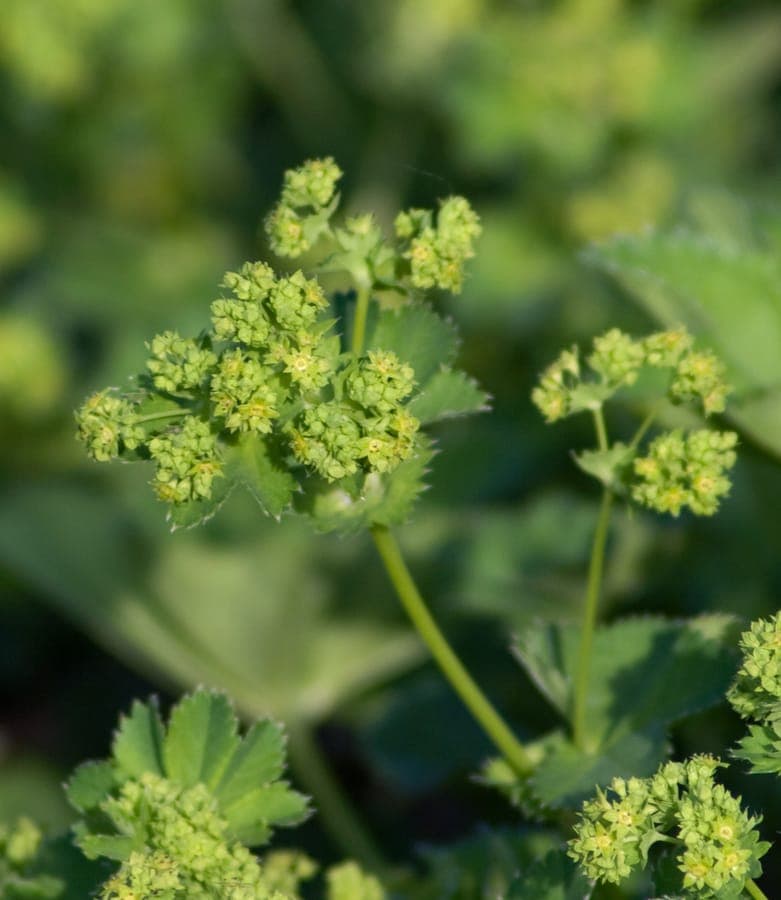
From June to August, airy sprays of tiny yellow-green flowers rise just above the foliage. Individual flowers are only 3–4 mm wide but appear in such abundance that they create a luminous haze. The bloom period is long and attracts hoverflies and small pollinators. While not flashy, the flowers add a gentle rhythm to the border, especially when backlit by afternoon sun.
Ideal location
This plant prefers partial to full shade, thriving in light values between 5 and 7 on a 1–10 scale. It does best in cool, sheltered spots-under deciduous shrubs, along woodland paths, or at the base of north-facing walls. In hot climates (USDA zones 7 and above), avoid afternoon sun to prevent leaf scorch.
It's particularly effective in damp, shaded areas where grass won't grow, such as under dense tree roots or on sloped banks with consistent moisture. If you're unsure whether your garden conditions suit Alchemilla monticola, use gardenworld.app to map your light and moisture levels for accurate planting recommendations.
Free design
Want to see Hairy lady's mantle: complete guide in your garden? Make a free design now.
Soil requirements
The ideal soil is moist, humus-rich, and well-drained, with a pH between 5.5 and 6.5. It tolerates clay soils as long as they don't become waterlogged. Sandy soils can work if amended with compost to improve water retention. Avoid highly alkaline or chalky soils, which may cause chlorosis.
When planting, mix in a generous handful of compost or leaf mould into the planting hole. No additional fertiliser is needed-this is not a heavy feeder.
Watering
Keep the soil consistently moist, especially during the first growing season and in dry spells. Mulching with organic matter in spring helps retain moisture and suppress weeds. Once established, it can tolerate short dry periods, but prolonged drought will cause leaf browning and reduced vigour.
Pruning
After flowering, cut back spent flower stems to maintain a tidy appearance and reduce self-seeding. The foliage often remains semi-evergreen through winter in milder zones. In late winter or early spring (February–March), remove any damaged or tattered leaves to make way for fresh growth.
Maintenance calendar
- Jan: Dormant; no action
- Feb: Clear old foliage
- Mar: New growth emerges
- Apr: Monitor moisture
- May: Maintain consistent watering
- Jun: Flowers begin; watch for slugs
- Jul: Peak bloom; water during dry spells
- Aug: Continue bloom; deadhead if desired
- Sep: Allow seed heads to develop if naturalising
- Oct: Leave foliage for winter protection
- Nov: Plant retreats; no care needed
- Dec: Dormant period
Winter hardiness
Alchemilla monticola is hardy to USDA zone 5 (-20°C). It reliably survives winter without protection in zones 5–8. Foliage may die back or turn brown, but the crown remains alive. Avoid cutting back too early-old leaves insulate the plant over winter.
Companion plants
This plant pairs beautifully with other moisture-loving perennials like astilbe, hosta, ferns, and ligularia. It contrasts well with bold-leaved plants or softens the look of upright grasses. Try combining it with white-flowering pulmonaria, blue bugle (Ajuga reptans), or variegated sedge (Carex oshimensis 'Evergold').
Avoid aggressive spreaders or plants that dry out the soil quickly. In a cottage garden, it works well with campanula or astrantia. For a woodland scheme, pair it with epimedium or anemone nemorosa.
Closing
Hairy lady's mantle won't shout for attention, but it earns its place through reliability, texture, and quiet beauty. It's a low-fuss plant that thrives in tricky spots and supports pollinators. You'll find it at garden centres across the UK and US, often near shade-tolerant perennials. Use gardenworld.app to plan where it fits best in your garden's microclimates and create a design that balances moisture, light, and plant compatibility.
Want to see Hairy lady's mantle: complete guide in your garden? Make a free design now.
Upload a photo, pick a style, and get a photorealistic design with plant list in under a minute.
No credit card required


Similar plants
Siberian crab apple: complete guide
Malus x robusta
Complete guide to the Siberian crab apple (Malus x robusta): location, soil, pruning, winter hardiness and the best companion plants for your garden.
Chinese flowering crabapple (Malus x spectabilis): complete guide
Malus x spectabilis
Meet the Chinese flowering crabapple (Malus x spectabilis): a classic spring bloomer with carmine buds and pink blossom.
Potentilla crassinervia: complete guide
Potentilla crassinervia
Potentilla crassinervia, the Corsican cinquefoil, grows wild on Corsica and Sardinia's peaks. Discover how to grow this hardy alpine rock garden gem.