
Anneli Salo / CC BY-SA 3.0, via Wikimedia Commons
Silky lady's mantle: complete guide
Alchemilla glaucescens
Want to see Silky lady's mantle: complete guide in your garden?
1 minute, no credit card
Overview
Alchemilla glaucescens, commonly known as silky lady's mantle, is a refined and often overlooked perennial that brings subtle elegance to the garden. Native to eastern and central Europe - from the Baltic States to the Balkans - it thrives in cool, moist, partially shaded spots with well-drained, humus-rich soil. Unlike its more rampant cousin Alchemilla mollis, this species spreads slowly, forming neat clumps that don't take over your border. That makes it ideal for smaller gardens or structured designs where control matters.
It's a plant that doesn't shout, but once you notice it, you'll appreciate its silvery-blue foliage and delicate yellow sprays. It's perfect for naturalistic planting schemes, woodland edges, or between stepping stones where moisture lingers. On gardenworld.app, you can visualise how this plant fits into a layered planting design, pairing it with taller perennials and ground-level companions for year-round texture.
Appearance & bloom cycle
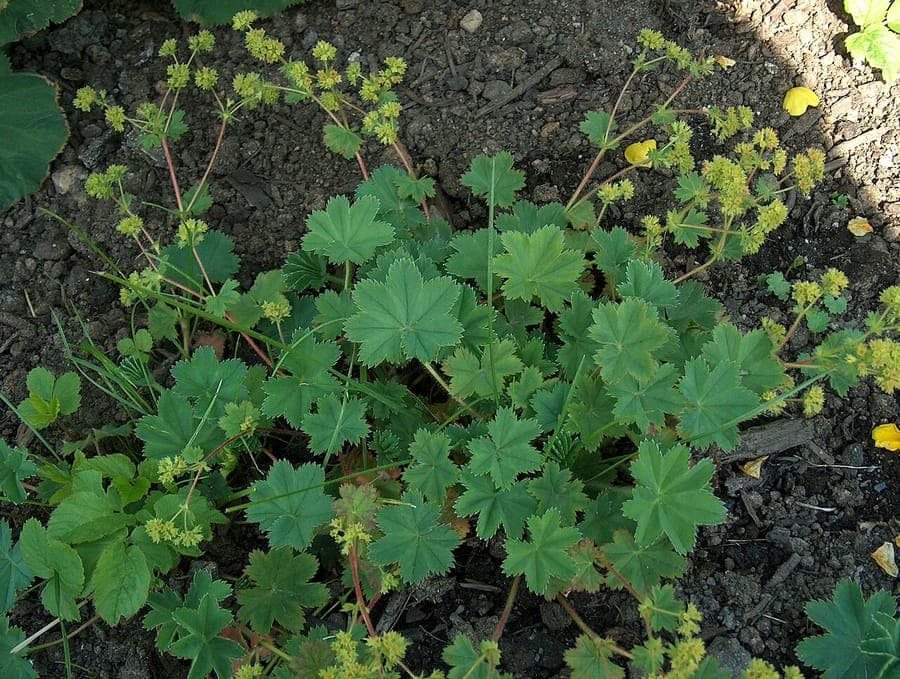
The leaves of Alchemilla glaucescens are rounded, deeply lobed, and covered in a fine, soft down that gives them a silky, reflective sheen. They're typically 5–10 cm across, slightly smaller than mollis, and carry a distinctive bluish-green hue - hence the species name glaucescens. The foliage stays fresh and dense all summer, rarely succumbing to mildew if given proper air circulation.
From June to August, slender stems rise 30–40 cm tall, bearing loose sprays of tiny yellow-green flowers. The blooms aren't showy in a traditional sense, but they add soft volume and light to the border. They're highly attractive to pollinators, especially hoverflies and small bees. Even after flowering, the seed heads remain ornamental, catching dew and light beautifully in early morning.
Self-seeding is minimal, so you won't find seedlings popping up everywhere - a welcome relief compared to other Alchemilla species.
Ideal location
Choose a spot with partial to light shade - around light level 7 on a 1–10 scale. Think north- or east-facing walls, beneath open-canopy trees like birch or alder, or in woodland clearings. It can tolerate morning sun but will struggle in hot afternoon sun, especially in dry soils.
This plant excels in naturalistic schemes, cottage gardens, or gravel beds with moisture-retaining mulch. Use it as a mid-layer plant to soften edges or link taller perennials like Digitalis or Echinacea with lower growers like Ajuga or Tiarella. On gardenworld.app, you can build a custom planting plan that shows spacing and seasonal growth, helping you avoid overcrowding.
Soil requirements
Silky lady's mantle prefers moist but well-drained soil with a pH between 5.0 and 5.5. It does best in loamy or clay-loam soils rich in organic matter. If your soil is sandy, amend it with compost or well-rotted manure to improve water retention. Avoid highly alkaline or compacted soils - this plant dislikes lime and poor drainage.
A 5–8 cm mulch of leaf mould or compost in spring helps retain moisture and suppress weeds. Don't pile mulch against the crown - it can lead to rot. The key is consistent moisture without waterlogging.
Free design
Want to see Silky lady's mantle: complete guide in your garden? Make a free design now.
Watering
Water regularly during the first growing season, especially in dry spells. Once established, it's moderately drought-tolerant but looks best when soil stays evenly moist. Water at the base to avoid wetting the foliage, which can encourage fungal issues in humid conditions.
In summer droughts, give a deep soak once a week. Rainwater is ideal - tap water with high calcium content can raise soil pH over time, leading to yellowing leaf margins.
Pruning
This plant needs very little pruning. In late winter or early spring, cut back old foliage to make way for fresh growth. Use clean, sharp shears and remove only dead or damaged leaves - don't cut into the crown.
If you want to prevent any self-seeding (though rare), deadhead after flowering. Otherwise, leave the stems standing through autumn for structural interest and to support overwintering insects.
Maintenance calendar
- Jan: Check for winter damage, remove collapsed leaves
- Feb: Prepare for spring growth, top up mulch if needed
- Mar: Cut back old foliage, watch for new shoots
- Apr: Water young plants regularly, mulch to retain moisture
- May: Monitor soil moisture, protect from late frosts
- Jun-Aug: Peak bloom! Keep soil moist, avoid overhead watering
- Sep: Remove spent flower stems or leave for wildlife
- Oct: Apply fresh mulch, reduce watering as growth slows
- Nov: No action needed, plant goes dormant
- Dec: Leave standing foliage for winter texture, only cut if unsightly
Winter hardiness
Alchemilla glaucescens is fully hardy in USDA zones 4–8 (-34°C to -12°C). It dies back in autumn but returns reliably each spring from its robust root system. No winter protection is needed in most temperate climates, though a light mulch in zone 4 can help in exposed sites.
The plant's dormancy is clean - no messy foliage to clear in spring, just a fresh flush of silvery growth.
Companion plants
Pair with plants that share its preference for cool, moist, partially shaded conditions:
- Geranium phaeum – deep maroon flowers, similar spread
- Athyrium filix-femina – adds feathery texture in damp areas
- Carex montana – grass-like contrast, evergreen
- Hosta – bold foliage for contrast
- Tiarella cordifolia – low-growing, shade-tolerant ground cover
Avoid aggressive spreaders like mint or ground elder - they'll overwhelm this gentle plant.
Closing
Alchemilla glaucescens is a quietly confident performer in the perennial border. It doesn't demand attention, but it earns admiration for its silvery foliage, pollinator-friendly blooms, and neat habit. It's perfect for gardeners who value subtlety, structure, and sustainability.
You can find it at most garden centres, especially those focusing on perennials or shade plants. Look for healthy, well-rooted pots - avoid any with yellowing leaves or soggy compost. And before planting, check gardenworld.app to see how this species ages over time and how it interacts with neighbours in a mixed border.
Want to see Silky lady's mantle: complete guide in your garden? Make a free design now.
Upload a photo, pick a style, and get a photorealistic design with plant list in under a minute.
No credit card required


Similar plants
Siberian crab apple: complete guide
Malus x robusta
Complete guide to the Siberian crab apple (Malus x robusta): location, soil, pruning, winter hardiness and the best companion plants for your garden.
Chinese flowering crabapple (Malus x spectabilis): complete guide
Malus x spectabilis
Meet the Chinese flowering crabapple (Malus x spectabilis): a classic spring bloomer with carmine buds and pink blossom.
Potentilla crassinervia: complete guide
Potentilla crassinervia
Potentilla crassinervia, the Corsican cinquefoil, grows wild on Corsica and Sardinia's peaks. Discover how to grow this hardy alpine rock garden gem.