
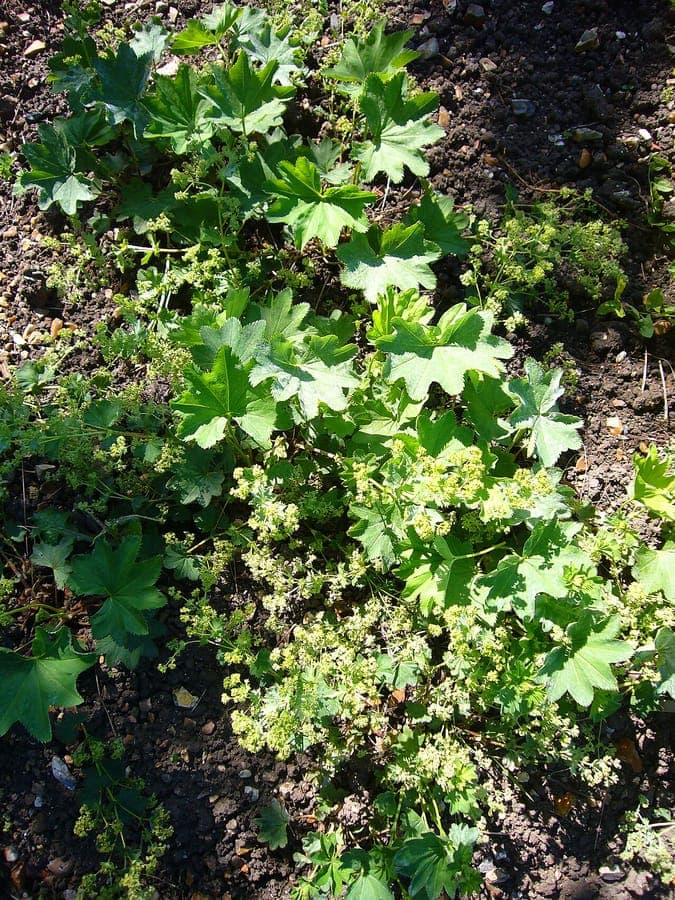
Magnus Manske / CC BY-SA 3.0, via Wikimedia Commons
Smooth lady's-mantle: complete guide
Alchemilla glabra
Want to see Smooth lady's-mantle: complete guide in your garden?
1 minute, no credit card
Overview
Smooth lady's-mantle, or Alchemilla glabra, is a refined yet understated perennial that brings quiet elegance to garden spaces. Native to parts of Central and Northern Europe - including Austria, Finland, and France - this species thrives in cool, moist conditions much like those found across the UK and northern US zones. Unlike its fuzzier cousin Alchemilla mollis, Alchemilla glabra has smooth, hairless foliage, giving it a sleeker, more polished appearance.
Growing to about 12–18 inches (30–45 cm) tall, it forms a neat, mounding clump that slowly spreads via short rhizomes. It's not invasive, making it a reliable groundcover in shaded corners or woodland gardens. Gardeners who appreciate structure without dominance will find this plant a quiet achiever in border design.
On gardenworld.app, you can create a custom garden plan that integrates Smooth lady's-mantle into shaded, moisture-rich areas with compatible companions.
Appearance & bloom cycle
The leaves are palmate with 7–9 deeply cut lobes, glossy on top, and lack the fine hairs seen in other Alchemilla species. This smooth texture makes them less prone to fungal issues in humid conditions. Morning dew clings beautifully to the scalloped edges, creating a sparkling effect that lasts until mid-morning.
From late June through August, delicate sprays of lime-green flowers rise above the foliage on slender, upright stems. The blooms are tiny and petal-less, typical of the genus, but their airy texture adds softness to planting schemes. They attract hoverflies and small pollinators, increasing biodiversity. Seed heads persist into autumn, offering subtle winter interest.
Ideal location
Smooth lady's-mantle prefers partial to full shade, thriving best at light level 7 - meaning dappled sunlight or morning sun with afternoon shade. East- or north-facing borders are ideal. In full sun, especially in USDA zones 7 and higher, the leaves may scorch or wilt during dry spells.
It excels in moist woodland edges, shaded rock gardens, or along the edges of streams and ponds. Avoid hot, south-facing spots unless the soil stays consistently damp.
Soil requirements
This plant favors humus-rich, well-drained soil that stays evenly moist. The ideal pH range is 5.5 to 6.5 - slightly acidic to neutral. Amend heavy clay with compost and coarse grit to improve drainage, while sandy soils benefit from organic matter to retain moisture.
Avoid alkaline or chalky soils, as they can lead to chlorosis. A 2-inch (5 cm) layer of leaf mould or compost applied in spring helps maintain moisture and feeds the roots gradually.
Free design
Want to see Smooth lady's-mantle: complete guide in your garden? Make a free design now.
Watering
Water regularly during dry periods, especially in the first growing season. Aim for 1 inch (2.5 cm) of water per week, either from rainfall or irrigation. Water at the base to prevent wet foliage, which can encourage powdery mildew.
Rainwater is preferable, as tap water with high lime content may affect long-term health. Mulching helps reduce evaporation and keeps roots cool.
Pruning
No heavy pruning is needed. Deadhead spent flower spikes to maintain neatness and prevent light self-seeding. In late autumn or early spring, cut back any tattered or damaged foliage to make room for fresh growth.
Some gardeners leave the foliage intact over winter for texture and protection, as it's semi-evergreen in milder climates.
Maintenance calendar
- Jan: Check for frost heave; protect exposed roots with mulch.
- Feb: Prepare soil with compost; divide mature clumps if needed.
- Mar: Plant new specimens; watch for slugs on emerging shoots.
- Apr: Begin regular watering; apply mulch to retain moisture.
- May: Monitor for aphids; ensure soil stays moist.
- Jun: Flowers emerge; deadhead after bloom.
- Jul: Maintain moisture; inspect for fungal issues in humid weather.
- Aug: Continue watering; collect seeds if desired.
- Sep: Divide plants if overcrowded; transplant seedlings.
- Oct: Cut back damaged leaves; mulch around base.
- Nov: Reduce watering; clear fallen leaves to prevent rot.
- Dec: Minimal care; ensure good drainage before freeze.
Winter hardiness
Smooth lady's-mantle is hardy in USDA zones 4–8. It tolerates winter lows down to -30°C (-22°F) when well-mulched. In colder zones, a light mulch of straw or leaves protects young plants. The foliage often remains semi-evergreen, providing structure in dormant borders.
Companion plants
Pair with shade-tolerant perennials like Tiarella, Heuchera, or Athyrium ferns. The soft green flowers contrast beautifully with deep purple Hellebores or blue Pulmonaria. For a naturalistic look, combine with Carex grasses or Tellima in damp, shady corners.
Use gardenworld.app to visualize planting schemes with Smooth lady's-mantle and test color and texture combinations before planting.
Closing
Smooth lady's-mantle is a quiet powerhouse in the shade garden - low maintenance, long-lived, and ecologically beneficial. It fills gaps with grace and adds texture without overwhelming. Whether tucked beneath shrubs or used in a modern gravel garden with moisture control, it adapts beautifully. Find it at local garden centres or specialty nurseries. With the right spot and a little care, it will return reliably each year, bringing subtle charm to your outdoor space.
Want to see Smooth lady's-mantle: complete guide in your garden? Make a free design now.
Upload a photo, pick a style, and get a photorealistic design with plant list in under a minute.
No credit card required


Similar plants
Siberian crab apple: complete guide
Malus x robusta
Complete guide to the Siberian crab apple (Malus x robusta): location, soil, pruning, winter hardiness and the best companion plants for your garden.
Chinese flowering crabapple (Malus x spectabilis): complete guide
Malus x spectabilis
Meet the Chinese flowering crabapple (Malus x spectabilis): a classic spring bloomer with carmine buds and pink blossom.
Potentilla crassinervia: complete guide
Potentilla crassinervia
Potentilla crassinervia, the Corsican cinquefoil, grows wild on Corsica and Sardinia's peaks. Discover how to grow this hardy alpine rock garden gem.