
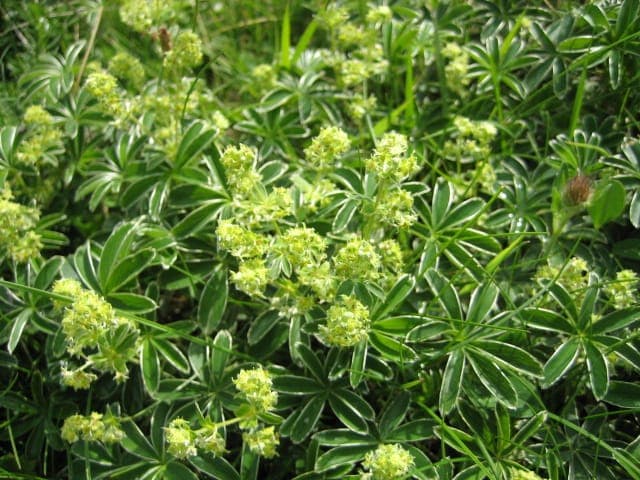
Rémih / CC BY-SA 3.0, via Wikimedia Commons
Alpine lady's-mantle: complete guide
Alchemilla alpina
Want to see Alpine lady's-mantle: complete guide in your garden?
1 minute, no credit card
Overview
Alpine lady's-mantle (Alchemilla alpina) isn't the kind of plant that shouts for attention. It doesn't have showy flowers or dramatic height. Instead, it earns its place in the garden through quiet resilience and delicate charm. Native to alpine and subalpine regions across northern and central Europe-including the Alps, Scandinavia, and parts of the British Isles-this hardy herb forms dense, creeping mats that thrive in cool, well-drained settings. It's ideal for gardeners who appreciate understated beauty and naturalistic planting.
On gardenworld.app, you can design a planting scheme that highlights Alchemilla alpina's subtle texture, especially in rock gardens or shaded corners where its water-beading leaves catch the light.
Appearance & bloom cycle
This perennial grows 10–15 cm tall and spreads slowly to about 20–25 cm wide. The leaves are rounded, deeply lobed, and covered in fine hairs that make them highly water-repellent. When it rains, tiny droplets form perfect beads on the surface-a signature trait of lady's-mantles. The foliage is dark green with a soft, velvety texture and prominent net-like veining.
Flowering occurs in July and August. The blooms are small, star-shaped, and greenish in colour, held in tight clusters on slender stems just above the foliage. While not flashy, these flowers attract beneficial insects like hoverflies and small bees. The plant maintains a neat, compact habit throughout the season, forming an excellent ground cover on gentle slopes or in crevices.
Ideal location
Alchemilla alpina thrives in full sun to partial shade, scoring a 9 out of 10 on the light scale. This means it does best with at least 6 hours of direct sunlight daily, though it tolerates light shade, especially in hotter climates. In full sun, the plant stays compact and dense. In deeper shade, it may become leggy and less vigorous.
Use it in rock gardens, between paving stones, on dry stone walls, or as a low border along woodland paths. Avoid hot, south-facing slopes without some afternoon shade, especially in regions with long, dry summers.
Soil requirements
This species prefers acidic to strongly acidic soil, with a pH between 4.0 and 4.5. It does not tolerate lime or alkaline conditions. The soil should be humus-rich, well-drained, and light-never heavy clay or waterlogged. If your soil is neutral or alkaline, grow it in a raised bed or container with ericaceous compost.
In the wild, it grows on rocky outcrops and gravelly slopes, so mimic those conditions: mix in sand, perlite, or fine grit to improve drainage. A top dressing of pine bark or leaf mould helps retain moisture without compaction.
Free design
Want to see Alpine lady's-mantle: complete guide in your garden? Make a free design now.
Watering
Keep the soil consistently moist but never soggy during the growing season (April to September). Water deeply during dry spells, especially in the first year after planting. Once established, it's moderately drought-tolerant but still benefits from occasional watering in prolonged dry periods.
Avoid overhead watering with hard tap water, which can raise pH and leave lime deposits. Rainwater is ideal. Mulching with pine needles or acidic compost helps retain moisture and stabilises soil pH.
Pruning
Minimal pruning is needed. In early spring, cut back any old, tattered, or winter-damaged foliage to make way for fresh growth. This also improves air circulation and reduces the risk of fungal issues.
You can deadhead the spent flower spikes if you prefer a tidier look, but leaving them in place supports overwintering insects and allows for light self-seeding in suitable conditions.
Maintenance calendar
- January: Check for winter damage; remove any collapsed leaves.
- February: Dormant period-no action needed.
- March: Clear old foliage; inspect for weeds.
- April: Apply a light layer of organic compost.
- May: Monitor soil moisture; protect from late frosts.
- June: No major tasks-plant prepares to bloom.
- July: In full bloom; watch for drought stress.
- August: Flowers fading; trim if desired.
- September: Reduce watering; stop feeding.
- October: Mulch lightly with leaf mould or compost.
- November: Plant dies back; leave some stems for habitat.
- December: Minimal care-ensure drainage is intact.
Winter hardiness
Alchemilla alpina is fully hardy down to USDA zone 3 (-30°C). It survives harsh winters with little to no protection. In milder zones, some foliage may remain semi-evergreen, adding texture to the winter garden. Snow cover acts as natural insulation. In areas with dry, freezing winds, a light layer of pine boughs can help prevent desiccation.
Companion plants
Pair it with other alpine or rock garden plants like Sedum acre, Thymus praecox, or Veronica umbrosa. It also works well with small ferns (e.g., Dryopteris filix-mas), heathers (Calluna vulgaris), or low-growing ornamental grasses. Its soft texture contrasts beautifully with spiky sedums or wiry grasses.
Try planting it near taller perennials like Geranium sylvaticum or Filipendula ulmaria, where it can serve as a living mulch, suppressing weeds and retaining moisture.
On gardenworld.app, you can visualise these plant combinations and create a layered garden design that balances texture, height, and bloom time.
Closing
Alpine lady's-mantle is a quiet achiever in the garden-no fireworks, just steady presence and subtle beauty. It asks for little: acidic soil, good drainage, and a spot with plenty of light. Once settled, it forms a durable, weed-suppressing carpet that lasts for years. Look for it at garden centres in spring, especially at trusted retailers like garden centres across the UK. Plant it where you can enjoy its rain-kissed leaves and quiet bloom, and let it do its thing-low, slow, and utterly reliable.
Want to see Alpine lady's-mantle: complete guide in your garden? Make a free design now.
Upload a photo, pick a style, and get a photorealistic design with plant list in under a minute.
No credit card required


Similar plants
Siberian crab apple: complete guide
Malus x robusta
Complete guide to the Siberian crab apple (Malus x robusta): location, soil, pruning, winter hardiness and the best companion plants for your garden.
Chinese flowering crabapple (Malus x spectabilis): complete guide
Malus x spectabilis
Meet the Chinese flowering crabapple (Malus x spectabilis): a classic spring bloomer with carmine buds and pink blossom.
Potentilla crassinervia: complete guide
Potentilla crassinervia
Potentilla crassinervia, the Corsican cinquefoil, grows wild on Corsica and Sardinia's peaks. Discover how to grow this hardy alpine rock garden gem.