
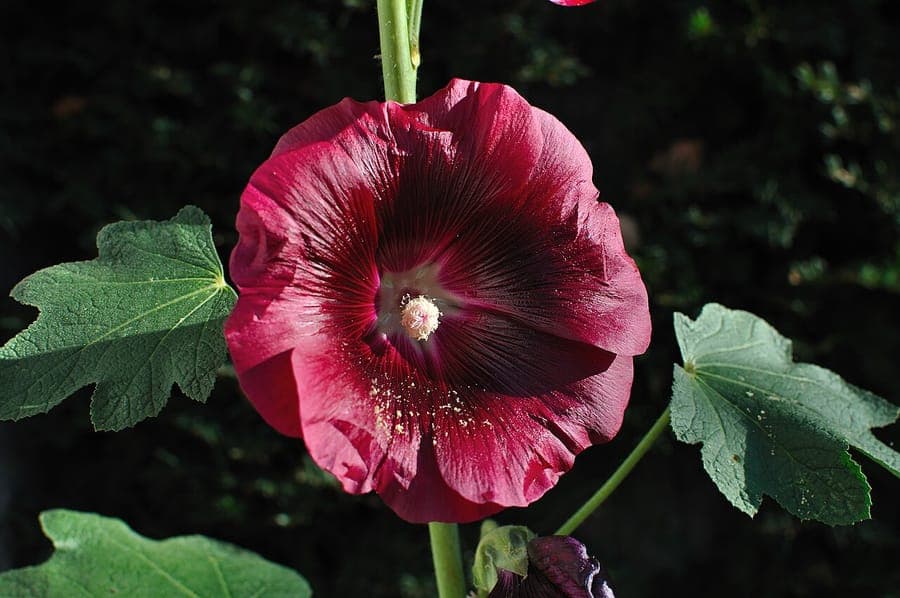
PJDespa / CC BY-SA 3.0, via Wikimedia Commons
Hollyhock: complete guide
Alcea rosea
Want to see Hollyhock: complete guide in your garden?
1 minute, no credit card
Overview
Hollyhock (Alcea rosea) is a timeless garden favourite, bringing height, drama, and old-world charm to borders and cottage-style plots. Native to Turkey, this member of the Malvaceae family has found a home in gardens across temperate zones. It's typically biennial or short-lived perennial, forming a rosette in year one and sending up towering flower spikes in year two. While prone to rust and powdery mildew, with proper spacing and conditions, it thrives for years. On gardenworld.app, you can design a garden layout that highlights the vertical impact of hollyhocks while balancing disease-prone neighbours.
These plants are a magnet for pollinators and add a romantic, informal feel. They're excellent for back-of-border planting and can reach up to 200 cm, making them ideal for creating living screens or focal points.
Appearance & bloom cycle
Hollyhocks produce tall, sturdy stems ranging from 120 to 200 cm in height, depending on variety and soil fertility. The large, saucer-shaped flowers (8–12 cm wide) bloom from the bottom up over 4 to 6 weeks, starting in late June and continuing through August. Flowers come in single or double forms, in shades of white, cream, pink, red, maroon, and near-black. Some have a contrasting dark eye in the centre.
Because they bloom progressively, you'll see a gradient of open flowers and tight buds. Self-seeding types naturalise over time, popping up in cracks and corners. On gardenworld.app, generate a bloom timeline to coordinate hollyhocks with neighbouring perennials like Echinacea or Verbena bonariensis.
Ideal location
Hollyhocks need full sun-6 to 8 hours daily-to flower well and stay upright. Choose a sheltered spot; their height makes them vulnerable to wind damage. Space plants 50–70 cm apart to ensure airflow and reduce fungal issues. Use stakes for taller varieties, especially in exposed gardens.
They work best at the back of borders, along fences, or beside garden sheds. Avoid shady areas: stems stretch, weaken, and flop. In urban gardens, plant them where they won't block light to lower-growing neighbours.
Soil requirements
They tolerate a range of soils but grow best in fertile, well-drained loam. Heavy clay is acceptable if it doesn't stay waterlogged. Improve sandy soils with compost to boost moisture retention. Ideal pH is 6.0–7.5. Deep soil is essential-the taproot can extend 40 cm or more.
Avoid overly rich, nitrogen-heavy soils, which promote lush foliage at the expense of blooms. Don't plant in compacted or shallow ground. A slow-release organic fertiliser in spring is enough.
Free design
Want to see Hollyhock: complete guide in your garden? Make a free design now.
Watering
Once established, hollyhocks are fairly drought-tolerant. Water deeply but infrequently during dry spells, especially in the first growing season. Aim for the base-wet foliage encourages rust and mildew. A 5–8 cm layer of organic mulch helps retain moisture and suppress weeds.
In prolonged drought (over 14 days without rain), supplemental watering is recommended. Rainwater is preferable; they can be sensitive to lime in tap water.
Pruning
After flowering, cut stems back to ground level to prevent disease carryover and reduce self-seeding if desired. Leave a few stalks if you want volunteer seedlings next year. Deadhead spent flowers to prolong blooming, though this is less effective than with other perennials.
Remove any spotted or discoloured leaves promptly. Rust (orange pustules on undersides) is common-improve airflow and avoid overhead watering. Cut down all old growth in late winter.
Maintenance calendar
- January: Remove any remaining old stems, inspect for pests
- February: Prepare seed-starting trays, test soil pH
- March: Sow seeds indoors or in cold frames
- April: Harden off seedlings, clear planting areas of weeds
- May: Transplant outdoors, water regularly, apply mulch
- June: Begin flowering, monitor for rust and mildew
- July: Peak bloom, stake tall plants, deadhead if needed
- August: Cut back after bloom, collect seeds
- September: Transplant self-sown seedlings
- October: Final disease check, tidy beds
- November: Apply leaf mulch in colder zones
- December: Dormant period-minimal intervention
Winter hardiness
Hollyhocks are hardy in USDA zones 3–8. In zones 7 and above, the basal rosette often stays green through winter. Old stems provide structure and shelter for beneficial insects, so consider leaving them until early spring.
In wet winters, crown rot can occur. Ensure good drainage-avoid low-lying areas. Mulch lightly in zone 4 and below with straw or composted leaves, but don't smother the crown.
Companion plants
Pair hollyhocks with yarrow, lavender, catmint, or sedum. These share similar sun and soil needs and attract bees and butterflies. Use low growers like thyme or oregano to cover bare lower stems.
Avoid overcrowding with aggressive perennials or heavy feeders like dahlias. Plant in groups of 3 or more for visual impact. Contrast dark varieties against pale walls or fences. Try mixing with tall grasses for movement and texture.
Closing
Hollyhocks aren't the lowest-maintenance plant, but their old-fashioned beauty and vertical drama make up for it. They need space, sun, and air-but reward you with weeks of colour and cottage charm. Buy seeds or young plants from garden centres like those at major retailers, and experiment with heirloom varieties. And remember: on gardenworld.app, you can visualise how hollyhocks will fit your garden's height layers and bloom sequence.
Want to see Hollyhock: complete guide in your garden? Make a free design now.
Upload a photo, pick a style, and get a photorealistic design with plant list in under a minute.
No credit card required


Similar plants
Crimean linden: complete guide
Tilia × euchlora
Crimean linden is an elegant, fast-growing shade tree ideal for large gardens. Discover cultivars, spacing, maintenance tips and winter hardiness.
California flannelbush: complete guide
Fremontodendron californicum
Everything about California flannelbush (Fremontodendron californicum): sunny placement, drainage, pruning and care for this spectacular yellow-flowering shrub.
Hairy rose mallow: complete guide
Hibiscus moscheutos subsp. lasiocarpos
Full growing guide for hairy rose mallow (Hibiscus moscheutos subsp. lasiocarpos): location, soil, watering, winter hardiness and garden design tips.