
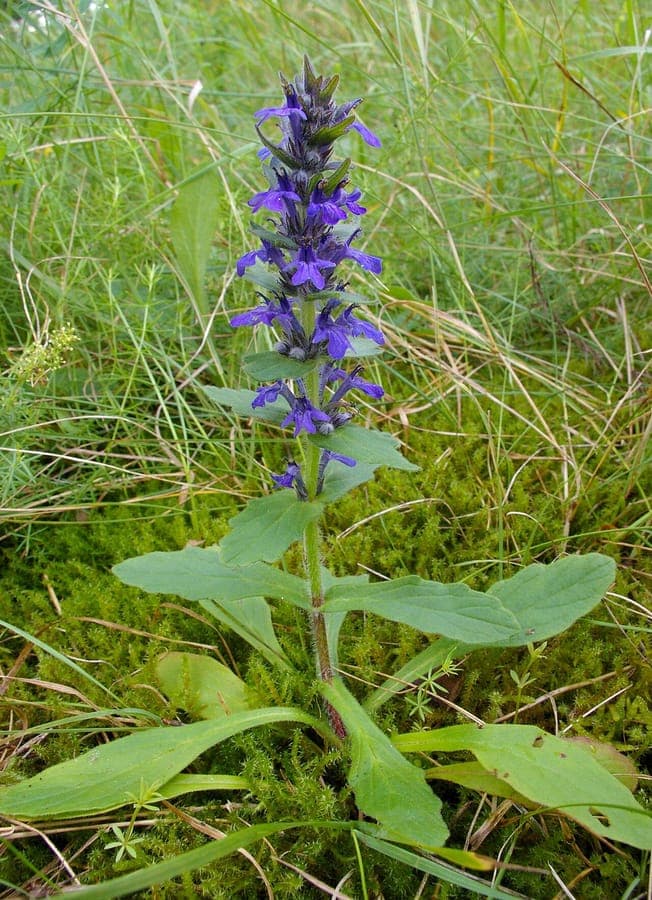
Christian Fischer / CC BY-SA 3.0, via Wikimedia Commons
Blue bugle: complete guide
Ajuga genevensis
Want to see Blue bugle: complete guide in your garden?
1 minute, no credit card
Overview
Blue bugle, or Ajuga genevensis, is one of those quiet achievers in the garden - not flashy, but utterly dependable. Unlike its more aggressive cousin Ajuga reptans, this species spreads slowly via rhizomes, forming neat, manageable clumps. Native to regions like Austria, France, and the Baltic states, it's well-adapted to temperate climates, including much of the UK and northern US. It thrives in USDA hardiness zones 5 through 8, making it a solid choice for gardeners dealing with cold winters and mild summers.
What I appreciate most is its restraint. It doesn't take over like some ground covers can. Instead, it quietly fills in gaps under shrubs, along pathways, or in shaded corners where other plants struggle. On gardenworld.app, you can design a planting scheme that highlights blue bugle's subtle spread, ensuring it complements rather than competes with neighboring plants.
Appearance & bloom cycle
Blue bugle grows 15–25 cm tall when in bloom, with slender spikes of soft blue to violet-blue flowers rising above narrow, hairy foliage. The leaves are dark green, lance-shaped, and remain evergreen through winter, though they may bronze in harsh conditions. Flowering occurs from late April to mid-May, depending on local climate. Each spike holds 10–20 small, tubular flowers that attract early-season pollinators like bumblebees and hoverflies.
The bloom is brief but effective - a soft glow of color when the garden is just waking up. After flowering, the spent spikes can be trimmed back to maintain a tidy look, though leaving them won't harm the plant.
Ideal location
This plant prefers part shade to full shade, doing best under deciduous trees or on the north side of structures. It tolerates morning sun if the soil stays moist, but afternoon sun in hot climates can scorch the leaves. Think woodland edges or underplanting beneath shrubs like azaleas or rhododendrons. In modern landscapes, it works well alongside stone paths or in rock gardens with good moisture retention.
Use gardenworld.app to map your garden's light patterns and find the perfect spots for blue bugle. The platform helps you match plant needs with microclimates in your yard.
Soil requirements
Ajuga genevensis likes moist, well-drained soil rich in organic matter. Loam or clay-loam soils are ideal, with a pH between 5.5 and 7.0. It can handle slightly sandy soils if amended with compost. Avoid highly acidic peat soils unless neutralized with lime. While it enjoys moisture, it won't survive in waterlogged conditions - ensure the site drains well to prevent root rot.
At planting, mix in a few handfuls of compost to give it a strong start, especially in compacted or poor soils.
Free design
Want to see Blue bugle: complete guide in your garden? Make a free design now.
Watering
Water regularly during the first growing season, about once or twice a week if rainfall is low. Once established, blue bugle is moderately drought-tolerant but performs best with consistent moisture. During dry spells in late spring or early summer, give it a deep soak. Mulching with leaf mold or shredded bark helps retain moisture and keeps roots cool.
Avoid overhead watering if possible - wet foliage over time can encourage fungal issues, especially in humid areas.
Pruning
Pruning is minimal. After flowering in late May or early June, cut back the flower stalks just above the foliage. This keeps the plant looking neat and redirects energy into root and leaf development. In early spring, you can also remove any winter-damaged or matted leaves to encourage fresh growth.
Don't cut it back too hard - the evergreen rosettes are important for early-season structure.
Maintenance calendar
- Jan: Check for vole damage, remove heavy debris
- Feb: No action needed in most zones
- Mar: Clear dead leaves, inspect for pests
- Apr: Growth resumes, watch for slugs
- May: In full bloom, deadhead after flowering
- Jun: Trim spent spikes, apply light compost
- Jul: Water during dry periods
- Aug: No maintenance required
- Sep: Let fallen leaves act as natural mulch
- Oct: No action, prepare for dormancy
- Nov: Protect from heavy wet leaves in soggy soils
- Dec: Monitor for frost heave in freeze-thaw cycles
Winter hardiness
Blue bugle is reliably hardy to -15°C (USDA zone 5). In zones 7–8, it stays evergreen with little dieback. In colder areas, foliage may bronze or flatten but rebounds quickly in spring. The main threat isn't cold - it's wet soil in winter, which can lead to crown rot. Plant in raised beds or slopes if drainage is poor.
Companion plants
Pair blue bugle with spring ephemerals like bloodroot (Sanguinaria), trout lily (Erythronium), or wood anemone (Anemone nemorosa). It also works well under deciduous shrubs such as hydrangeas or serviceberries. Avoid pairing with aggressive spreaders like periwinkle or bishop's weed, which can overwhelm it.
Closing
Blue bugle is a quiet workhorse - not loud, but essential. It fills shady spots with reliable greenery and a touch of spring color, all while asking for little in return. You'll find it at most garden centres in spring, often sold in trays of 6 or 9. Plant in groups of at least 7 for a solid cover. And remember, on gardenworld.app you can create a custom design that makes the most of its low, spreading habit and cool-season beauty.
Want to see Blue bugle: complete guide in your garden? Make a free design now.
Upload a photo, pick a style, and get a photorealistic design with plant list in under a minute.
No credit card required


Similar plants
Apple mint (Mentha x villosa): complete guide
Mentha x villosa
Meet apple mint (Mentha x villosa): a fruity-scented kitchen herb with woolly leaves, perfect for tea and mojitos.
Salvia peyronii: complete guide
Salvia peyronii
Discover Salvia peyronii, a rare Lebanese mountain sage. Growing tips, hardiness, and companion planting for a Mediterranean gravel garden.
Bigleaf mint (Mentha x rotundifolia): complete guide
Mentha x rotundifolia
Discover bigleaf mint: cultivation, care tips, and garden uses. Learn how to grow this aromatic herb with soft, hairy leaves.