
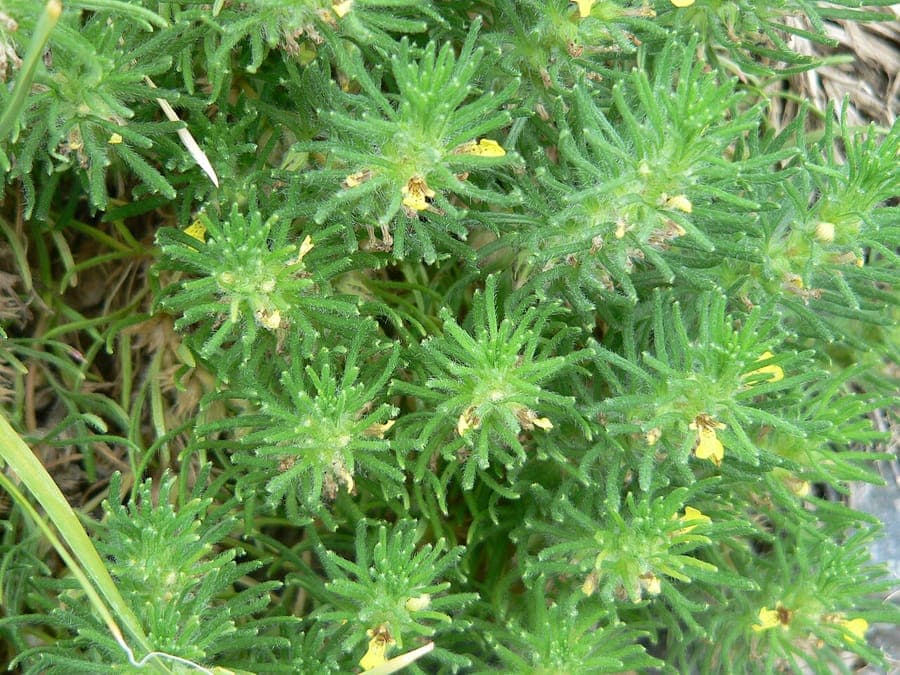
Wikimedia Commons / CC BY-SA 3.0, via Wikimedia Commons
Ground-pine: complete guide
Ajuga chamaepitys
Want to see Ground-pine: complete guide in your garden?
1 minute, no credit card
Overview
Ajuga chamaepitys, commonly known as Ground-pine, is a low-growing herbaceous perennial that brings subtle charm to dry, sunny corners of the garden. Despite its name, it's not a pine at all, but a member of the mint family (Lamiaceae) with a faintly resinous scent when brushed. Native to southern and central Europe, it thrives in well-drained, alkaline soils and full sun, making it a perfect fit for rock gardens, gravel beds, or between paving stones. Unlike its aggressive cousin Ajuga reptans, this species spreads slowly and never becomes a nuisance.
Gardeners in the UK and US zones 6–9 appreciate its long bloom season and resilience to drought. It's not often seen in mainstream garden centres, but when you spot it, grab it. On gardenworld.app, you can create a garden layout that highlights sun-loving species like Ground-pine, ensuring it gets the perfect spot.
Appearance & bloom cycle
Ground-pine reaches 10–15 cm in height and forms loose mats with finely divided, needle-like leaves that resemble tiny pine sprigs. The foliage stays green to grey-green year-round in mild climates. From April through October, it produces small, bright yellow flowers in short spikes at the stem tips. Each bloom is about 8 mm wide and rich in nectar, attracting bees, hoverflies, and other pollinators.
The extended flowering period makes it a standout in low-water gardens. Even when not in bloom, its tidy growth habit adds structure and texture to the front of borders.
Ideal location
Give Ground-pine at least 7 on the light scale - full sun is ideal. It needs 6–8 hours of direct sunlight daily for strong growth and maximum flowering. Plant it in south- or west-facing spots where heat and light accumulate. In shade, it becomes leggy and sparse.
It's excellent for dry stone walls, alpine beds, or sandy slopes. Avoid damp, shaded corners. If you're unsure about light levels in your garden, check with gardenworld.app's sun mapping tool to find the best microclimate for this sun-hungry plant.
Soil requirements
This plant prefers alkaline soil with a pH between 8 and 9. It thrives in chalky, gritty, or sandy substrates that drain rapidly. Heavy clay soils must be amended with horticultural grit or sharp sand to prevent waterlogging. Poor fertility is fine - in fact, rich soil encourages weak, floppy growth.
No fertiliser is needed. Overfeeding reduces flowering and increases disease risk. Let it struggle a little; that's where its strength lies.
Free design
Want to see Ground-pine: complete guide in your garden? Make a free design now.
Watering
Once established, Ground-pine is highly drought-tolerant. Water only during prolonged dry spells, especially in the first growing season. Use a drip method at the base to keep foliage dry and avoid fungal issues. In most temperate climates, rainfall is sufficient.
Never let it sit in wet soil. Root rot is the main killer, especially in winter.
Pruning
No regular pruning is required. In late winter or early spring, trim back any dead or damaged stems with clean secateurs. This tidy-up encourages fresh growth and keeps the plant looking sharp. Compost only healthy material; avoid spreading diseased cuttings.
Maintenance calendar
- Jan: check for frost damage, protect young rosettes if needed
- Feb: prepare planting areas, improve drainage if soil is compacted
- Mar: remove old leaves, inspect for pests or slugs
- Apr: flowering begins, monitor for aphids
- May: peak bloom, ensure good air circulation
- Jun: continue observation, water only in extreme drought
- Jul: maintain dry conditions, avoid overhead watering
- Aug: allow some seed heads to form for self-sowing in dry spots
- Sep: enjoy late blooms, leave stems for winter interest
- Oct: trim lightly if needed, clear debris
- Nov: leave standing for shelter, avoid mulching heavily
- Dec: minimal care, check for winter wetness
Winter hardiness
Hardy in USDA zones 6 to 9. In zone 6, a light mulch may help in harsh winters, but avoid covering the crown. In zones 7–9, it remains evergreen and requires no protection. The main threat is winter wet, not cold. Ensure drainage is optimal before temperatures drop.
Companion plants
Pair Ground-pine with drought-tolerant allies: Sedum spurium, Thymus vulgaris, Dianthus deltoides, or Eryngium bourgatii. These share similar needs and create a textured, low-water front edge. Avoid moisture-loving plants like hostas or astilbes.
For contrast, add silver-foliaged Stachys byzantina or architectural Alliums. The combination draws the eye and supports pollinators all season.
Closing
Ground-pine is an underrated gem for sunny, dry gardens. It's tough, long-blooming, and nearly carefree once settled. Look for it at garden centres in spring, especially at independent growers or specialist nurseries. While not always in stock at big chains, you might find it at local spots or online suppliers.
Its golden flowers and pine-scented foliage make it a unique addition. And if you're planning a new border, use gardenworld.app to visualise how Ground-pine fits into your design - because the right placement makes all the difference.
Want to see Ground-pine: complete guide in your garden? Make a free design now.
Upload a photo, pick a style, and get a photorealistic design with plant list in under a minute.
No credit card required


Similar plants
Apple mint (Mentha x villosa): complete guide
Mentha x villosa
Meet apple mint (Mentha x villosa): a fruity-scented kitchen herb with woolly leaves, perfect for tea and mojitos.
Salvia peyronii: complete guide
Salvia peyronii
Discover Salvia peyronii, a rare Lebanese mountain sage. Growing tips, hardiness, and companion planting for a Mediterranean gravel garden.
Bigleaf mint (Mentha x rotundifolia): complete guide
Mentha x rotundifolia
Discover bigleaf mint: cultivation, care tips, and garden uses. Learn how to grow this aromatic herb with soft, hairy leaves.