
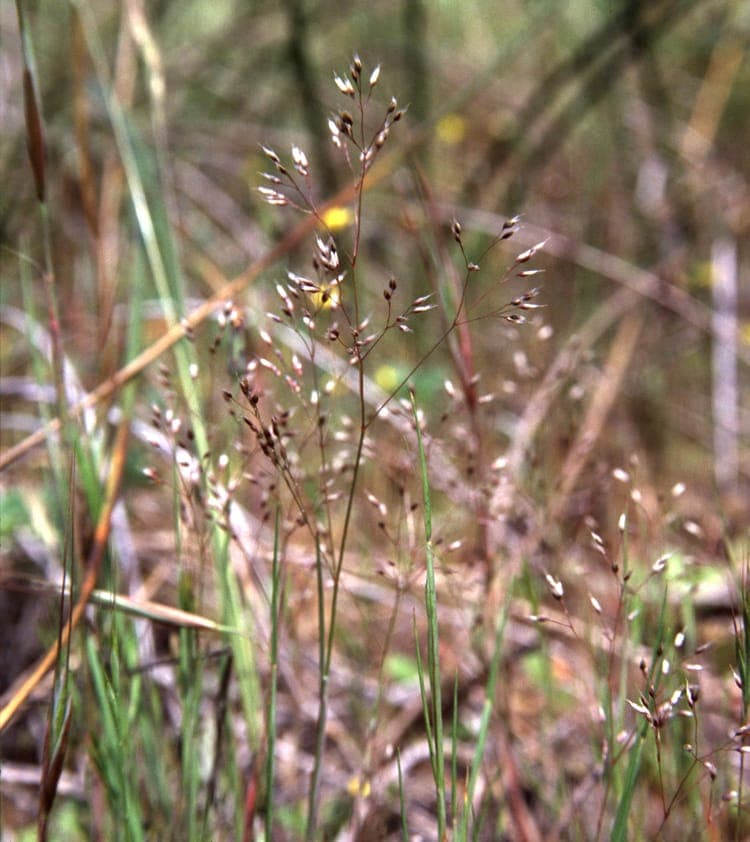
Gordon Leppig & Andrea J. Pickart / Public domain, via Wikimedia Commons
Silvery hair grass: complete guide
Aira caryophyllea
Want to see Silvery hair grass: complete guide in your garden?
1 minute, no credit card
Overview
Silvery hair grass (Aira caryophyllea) is a fine-textured, airy grass that brings movement and lightness to dry, open garden spaces. Native to southern and central Europe, it thrives in poor, well-drained soils and is increasingly popular in UK and North American gardens seeking naturalistic, low-input planting schemes. Though often short-lived, it self-seeds readily, creating a soft, ever-changing presence in the garden.
As a member of the Poaceae family, Silvery hair grass is sometimes mistaken for other delicate ornamental grasses like Stipa tenuissima. But it's lighter, more ephemeral, and better suited to lean soils. It's a fantastic choice for gravel gardens, rockeries, or sandy borders. On gardenworld.app, you can design a planting plan that highlights its airy texture alongside other drought-tolerant perennials.
Appearance & bloom cycle
Silvery hair grass grows 20–40 cm tall with a spread of about 15 cm. The narrow, thread-like leaves are bright green and often curl slightly in dry conditions. From June to August, slender stems rise above the foliage, bearing delicate, silvery flower panicles that shimmer in sunlight. The bloom period peaks in midsummer, with seed heads persisting into early autumn.
The flowers are wind-pollinated and lack showy petals, but their reflective, feathery structure catches light beautifully. As the season progresses, the panicles fade to pale beige, adding winter interest when left standing. By October, seeds are dispersed by wind or gravity, often germinating the following spring if conditions are right.
Ideal location
This grass loves full sun - at least 6 hours of direct light daily. It performs best in open, unshaded areas with good air circulation. Ideal spots include dry borders, gravel paths, or between paving stones. Avoid shady, damp corners; these encourage floppiness and fungal issues.
It's perfect for xeriscaping or Mediterranean-style gardens. Plant it on slopes, raised beds, or in crevices where water drains quickly. If you're planning a low-water garden, use gardenworld.app to map out where Silvery hair grass fits best, especially in drifts with Sedum, Thymus, or Lavandula.
Soil requirements
Silvery hair grass thrives in poor, sandy, or gravelly soils with excellent drainage. It prefers a pH between 5.5 and 7.0. Heavy clay or water-retentive soils are a no-go - they lead to root rot and poor establishment. Amend dense soils with 30–40% horticultural grit or sharp sand to improve drainage.
The key is low fertility. Rich compost or manure encourages weak, floppy growth. A lean soil keeps the plant compact and upright. Over time, its fine roots help aerate compacted ground, making it a useful pioneer on neglected sites.
Free design
Want to see Silvery hair grass: complete guide in your garden? Make a free design now.
Watering
Water only during establishment - the first 3–4 weeks after planting or germination. Once settled, Silvery hair grass is fully drought-tolerant. In average UK summers, you'll rarely need to water. Overwatering is more dangerous than under-watering; it weakens the plant and invites disease.
In prolonged dry spells (especially in USDA zones 7–9), a deep soak every 2–3 weeks is sufficient. Always let the top 5 cm of soil dry out between waterings.
Pruning
Pruning isn't required. Leave the spent flower heads through winter to provide structure and shelter for insects. Cut back old growth in early March, just above ground level, using secateurs or shears. Remove any dead debris to prevent fungal buildup, but leave some standing if you're supporting overwintering bugs.
If you prefer a tidier look, cut back in late autumn. But remember: a little mess supports more life.
Maintenance calendar
- Jan: Check for winter damage, leave seed heads
- Feb: Clear heavy debris, prepare for spring
- Mar: Cut back old growth, divide if needed
- Apr: Sow seeds outdoors when soil hits 12°C
- May: Monitor seedlings, protect from slugs
- Jun: Flowers emerge, ensure full sun
- Jul: Peak bloom, no watering needed
- Aug: Seeds ripen, watch for self-seeding
- Sep: Flowers fade, plant begins to die back
- Oct: Seeds disperse, plant dies down
- Nov: Leave or cut back, depending on style
- Dec: Protect from wet, avoid mulching heavily
Winter hardiness
Silvery hair grass is not reliably perennial in colder climates. It's best suited to USDA zones 7–9. In zone 6 and below, it often behaves as an annual or short-lived perennial, relying on self-seeding to return. The seeds survive winter dormancy and germinate in spring when temperatures rise.
To boost survival, sow seeds in autumn in a sheltered spot. Avoid winter wet - that's the real killer.
Companion plants
Pair Silvery hair grass with other sun-loving, drought-tolerant plants: Lavender, Sedum 'Autumn Joy', Thymus, Eryngium, or Achillea. Its fine texture contrasts beautifully with bolder foliage and architectural forms. Avoid vigorous spreaders like mint or knotweed.
It also works well in gravel gardens or between stepping stones. Combine with creeping thyme or dwarf Alliums for a layered effect.
Closing
Silvery hair grass won't dominate your border, but it adds a whisper of elegance. It asks for little - just sun, sharp drainage, and space to breathe. Perfect for gardeners who value subtlety and sustainability. Pick up seeds or plugs from garden centres like Wyevale or Dobbies, or online suppliers. And before planting, check gardenworld.app to see how Silvery hair grass fits into your garden's year-round design - from bloom timing to companion choices and maintenance reminders tailored to your zone.
Want to see Silvery hair grass: complete guide in your garden? Make a free design now.
Upload a photo, pick a style, and get a photorealistic design with plant list in under a minute.
No credit card required


Similar plants
Sporobolus pungens: complete guide
Sporobolus pungens
Sporobolus pungens is a stoloniferous Mediterranean coastal grass with outstanding salt and drought tolerance, perfect for seaside and dry gardens.
Mediterranean aegilops: complete guide
Aegilops biuncialis
Everything about Aegilops biuncialis, a Mediterranean annual grass with ornamental spikes and outstanding drought tolerance for dry gardens.
Silver bluestem: complete guide
Bothriochloa saccharoides
Full guide to Bothriochloa saccharoides (silver bluestem): site, soil, watering, winter hardiness, pruning, and garden companions.