
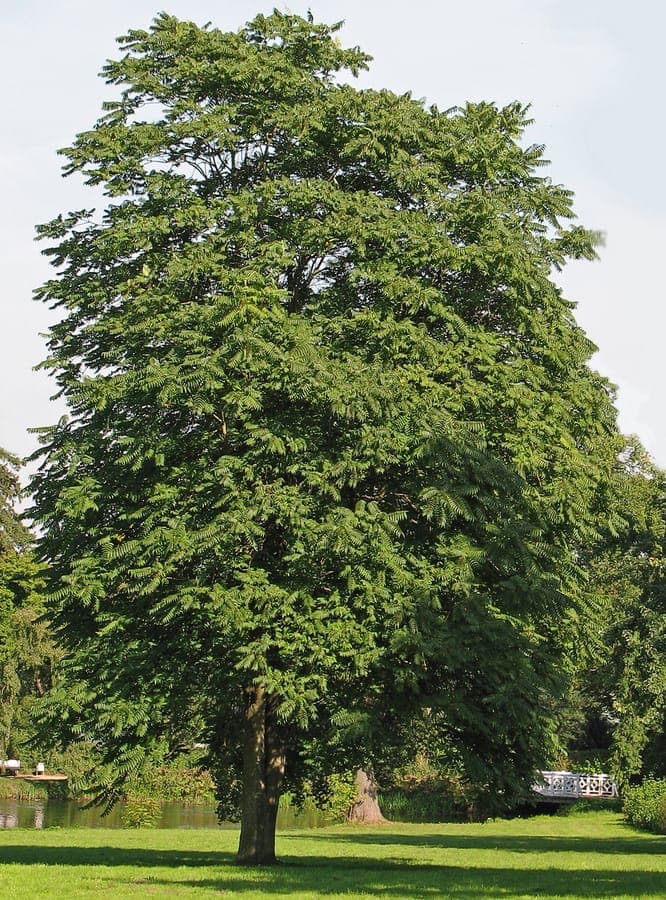
Darkone (talk · contribs) / CC BY-SA 2.5, via Wikimedia Commons
Varnishtree: complete guide
Ailanthus altissima
Want to see Varnishtree: complete guide in your garden?
1 minute, no credit card
Overview
The Varnishtree, or Ailanthus altissima, is a fast-growing deciduous tree native to China. Introduced to the West in the 1700s as an ornamental, it quickly gained popularity for its rapid growth and tolerance of urban pollution. But that same vigor makes it invasive in many regions. In the UK and US, it's often called the 'Tree of Heaven' with irony - it can take over vacant lots, cracks in pavements, and even grow through building foundations.
In a private garden, this tree demands respect and planning. It's not for small spaces or low-effort gardeners. But if you have room and are willing to commit to regular maintenance, it can be a dramatic focal point. On gardenworld.app, you can design a layout that accounts for its aggressive root system and ultimate height, ensuring it doesn't clash with utilities or boundaries.
Appearance & bloom cycle
Expect rapid growth - up to 1.5 meters per year when young. Mature height ranges from 15 to 25 meters, with a spread of 10 to 12 meters. The bark is smooth and pale grey when young, becoming rougher with age. The leaves are pinnately compound, up to 60 cm long, with individual leaflets 5–10 cm in size and a glossy, light green hue.
Flowering occurs in mid-summer, typically June to July. The flowers are small, yellowish-green, and grow in large panicles. Only female trees produce winged seeds (samaras), which are dispersed widely by wind. Male trees are preferred in cultivation to avoid seed spread. The scent, often described as peanut butter or burnt rubber, can be unpleasant up close.
Ideal location
Full sun is best - at least 6 hours of direct light daily. The tree tolerates partial shade but will grow lopsided and weak. Give it at least 5 meters of clearance from buildings, driveways, and underground pipes due to its powerful root system.
Avoid planting near septic systems or retaining walls. Its roots can lift paving and damage masonry. In city gardens or large estates, it can work as a specimen tree. Use gardenworld.app to model spacing and visualize long-term growth before planting.
Soil requirements
This tree is adaptable. It thrives in poor, compacted soils, including clay, sand, and even gravel. pH range from 5.5 to 8.0 is suitable. It's not fussy, but it hates waterlogged roots. Ensure good drainage - raised beds or sloped ground help.
It's highly tolerant of pollution, salt, and drought, making it a common choice in urban plantings. However, this resilience contributes to its invasiveness. Once established, it's hard to remove.
Free design
Want to see Varnishtree: complete guide in your garden? Make a free design now.
Watering
Young trees need consistent watering for the first two years. Provide 10–15 liters per week during dry spells. After establishment, it's extremely drought-tolerant and rarely needs supplemental water, even in prolonged dry periods.
Overwatering leads to root rot. Water deeply but infrequently, allowing the soil to dry between sessions. Drip irrigation works well for young specimens.
Pruning
Pruning is essential. Without it, the tree becomes a tangled, multi-stemmed mess. Prune in late winter or early spring before sap rises. Aim for a single central leader and remove competing trunks.
Cut suckers and root sprouts as soon as they appear - they can grow 30 cm per month. Use sharp bypass pruners or a mower. Even small root fragments can regenerate, so dispose of debris carefully.
Maintenance calendar
- January: Inspect for storm damage, light pruning if needed
- February: Main pruning window; remove suckers
- March: Begin monitoring for new growth; apply compost if desired
- April–August: Weekly sucker checks
- September: Reduce watering frequency
- October: Clear fallen leaves; mulch base
- November–December: Protect trunk from rodents; check stability
Winter hardiness
Hardy in USDA zones 4–9. In the UK (zone 8), it survives harsh winters easily. Young trees may suffer tip dieback in extreme cold but usually recover. The bark can be vulnerable to frost cracks in sudden temperature shifts - avoid planting in south-facing, highly reflective spots.
Mulch the base with bark or straw to insulate roots. Avoid piling mulch against the trunk to prevent rot.
Companion plants
Due to dense shade and root competition, companion planting is tricky. Choose tough, shallow-rooted perennials like Echinacea, Sedum, or ornamental grasses. Avoid moisture-loving plants like ferns or hostas.
Keep plantings at least 3 meters from the trunk. Use deep mulch (10 cm) to suppress weeds and reduce competition. Avoid planting lawn grasses directly under the canopy - they'll struggle.
Closing
The Varnishtree is not a plant to take lightly. It's vigorous, invasive, and hard to eradicate. But in the right hands - with space, foresight, and discipline - it can be a striking addition. Always check local regulations; some areas ban its sale or require permits.
UK garden centres rarely stock it, but it may appear in specialist nurseries. Be sure to ask for a male cultivar to avoid seed spread. On gardenworld.app, you can set up alerts for invasive species in your postcode and get design tips for managing aggressive trees.
Want to see Varnishtree: complete guide in your garden? Make a free design now.
Upload a photo, pick a style, and get a photorealistic design with plant list in under a minute.
No credit card required


Similar plants
Acer pycnanthum: complete guide
Acer pycnanthum
Acer pycnanthum, the Japanese swamp maple, is a fast-growing tree with early red flowers and brilliant autumn color, ideal for damp garden settings.
Freeman maple: complete guide
Acer × freemanii
Everything about the Freeman maple (Acer x freemanii): a fast-growing shade tree with spectacular autumn colour for large gardens.
Silver vine: complete guide
Actinidia polygama
Discover silver vine (Actinidia polygama): a hardy climbing plant with silvery foliage, loved by gardeners and cats alike.