
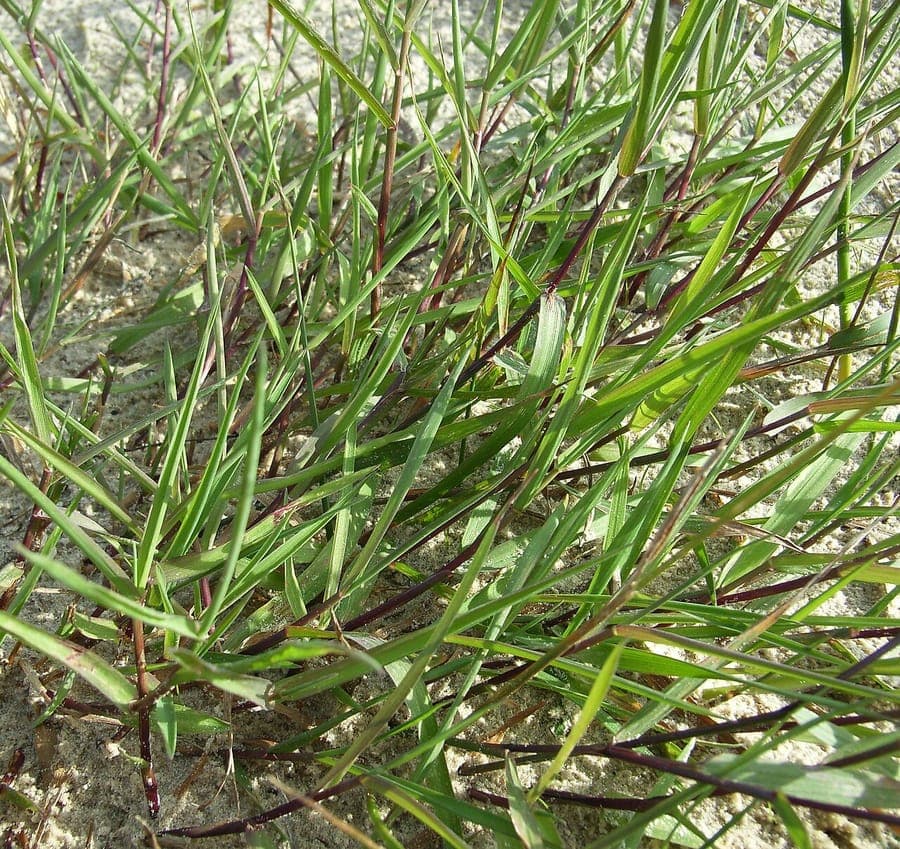
Alfred / CC BY-SA 3.0, via Wikimedia Commons
Spreading bent: complete guide
Agrostis stolonifera
Want to see Spreading bent: complete guide in your garden?
1 minute, no credit card
Overview
Spreading bent, or Agrostis stolonifera, is a graceful, creeping grass that's more than just a lawn component. While often found in turf mixes, it shines as an ornamental grass in cottage gardens, gravel paths, or naturalistic planting schemes. It spreads via stolons-horizontal stems that root at nodes-creating soft, dense mats. Native across much of Europe and temperate Asia, this perennial grass adapts well to UK and North American gardens in USDA zones 3–7.
On gardenworld.app, you can design a low-maintenance border where Spreading bent complements airy perennials and adds movement to structured layouts. Its fine texture softens hard edges and blends seamlessly with both formal and wild-style planting.
Appearance & bloom cycle
The leaves are narrow, bright green, and grow to about 15–20 cm in height, rarely exceeding 30 cm. In early summer-typically June through July-the plant sends up delicate, silvery-white inflorescences that rise another 20–30 cm above the foliage. These airy panicles shimmer in the breeze and last for four to six weeks.
After blooming, the seed heads persist into autumn, providing visual interest and food for finches and other small birds. Foliage remains semi-evergreen in mild climates, turning light brown in winter but rarely dying back completely.
Ideal location
Spreading bent thrives in full sun to light shade. It performs best with at least 6 hours of direct sunlight daily. In deep shade, it becomes sparse and leggy. Choose open areas with good air circulation to prevent fungal issues. It's excellent for edging pathways, filling gaps between pavers, or as a ground cover under open-canopied shrubs.
Avoid heavily trafficked zones-while it tolerates light foot traffic, it's not a durable lawn grass like Kentucky bluegrass.
Soil requirements
This grass grows well in moist, well-drained loam or clay-loam soils. It tolerates slightly acidic to neutral pH (5.5–7.0). Sandy soils are acceptable if irrigation is available during dry spells. Avoid dry, compacted, or nutrient-poor substrates.
Good drainage is essential-standing water leads to root rot, especially in winter. If planting on heavy clay, amend with compost to improve structure and aeration.
Watering
During establishment-spring to early summer-water weekly if rainfall is below 2.5 cm. Once established, Spreading bent is moderately drought-tolerant but looks best with consistent moisture. In prolonged dry periods, irrigate every 10–14 days with a deep soak to encourage deep rooting.
Avoid frequent light sprinkling, which promotes shallow roots and fungal growth. Use drip irrigation or a soaker hose for efficiency.
Free design
Want to see Spreading bent: complete guide in your garden? Make a free design now.
Pruning
An annual cutback in late winter or early spring (February–March) keeps the plant tidy. Trim foliage to 5–8 cm above ground to remove old growth and stimulate fresh, upright blades. For ornamental use, leave the flower plumes over winter for texture and wildlife value.
If used in a lawn setting, mow monthly during the growing season (April–September) at 5–10 cm height. Use sharp blades to prevent ragged cuts.
Maintenance calendar
- January: Monitor for frost damage; avoid walking on frozen foliage.
- February: Begin spring cleanup. Cut back old growth.
- March: Finish pruning. Apply a light top-dressing of compost.
- April–May: Watch for dry spells; water if needed.
- June–July: Bloom period. Enjoy the silvery panicles.
- August: Reduce watering as rains return.
- September: Leave seed heads for autumn interest.
- October: Avoid cutting back; let structure remain.
- November–December: Dormant phase. Protect young plants with mulch in harsh climates.
On gardenworld.app, set up a seasonal maintenance plan tailored to Spreading bent, with reminders for pruning, watering, and soil checks.
Winter hardiness
Spreading bent is hardy in USDA zones 3–7, surviving temperatures down to -40°C. It remains semi-evergreen in milder zones but may turn straw-coloured in colder areas. The plant dies back partially but regrows from stolons in spring.
In exposed sites, a light mulch of straw or leaf litter helps protect crowns during freeze-thaw cycles.
Companion plants
Pair Spreading bent with plants that contrast in form and height. Try it with upright alliums, verbascum, or nepeta for structure. It also works well with low-growing thymes, cranesbills, or carex varieties.
Avoid invasive ground covers like ivy or mint, which can overwhelm its delicate spread.
Closing
Spreading bent is a subtle yet impactful addition to any garden. It's not flashy, but its fine texture, seasonal movement, and low upkeep make it a gardener's favourite for naturalistic designs. Whether used as a lawn substitute, a filler in rock gardens, or a softening element in borders, it brings elegance without demanding much.
Buy Spreading bent at local garden centres, where you'll find plugs, sod, or seed mixes. Prepare the bed well-remove weeds, level the soil, and water consistently for the first season. After that, it settles in and asks for little more than an annual tidy-up.
With the right start, Spreading bent becomes a resilient, wildlife-friendly feature that evolves with the seasons. And with tools like gardenworld.app, you can visualise how it fits into your long-term garden vision-season by season, year after year.
Want to see Spreading bent: complete guide in your garden? Make a free design now.
Upload a photo, pick a style, and get a photorealistic design with plant list in under a minute.
No credit card required


Similar plants
Sporobolus pungens: complete guide
Sporobolus pungens
Sporobolus pungens is a stoloniferous Mediterranean coastal grass with outstanding salt and drought tolerance, perfect for seaside and dry gardens.
Mediterranean aegilops: complete guide
Aegilops biuncialis
Everything about Aegilops biuncialis, a Mediterranean annual grass with ornamental spikes and outstanding drought tolerance for dry gardens.
Silver bluestem: complete guide
Bothriochloa saccharoides
Full guide to Bothriochloa saccharoides (silver bluestem): site, soil, watering, winter hardiness, pruning, and garden companions.