
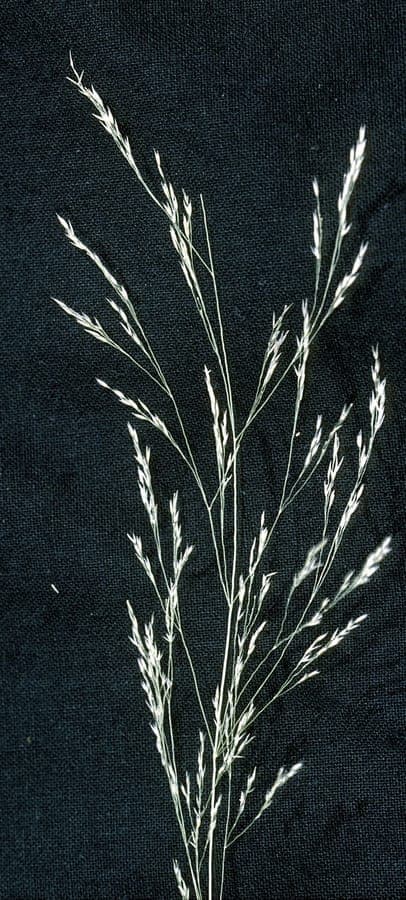
Robert H. Mohlenbrock. USDA NRCS. 1995. Northeast wetland flora: Field office guide to plant species. Northeast National Technical Center, Chester, PA. / Public domain, via Wikimedia Commons
Autumn bent (Agrostis perennans): complete guide
Agrostis perennans
Want to see Autumn bent (Agrostis perennans): complete guide in your garden?
1 minute, no credit card
Overview
Agrostis perennans, commonly known as autumn bent, upland bent, or upland bentgrass, is a graceful perennial grass native to North and Central America. The species was formally described by Tuckerman in 1843, based on earlier material collected by botanist Thomas Walter. Its name "perennans" derives from the Latin for enduring or perennial, a direct reference to its persistence as a true perennial plant with a rhizomatous growth form - a quality that distinguishes it from the annual or biennial species that dominate its genus in garden cultivation.
This grass occurs naturally across a remarkably wide range: from New Brunswick, Quebec, and Nova Scotia in Canada southward through most of the eastern and central United States, west to Oregon, and further south through Mexico, Central America, and into South America as far as Argentina and Chile. This vast range speaks to the plant's adaptability and resilience. On gardenworld.app you will find naturalistic front garden designs that use perennial grasses like autumn bent to create year-round structure and movement.
The "bent" in the common name is a traditional English term referring to fine-leaved grasses that were historically used on golf courses, bowling greens, and ornamental lawns. Agrostis perennans belongs to this family of fine-textured grasses, though in garden practice it is best appreciated as a border plant or ground cover rather than a lawn species.
Appearance and bloom cycle
Autumn bent grows as a spreading perennial forming loose clumps or drifts via underground rhizomes. The foliage is narrow, fine, and medium in texture according to the Trefle data. Leaves are a soft, fresh green, and the overall impression is of a light, airy, understated plant. Mature clumps typically reach 30 to 60 cm in height during flowering.
The inflorescence is a large, open panicle of fine branches - characteristic of the genus Agrostis - ranging from green to slightly purplish while fresh, fading to a warm golden tone as it dries. Flowering typically occurs from July through September in northern European gardens. Because this is a true perennial, plants return reliably each year and slowly expand via rhizomes, filling in gaps and creating naturalistic drifts over time. Self-seeding can occur but is generally modest compared to annual Agrostis species.
Leaf retention into late autumn is one of this plant's best features: the foliage stays green and fresh-looking well past the first frosts, earning the "autumn" in its common name. Even after the panicles have dried and the first cold sets in, the leafy base remains presentable.
Ideal position
Autumn bent is one of the more adaptable grasses in the Agrostis genus. In its native habitat it grows in a wide range of conditions - open woodlands, woodland edges, moist meadows, roadsides, and streambanks. In the garden, it performs well in full sun to light shade. In deeper shade it becomes lax and flowers less freely, but it can tolerate the partial shade under high-branching trees better than many other ornamental grasses.
This adaptability makes autumn bent particularly valuable in gardens where light varies across the planting area. It works beautifully as a ground cover beneath open-canopy trees, as an edging plant along a path or stream, or as a fine-textured companion to bolder flowering perennials. The light panicles catch every breath of air, giving movement and life to the border throughout the season.
Soil requirements
Autumn bent is tolerant of a wide range of soil types. It grows naturally on everything from sandy upland soils to heavier loamy riverside soils, provided drainage is reasonable. Heavy, waterlogged clay is the one condition to avoid. If your garden has heavy clay, incorporate coarse grit and organic matter to improve drainage before planting.
Nutrient requirements are modest. The plant performs well on soils with moderate organic content and does not need regular fertilising. Overly rich soils encourage lush, floppy growth that tends to lodge - particularly in windy sites. A mildly fertile soil with good structure is ideal. Soil pH tolerance is broad, covering the lightly acid to neutral range.
Free design
Want to see Autumn bent (Agrostis perennans): complete guide in your garden? Make a free design now.
Watering
Given its origins in moist meadows and woodland edges, autumn bent appreciates consistent moisture, especially during establishment. Water newly planted clumps regularly throughout the first growing season to encourage strong root development. Once established, the plant shows reasonable drought tolerance, though it performs best when moisture is available during dry spells in summer.
On heavier, moisture-retentive soils, supplemental watering is rarely necessary. On sandy or free-draining soils, check regularly during prolonged dry periods and water at the base of the plant in the early morning. Avoid overhead watering, which can encourage fungal disease. In containers, check soil moisture weekly and do not allow the root ball to dry out completely.
During severe drought, the plant may go partially dormant, reducing growth. This is a natural response and the plant recovers quickly once conditions improve.
Pruning
As a perennial grass, autumn bent benefits from a single annual cut-back in early spring before new growth begins. Cut the entire plant back to 5 to 10 cm above soil level. This removes old, tired foliage and spent panicles, stimulates fresh new growth, and keeps the plant compact and tidy. Avoid cutting too early in winter when the dried panicles still provide wildlife value and ornamental interest.
During the growing season, no pruning is needed. Remove any damaged or diseased stems if spotted. If you wish to use the panicles in dried arrangements, cut them when they are fully formed but still carrying some colour. To manage the spread of rhizomes, divide clumps every two to three years in spring, discarding the older central growth and replanting vigorous outer sections.
Maintenance calendar
- January - February: Leave dried stems and panicles standing for birds and winter interest.
- March: Cut the whole plant back to 5 to 10 cm. Divide congested clumps if required.
- April: Fresh shoots emerge. Mulch sandy soils lightly to retain moisture.
- May - June: Full growth phase. Water on dry, sandy soils during prolonged dry spells.
- July - September: Flowering period. Allow panicles to develop. Harvest some for drying.
- October: Foliage remains green and attractive. Divide or reposition clumps if needed.
- November - December: Plant enters dormancy. Leave stems in place for winter structure.
Winter hardiness
Agrostis perennans is reliably hardy across a broad climate range. Its natural distribution from Canada to southern South America indicates tolerance of USDA zones 4 to 9. In the Netherlands and Belgium (approximately USDA zone 7 to 8), it overwinters without any protection whatsoever. Even after harsh winters, the rhizomes in the soil ensure rapid re-sprouting when temperatures rise in spring.
No mulching or frost protection is needed in northern European conditions. The main advantage of the rhizomatous habit is that even if the above-ground parts are killed back by extreme cold, new shoots emerge reliably from the intact underground rhizomes.
Companion plants
The fine, airy texture of autumn bent works beautifully with partners that offer contrasting form or colour:
- Echinacea purpurea (purple coneflower): the bold flower heads and fine panicles create a striking late-season combination.
- Rudbeckia fulgida (black-eyed Susan): golden autumn flowers complement the drying panicles perfectly.
- Aster novi-belgii (Michaelmas daisy): blue-purple flowers in autumn alongside the warm-toned panicles.
- Solidago canadensis (goldenrod): a fully North American native combination, both plants sharing similar natural habitats.
- Heuchera cultivars: low, dark-leafed mounds provide a strong textural contrast to the airy panicles.
Avoid planting autumn bent directly beneath dense, heavy-canopied plants that create deep shade. At least half a day of sunlight will keep it flowering freely and looking its best.
Closing thoughts
Agrostis perennans is a quiet, dependable perennial grass that earns its place in any garden where naturalism, movement, and year-round interest matter. It asks for little, tolerates difficult conditions with equanimity, and rewards gardeners with a sustained season of ornamental value from early summer into late autumn. Whether used as a ground cover, an edging plant, or a fine-textured companion to bolder perennials, autumn bent is a plant you plant once and enjoy for years.
Want to see how autumn bent will look in your own garden design before you plant it? Visit gardenworld.app to experiment with planting combinations digitally. The planning tools on gardenworld.app let you visualise the texture, height, and seasonal colour of this and hundreds of other plants in your border layout.
Want to see Autumn bent (Agrostis perennans): complete guide in your garden? Make a free design now.
Upload a photo, pick a style, and get a photorealistic design with plant list in under a minute.
10,000+ gardens designed already
No credit card required

