
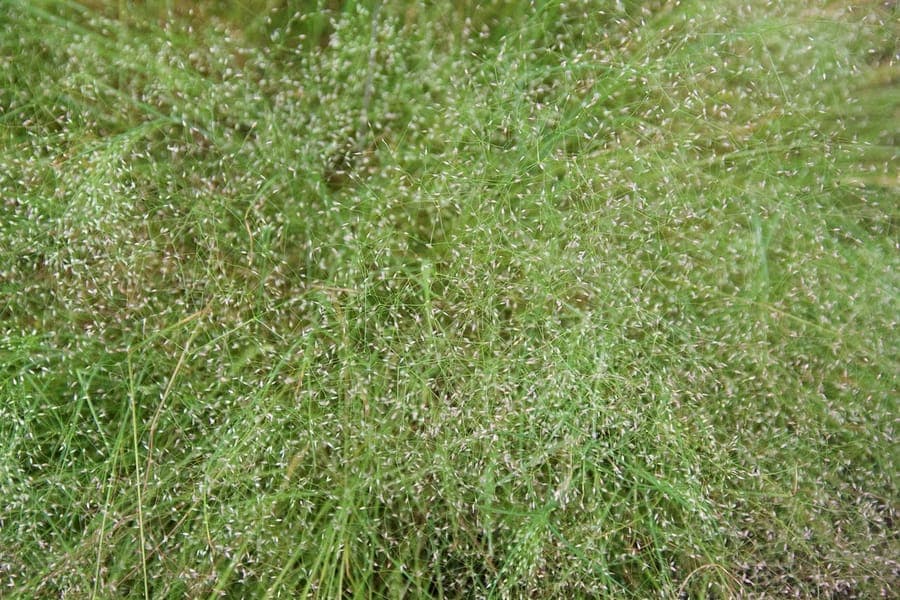
Photograph by Mike Peel (www.mikepeel.net). / CC BY-SA 4.0, via Wikimedia Commons
Cloud grass (Agrostis nebulosa): complete guide
Agrostis nebulosa
Want to see Cloud grass (Agrostis nebulosa): complete guide in your garden?
1 minute, no credit card
Overview
Agrostis nebulosa, commonly called cloud grass, is a slender annual grass native to eastern and southern Spain, Portugal, and Morocco. The species was first described by botanists Boissier and Reuter in 1842. Its botanical name tells the whole story: "nebulosa" is Latin for misty or cloudy, a direct reference to the ethereal quality of the flower panicles that seem to float above the plant like a veil of green-gold mist. Few plants deliver this kind of light, airy texture with so little effort.
This grass belongs to the family Poaceae and the genus Agrostis, which contains over two hundred species worldwide. Among them, Agrostis nebulosa stands out for the sheer delicacy of its flower panicles - each one a network of hair-thin branches bearing tiny florets that catch the light magnificently. This quality has made cloud grass a firm favourite not just in garden borders but also in dried and fresh flower arrangements. On gardenworld.app you will find hundreds of front garden designs that use airy ornamental grasses like this one to add movement and transparency to planting schemes.
Appearance and bloom cycle
Cloud grass grows as a compact, low-growing annual, typically reaching between 20 and 40 cm in height. The leaves are narrow, soft, and pale green. The plant's real charm, however, lies in its inflorescence: a large, open panicle of extraordinarily fine, wispy branches. When in full bloom, the whole plant appears to be wrapped in a haze of soft colour - green in early bloom, shifting through silvery gold as the season progresses.
In its native Mediterranean habitat, Agrostis nebulosa blooms in late spring to early summer. In garden conditions in northern Europe, expect flowers from May through July when sown early indoors. After flowering, the panicles dry on the plant, retaining their fine structure and ghostly beauty well into autumn. Being an annual, cloud grass will self-seed in warm, well-drained soils, often providing a fresh generation of plants the following spring without any intervention.
Ideal position
Full sun is non-negotiable for Agrostis nebulosa. The Trefle data record a light value of 9 out of 10, which means this grass genuinely needs maximum sun to perform well. In even partial shade, stems become lax and etiolated, and the characteristic misty panicles fail to develop properly. Choose the warmest, most open spot in the garden.
Cloud grass suits exposed, south-facing or west-facing borders, gravel gardens, rock gardens, and Mediterranean-style plantings. It also works beautifully in large pots and containers on a sunny terrace. One useful design trick: plant it in front of a dark backdrop of shrubs or dark-leaved plants, which makes the translucent panicles glow and stand out far more effectively than they would against a pale background.
Soil requirements
This grass prefers light, free-draining soil. The Trefle data specify a pH preference between 5.0 and 5.5, placing it firmly in the acidic to slightly acidic range. Heavy clay soils that remain waterlogged will cause root rot; if you garden on clay, improve drainage by incorporating coarse grit and mature compost before planting.
Nutrient levels should be low to moderate - the Trefle soil nutriment rating is 3 out of 10. Rich garden soils or heavily fertilised ground encourage leafy growth at the expense of the fine, delicate panicles that make cloud grass worth growing. Avoid adding slow-release fertiliser or rich potting compost. Sandy or loamy soils with reasonable organic matter content are ideal.
Watering
Once established, Agrostis nebulosa is notably drought tolerant. During germination and early establishment, keep the soil lightly moist but never waterlogged. Once seedlings reach 5 to 10 cm tall, reduce watering frequency significantly. The plant's high atmospheric humidity rating (7 out of 10) in the Trefle data suggests it draws moisture from the air as well as the soil.
During the blooming period, supplemental watering is rarely necessary unless there is a prolonged dry spell. Always water at the base of the plant, not over the panicles: wetting the delicate flower heads promotes fungal disease and damages the fine structure. Morning watering is preferable to evening, as this allows foliage to dry before nightfall. In containers, check soil moisture more regularly, but err on the dry side.
Free design
Want to see Cloud grass (Agrostis nebulosa): complete guide in your garden? Make a free design now.
Pruning
As an annual, Agrostis nebulosa requires minimal pruning. During the growing season, simply let the plant do its thing. When panicles are well developed and still carrying some colour, cut stems low for use in fresh or dried arrangements - they hold their form beautifully for months after cutting.
At the end of the season, once seed has set and you have allowed whatever self-seeding you want to occur, remove the spent plant material. On fertile soils, self-seeding can be prolific; if you want to manage numbers, remove some of the ripe panicles before the seeds fully disperse. There is no need for any other pruning intervention during the season.
Maintenance calendar
- January - February: Store any saved seed in a cool, dry, dark location. Check on self-seeded seedlings if you are gardening in a mild climate.
- March: Sow seed indoors on a warm, bright windowsill at 15 to 18 degrees Celsius. Use a fine, well-drained seed compost and barely cover the seed.
- April: Prick out seedlings and grow on in a frost-free place. Harden off gradually before planting out once the risk of frost has passed.
- May - June: Main flowering period. Little water needed. Cut panicles for drying while still fresh and green-gold in colour.
- July: Flowering winds down. Allow seed to ripen if self-seeding is desired.
- August - October: Clear spent plants. Prepare the ground for the following season or allow self-seeded seedlings to establish.
- November - December: Rest period. No action needed.
Winter hardiness
Agrostis nebulosa is a true annual and does not overwinter as a living plant. It is not frost-hardy in the sense that a perennial survives cold temperatures. However, the seeds in the soil tolerate light frost surprisingly well and can germinate the following spring given favourable conditions. In regions with harsh winters (USDA zones 5 to 6), collect ripe seed in autumn and store it dry for indoor sowing the following March.
In mild climates (USDA zones 7 to 10), cloud grass may self-seed freely and behave almost like a short-lived perennial, returning year after year from self-sown seedlings. The parent plant, however, always dies once seed is set.
Companion plants
The misty, translucent quality of cloud grass calls for companions that either contrast with its fineness or reinforce the light, airy atmosphere. Good choices include:
- Nigella damascena (love-in-a-mist): similar feathery texture, blue or white flowers, same requirements.
- Gypsophila elegans: white flowers create a beautiful contrast with the grass panicles.
- Eschscholzia californica (California poppy): vivid orange and yellow flowers against pale panicles for a Mediterranean feel.
- Centranthus ruber (red valerian): sturdy pink flower spikes provide structure while cloud grass fills the foreground.
- Stipa tenuissima (Mexican feather grass): another fine-textured grass for an all-grass planting scheme.
Avoid pairing cloud grass with bold, heavy-textured plants like Bergenia or large-leafed Hosta directly in front - the delicate panicles will be visually overwhelmed.
Closing thoughts
Cloud grass is one of those plants that punches well above its weight in the garden. Small in stature, effortless to grow, and almost impossible to overuse, Agrostis nebulosa adds a lightness to planting that few other annuals can match. Whether you grow it as a cut flower, a border filler, or a self-seeding meadow element, it will earn its place every single year.
Thinking about where to fit cloud grass into your front garden design? Visit gardenworld.app to design your planting scheme digitally before you pick up a trowel. The design tools at gardenworld.app make it easy to visualise how this misty grass will look alongside other plants in your border, saving you time and effort in the garden.
Want to see Cloud grass (Agrostis nebulosa): complete guide in your garden? Make a free design now.
Upload a photo, pick a style, and get a photorealistic design with plant list in under a minute.
10,000+ gardens designed already
No credit card required

