
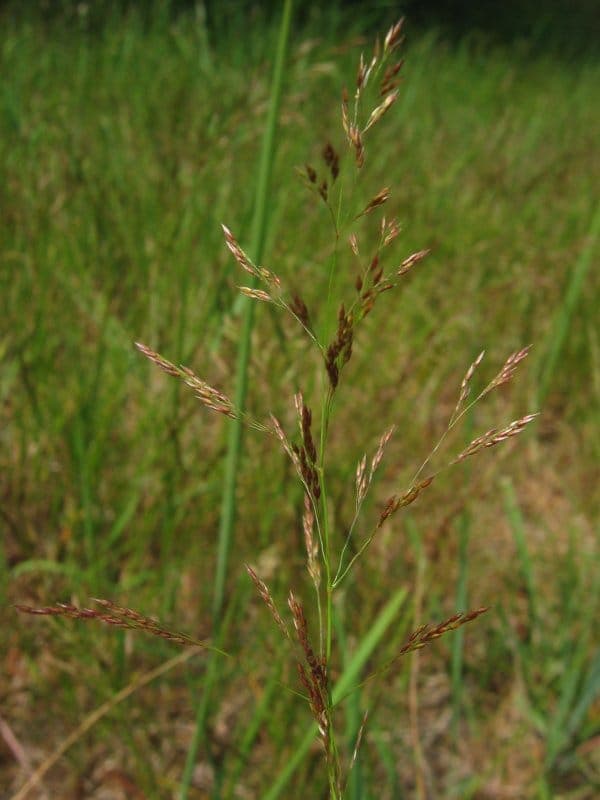
Kristian Peters -- Fabelfroh 08:23, 21 September 2006 (UTC) / CC BY-SA 3.0, via Wikimedia Commons
New zealand bent grass: complete guide
Agrostis capillaris
Want to see New zealand bent grass: complete guide in your garden?
1 minute, no credit card
Overview
New Zealand bent grass, known botanically as Agrostis capillaris, isn't actually from New Zealand - it's a native of temperate Europe and parts of Asia, commonly found in dry meadows and open woodlands. Despite the misleading name, it's earned its place in ornamental gardens for its delicate structure and airy movement. This grass, part of the Poaceae family, grows in loose clumps and reaches heights between 30 and 60 cm. It's not aggressive, spreads gently, and fits beautifully into naturalistic planting schemes. Whether you're redesigning a border or adding texture to a gravel garden, this grass brings softness without fuss. On gardenworld.app you can create a garden layout that integrates New Zealand bent grass seamlessly, balancing its fine form with bolder perennials.
Appearance & bloom cycle
The plant forms slender, bright green tufts in spring, quickly developing upright stems that hold airy, grey-green inflorescences from June through August. These bloom spikes rise 10–20 cm above the foliage, catching the light and moving gracefully in the wind. The overall effect is subtle but striking - especially when planted in small groups of three or five. In autumn, the foliage turns golden before fading to a warm tan in winter. It doesn't die back completely, offering year-round structure. There's no flashy colour here, but plenty of seasonal rhythm.
Ideal location
Full sun is best - at least 6 hours of direct sunlight daily. It tolerates light shade, especially in hotter climates, but in dense shade, the stems flop and flowering diminishes. Plant it in south- or west-facing borders, rock gardens, or as an understory in open shrub beds. It works well in coastal gardens too, since it handles light salt spray. Avoid planting under dense tree canopies. For best visual impact, position it where backlighting will highlight the delicate plumes in late afternoon sun. On gardenworld.app you can preview how this grass interacts with light patterns across your garden space.
Soil requirements
Agrostis capillaris thrives in well-drained, poor to moderately fertile soils. Sandy or loamy soils are ideal; it struggles in heavy clay unless amended with grit or perlite. The pH range should sit between 5.5 and 7.0 - slightly acidic to neutral. Do not enrich the soil with compost or manure. This grass performs best when slightly stressed; too much fertility leads to floppy growth and reduced flowering. If your soil is compacted, loosen it to 20 cm depth before planting.
Free design
Want to see New zealand bent grass: complete guide in your garden? Make a free design now.
Watering
Once established, New Zealand bent grass is highly drought tolerant. Water regularly during the first 4–6 weeks after planting to help roots settle. After that, only water during prolonged dry spells - once every 2–3 weeks with a deep soak. Avoid frequent shallow watering, which encourages weak roots. A drip irrigation system works better than sprinklers, which wet the foliage and can promote fungal issues in humid areas.
Pruning
Cut back the old growth in late winter or early spring, before new shoots emerge. Trim to about 10 cm above ground level using sharp shears or hedge trimmers. Leave the cuttings for a few days to protect emerging growth, then remove or use as mulch. Avoid cutting too late - once new growth starts, you risk damaging fresh shoots.
Maintenance calendar
- Jan: Check plant condition, prepare for pruning
- Feb: Cut back old foliage to 10 cm
- Mar: New growth appears, no feeding needed
- Apr: Watch for weeds around young clumps
- May: Flower stems begin to elongate
- Jun: Blooming starts, reduce watering
- Jul: Peak bloom, enjoy movement in breeze
- Aug: Flowers fade, maintain dry conditions
- Sep: Foliage turns golden, minimal care
- Oct: Leave seed heads for winter interest
- Nov: Dormancy begins, no action required
- Dec: Plant remains standing, provides habitat
Winter hardiness
This grass is hardy to USDA zone 5 (-20°C). It remains semi-evergreen in milder climates, retaining its tan-coloured blades and plumes throughout winter. These dry stems add structure to the dormant garden and shelter overwintering insects. No winter protection is needed, even in snowy regions. Avoid mulching heavily around the crown - it can trap moisture and lead to rot.
Companion plants
Pair with other drought-tolerant perennials like Echinacea purpurea, Salvia nemorosa, or Stachys byzantina. It combines beautifully with fine-textured grasses such as Deschampsia cespitosa or Nassella tenuissima. For contrast, plant near bold-leaved perennials like Rudbeckia or ornamental thistles. Avoid vigorous spreaders like mint or goldenrod, which can overwhelm its delicate presence. In gravel gardens, it works well with Sedum and Allium species.
Closing
New Zealand bent grass isn't loud, but it's never quiet. It brings gentle motion, seasonal shifts, and a sense of calm to any planting scheme. It's not the kind of plant you buy on impulse - it earns its place over seasons. You'll find it at most garden centres, often sold in 1L pots. Look for healthy, green clumps in spring. Once planted right, it asks for little and gives back texture, resilience, and subtle beauty. On gardenworld.app you can design a planting plan that uses this grass as a softening layer, perfectly timed with bloom cycles and maintenance needs.
Want to see New zealand bent grass: complete guide in your garden? Make a free design now.
Upload a photo, pick a style, and get a photorealistic design with plant list in under a minute.
No credit card required


Similar plants
Sporobolus pungens: complete guide
Sporobolus pungens
Sporobolus pungens is a stoloniferous Mediterranean coastal grass with outstanding salt and drought tolerance, perfect for seaside and dry gardens.
Mediterranean aegilops: complete guide
Aegilops biuncialis
Everything about Aegilops biuncialis, a Mediterranean annual grass with ornamental spikes and outstanding drought tolerance for dry gardens.
Silver bluestem: complete guide
Bothriochloa saccharoides
Full guide to Bothriochloa saccharoides (silver bluestem): site, soil, watering, winter hardiness, pruning, and garden companions.