
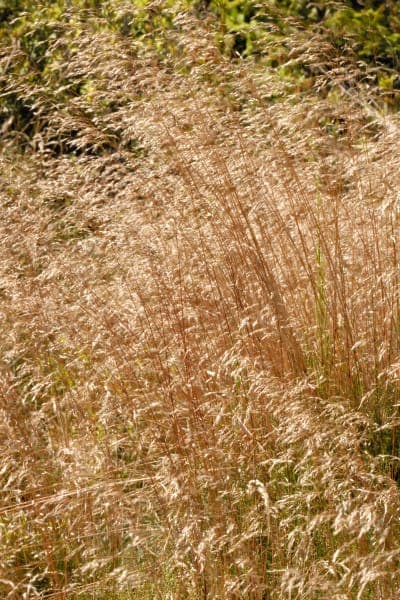
James K. Lindsey / CC BY-SA 3.0, via Wikimedia Commons
Velvet bent: complete guide
Agrostis canina
Want to see Velvet bent: complete guide in your garden?
1 minute, no credit card
Overview
Agrostis canina, commonly known as Velvet bent, is a perennial grass from the Poaceae family that thrives in damp, often acidic conditions. Native across much of Europe and parts of Asia, it naturally grows in heaths, marshes, and poorly drained soils where richer competitors struggle. It's not a flashy plant, but its fine texture and airy presence make it a valued choice for naturalistic garden design. Unlike Agrostis stolonifera, it doesn't spread via runners, forming upright tufts instead.
This grass is ideal for gardeners who appreciate subtlety and function over show. It's not meant for lawns or sports fields but excels as an ornamental grass in wetland gardens or challenging corners. Its loose, open panicles catch the light and move gracefully in the breeze, adding movement and sound to the garden.
On gardenworld.app you can create a garden layout that integrates Velvet bent with other moisture-loving plants, ensuring your design works with your soil type and microclimate.
Appearance & bloom cycle
Velvet bent reaches 8 to 24 inches (20–60 cm) in height, with narrow, soft green to grey-green leaves about 1–3 mm wide. The foliage forms upright clumps with a delicate, feathery look. From June to August, airy flower panicles emerge-pale grey to silvery, 5–15 cm long, with tiny purplish florets that mature to a soft, downy grey.
These panicles sway easily in the wind, creating a shimmering effect, especially at sunrise or sunset. While not nectar-rich, they do attract small pollinators like hoverflies and solitary bees. The seeds are wind-dispersed, so light self-seeding can occur in suitable spots.
Ideal location
Plant in full sun to light shade. Velvet bent performs best with at least 6 hours of direct sunlight daily. It tolerates partial shade only if soil moisture remains consistently high. Avoid deep shade, as this leads to floppy growth and reduced flowering.
This grass works well in rain gardens, damp borders, or along pond edges. It's particularly effective in naturalistic plantings or restoration projects. If your garden has a soggy patch where little else grows, this might be the solution. Check your garden's conditions using gardenworld.app to see if Velvet bent fits your site.
Soil requirements
The soil should be consistently moist but well-draining-avoid stagnant water. Ideal types include sandy clay, loam, or peat-based soils with a pH between 4.5 and 6.5. It thrives in low-fertility conditions; rich soils promote excessive leaf growth and weaken the plant's structure.
Do not add compost or fertilizer when planting. Agrostis canina evolved in nutrient-poor environments, so over-feeding leads to leggy, floppy plants. If amending soil, use sand or fine gravel to improve drainage without boosting fertility.
Free design
Want to see Velvet bent: complete guide in your garden? Make a free design now.
Watering
Water regularly during the first growing season, especially in dry spells. Young plants need consistent moisture for the first 6–8 weeks to establish strong roots. Once established, it's moderately drought-tolerant, though prolonged dry periods may reduce vigor.
In its natural habitat, it grows near streams or in boggy areas, so mimic those conditions. Use rainwater when possible, as it's naturally soft and slightly acidic-perfect for this grass. Avoid overhead watering in winter to prevent crown rot.
Pruning
Pruning is minimal. In late winter or early spring (February to March), cut back old foliage and spent flower stems to about 4 inches (10 cm) above ground. This encourages fresh growth and prevents a tangled mess.
Use sharp shears or a hedge trimmer for larger clumps. Avoid cutting in autumn, as the standing dead stems provide winter interest, shelter for insects, and frost protection. Compost the trimmings or use them as light mulch elsewhere.
Maintenance calendar
- January: Inspect clumps; prepare for pruning.
- February: Begin light cutting if weather is dry.
- March: Complete pruning; watch for new shoots.
- April: No action needed; monitor for weeds.
- May: Active growth starts; avoid fertilizing.
- June: Flowering begins; maintain moisture.
- July: Peak bloom; enjoy movement in wind.
- August: Blooming fades; no extra care.
- September: Let seed heads mature for birds.
- October: Leave standing; overwintering begins.
- November: No watering; check for fungal spots.
- December: Dormant period; avoid walking on clumps.
Winter hardiness
Velvet bent is fully winter-hardy in USDA zones 4 to 8, surviving temperatures down to -25°C (-13°F). It remains semi-evergreen in milder winters, with foliage often staying intact under snow. The plant dies back to a tight basal rosette and re-emerges strongly in spring.
No winter protection is needed. In wet winters, ensure good air flow to prevent fungal diseases. Space plants 30–40 cm apart to allow circulation.
Companion plants
Pair Velvet bent with other moisture-loving, acid-tolerant plants such as Purple moor-grass (Molinia caerulea), Heathers (Calluna vulgaris), Cotton grass (Eriophorum angustifolium), or Spiraea hybrida. It also complements taller perennials like Joe-Pye weed (Eutrochium maculatum) or sedges (Carex spp.).
Plant in groups of 3–5 for visual impact. Use natural edging like driftwood or local stone to frame the planting without containing it.
Closing
Velvet bent isn't a showstopper, but it's a quiet achiever. It handles tough conditions with grace and adds texture and movement to the garden. It's ideal for gardeners tired of high-maintenance plants and looking for resilient, ecological solutions.
Buy Agrostis canina from garden centres like B&Q, local nurseries, or online suppliers. Available in 1L pots or seed packs. Look for regionally sourced seed for better adaptation. Check planting dates and care tips on gardenworld.app for best results.
Want to see Velvet bent: complete guide in your garden? Make a free design now.
Upload a photo, pick a style, and get a photorealistic design with plant list in under a minute.
No credit card required


Similar plants
Sporobolus pungens: complete guide
Sporobolus pungens
Sporobolus pungens is a stoloniferous Mediterranean coastal grass with outstanding salt and drought tolerance, perfect for seaside and dry gardens.
Mediterranean aegilops: complete guide
Aegilops biuncialis
Everything about Aegilops biuncialis, a Mediterranean annual grass with ornamental spikes and outstanding drought tolerance for dry gardens.
Silver bluestem: complete guide
Bothriochloa saccharoides
Full guide to Bothriochloa saccharoides (silver bluestem): site, soil, watering, winter hardiness, pruning, and garden companions.