
Wikimedia Commons / CC BY-SA 2.5, via Wikimedia Commons
Cockle: complete guide
Agrostemma githago
Want to see Cockle: complete guide in your garden?
1 minute, no credit card
Overview
Cockle, or Agrostemma githago, is a striking annual that once grew as a weed among wheat fields across southern Europe. Now, it's a prized addition to cottage gardens, meadow mixes, and naturalistic plantings. This member of the Caryophyllaceae family reaches heights of 60–90 cm and produces vivid purple flowers with dark centers from June through July. Native to regions like Greece, Italy, and the Crimea, it thrives in hot, dry conditions and poor soils - making it ideal for low-fertility gardens where other plants struggle.
While all parts of the plant are mildly toxic, its bold color and airy stems bring charm to any open, sunny spot. It's not a plant to mass heavily, but a few stalks scattered through a border can elevate the whole design.
On gardenworld.app, you can upload your garden layout to see exactly where Cockle would perform best based on sunlight and soil type.
Appearance & bloom cycle
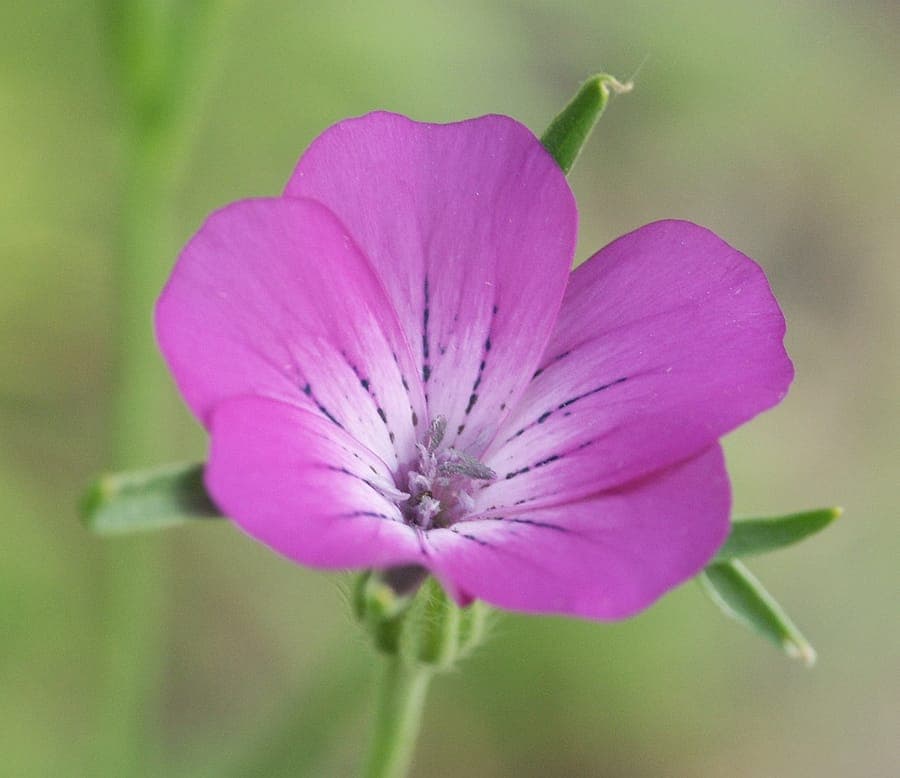
Cockle features slender, upright stems with narrow, grey-green leaves. The flowers are 3–5 cm wide, with five deeply notched petals in a rich purple, surrounding a nearly black center. Each bloom lasts several days, and the plant continues flowering for four to six weeks under full sun. Deadheading isn't required, but removing spent blooms can extend flowering slightly and prevent excessive self-seeding.
After blooming, seed capsules form and dry on the stalk. These split open in late summer, scattering seeds that may germinate the following spring. The plant typically grows to 75 cm, though in nutrient-poor soils it may stay shorter. Its form is delicate, almost wispy - best used as a background accent or mid-height filler.
Ideal location
Cockle needs at least 6–8 hours of direct sunlight daily (light level 7–10). It performs poorly in shade, where stems become leggy and flowers sparse. Choose a spot with excellent air circulation to prevent fungal issues. It's perfect for gravel gardens, dry borders, or wildflower patches.
In urban gardens, grow Cockle in large pots (minimum 30 cm diameter) filled with free-draining compost. Place containers on south-facing patios or balconies. Avoid overcrowding - space plants 20–25 cm apart to allow airflow. If you're unsure about light exposure, use gardenworld.app's sun mapping tool to verify your site's suitability before planting.
Soil requirements
This plant prefers alkaline soils with a pH between 7.5 and 8. It grows well in sandy, chalky, or loamy soils as long as drainage is sharp. Avoid heavy clay or water-retentive substrates - they promote root rot, especially in winter. Do not enrich the soil with compost or manure; Cockle thrives in lean conditions. Excess fertility leads to weak stems and fewer flowers.
If your soil is acidic, amend with ground limestone to raise pH gradually. A top-dressing of fine gravel (1–2 cm) helps keep the base dry and mimics its natural habitat.
Free design
Want to see Cockle: complete guide in your garden? Make a free design now.
Watering
Once established, Cockle is drought-tolerant. Water young seedlings regularly for the first 3–4 weeks, especially during dry spells. After that, natural rainfall is usually sufficient. Only irrigate during prolonged droughts (three weeks or more without rain). When watering, apply at soil level in the morning to avoid wetting foliage, which can encourage mildew.
In containers, check moisture by inserting a finger 2 cm into the soil. Water only if dry. Overwatering is a bigger risk than underwatering.
Pruning
Pruning isn't necessary for plant health, but cutting back after flowering helps manage reseeding. For a neater look, deadhead spent blooms with clean scissors. To encourage self-sowing, leave 1–2 stalks standing until seeds fully mature in late August. Cut down all remaining stalks in autumn to tidy the garden.
If plants flop due to rain or wind, use short bamboo canes for light support. Avoid heavy staking - it ruins the natural flow.
Maintenance calendar
- Jan: Clear any lingering debris. No watering or feeding.
- Feb: No action needed.
- Mar: Prepare soil if sowing early. Lightly rake to loosen surface.
- Apr: Sow seeds directly outdoors from late April when soil reaches 10°C.
- May: Thin seedlings to 20–25 cm apart. Keep soil lightly moist.
- Jun: Flowers begin. Monitor for pests like aphids; hose off if needed.
- Jul: Peak bloom. Remove faded flowers for tidiness.
- Aug: Seeds mature. Decide whether to collect or allow self-seeding.
- Sep: No care. Let soil rest.
- Oct: Cut back dead stems if not self-sowing.
- Nov: Clear remaining material. Protect bare soil with mulch.
- Dec: Dormant. No maintenance.
Winter hardiness
As an annual, Cockle doesn't survive winter. However, its seeds can overwinter in the ground in USDA zones 5–8, germinating in spring when temperatures rise. In colder zones (below 5), sow fresh seeds each year. Avoid overwintering in pots - frozen moisture kills roots. In mild climates, light mulching helps protect dormant seeds.
Companion plants
Pair Cockle with other sun-loving, drought-tolerant species. Good matches include Cornflower (Centaurea cyanus), Poppy (Papaver rhoeas), and Yarrow (Achillea millefolium). In mixed borders, it works well with Salvia nemorosa, Echinacea purpurea, or ornamental grasses like Deschampsia cespitosa.
Avoid vigorous growers like Monarda or tall Phlox - they'll overshadow Cockle. For a cottage look, combine with Verbascum or Gaura lindheimeri.
Closing
Cockle isn't flashy in the traditional sense, but its wild elegance makes it unforgettable. It's not for manicured lawns or richly mulched beds - this is a plant for gardeners who embrace imperfection. Sow it where you want a touch of old-world charm, then let it do its thing. Available at garden centres across the UK, often sold as seed packets in the spring. Remember: less is more. Too many plants lead to flopping and disease. Use gardenworld.app to plan spacing and light exposure so your Cockle thrives without taking over.
Want to see Cockle: complete guide in your garden? Make a free design now.
Upload a photo, pick a style, and get a photorealistic design with plant list in under a minute.
No credit card required


Similar plants
Dianthus karami: complete guide
Dianthus karami
Dianthus karami is a rare Lebanese mountain pink with fringed pink blooms on limestone cliffs, ideal for rock gardens and troughs.
Sicilian pink: complete guide
Dianthus siculus
Discover Dianthus siculus, an elegant purple bloomer from Sicily. Cultivation, June-September flowering and garden combinations.
Alpine mouse-ear chickweed: complete guide
Cerastium pedunculatum
Full growing guide for Cerastium pedunculatum: ideal location, soil, watering, winter hardiness, and companion plants for rock gardens.