
Sten Porse / CC BY-SA 3.0, via Wikimedia Commons
White Snakeroot: complete guide
Ageratina altissima
Want to see White Snakeroot: complete guide in your garden?
1 minute, no credit card
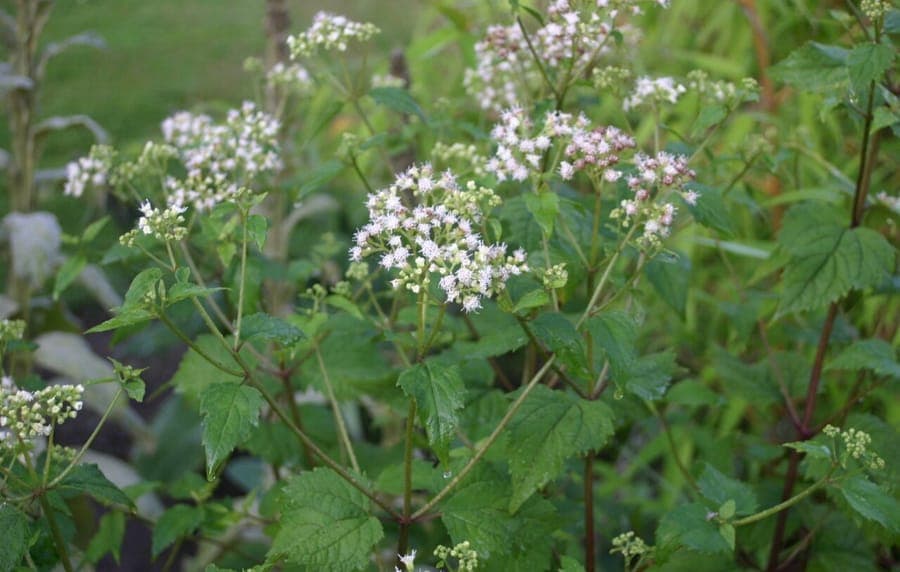
Ageratina altissima, commonly known as white snakeroot or richweed, is an elegant wildflower native to southeastern North America. This plant is valued for its mass of tiny white flowers and its potential value as pollinator food. In Europe, it has been introduced and now grows in many regions, though in some areas it is considered invasive.
Appearance and Bloom
White snakeroot grows to approximately 60 to 120 centimeters tall. The stems are thin, hairy, and branch well. The leaves are opposite, lance-shaped, and have a rough surface described as 'wrinkled,' hence the French name. From August to October, the plant produces masses of tiny white to pale green flowers in dense, umbel-like clusters. The flowers attract butterflies, bees, and other pollinators. The plant dies back after blooming and seeding.
Ideal Location
Place white snakeroot in zones with partial to full shade. The plant grows best in moister microhabitats, such as forest edges and wet meadows. In gardens, however, it also tolerates drier conditions, especially once established. It prefers areas with some shelter from strong wind, though it is reasonably hardy. Experiment with placement in half-shade for optimal blooms.
Soil
White snakeroot is not very particular about soil type. It grows in both heavy clay and light sandy soil, as long as the pH stays somewhere between 5.5 and 7.0. The plant appreciates moister soil but tolerates drought once roots are established. Adding organic matter helps, especially in poor soils. Good drainage is important to prevent root rot.
Free design
Want to see White Snakeroot: complete guide in your garden? Make a free design now.
Watering
In the first year after sowing, water regularly, especially during hot, dry periods. Young plants benefit from consistently moist (but not waterlogged) soil. Once established, mature white snakeroot tolerates drought. After blooming in October, the plant tolerates moister conditions. Mulching helps moisture retention and temperature regulation.
Pruning
White snakeroot does not really need pruning. You can, however, gently pinch the top in late spring to encourage more branched growth. After blooming and seeding, you can cut the stems down to ground level, especially if you want to prevent self-seeding. Leave some stems standing for pollinators and small birds that feed on seed.
Maintenance Calendar
March through May sow seeds or plant cuttings. June to July is growing time with regular watering. August to October is blooming period - no special attention needed. November to February is dormancy. In early spring remove dead stems.
Winter Hardiness
Ageratina altissima is hardy to USDA zone 4, making it very suitable for the United Kingdom and northern Europe. The plant dies back to the ground in harsher winters but regrows from its root crown in spring. In milder climates it may be evergreen or only partially back.
Good Companions
White snakeroot combines well with other fall bloomers such as asters, September phlox, and Spiranthes orchids. Plant it next to other pollinator food plants. It also works well as filler between larger perennials. Avoid strong competitors such as iris.
Closing Tip
White snakeroot is an underrated garden jewel. With its delicate flowers and important role for pollinators, it deserves more attention. Let it self-seed for a spontaneous, natural effect. The plant provides food for butterflies and other insects throughout the season, keeping your garden vibrant!
Want to see White Snakeroot: complete guide in your garden? Make a free design now.
Upload a photo, pick a style, and get a photorealistic design with plant list in under a minute.
No credit card required


Similar plants
Calendula stellata: complete guide
Calendula stellata
Complete guide to Calendula stellata, the star-flowered marigold from Sicily: location, soil, watering and companion planting tips.
Korean chrysanthemum: complete guide
Chrysanthemum x rubellum
Chrysanthemum x rubellum is a hardy autumn perennial with single pink to copper flowers from August to November. Care and combinations.
Helianthus divaricatus: complete guide
Helianthus divaricatus
Helianthus divaricatus is a North American woodland sunflower with yellow summer blooms, ideal for naturalistic borders and shady edges.