
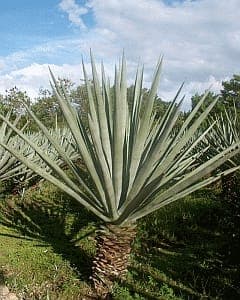
Wikimedia Commons / CC BY-SA 3.0, via Wikimedia Commons
Mescal: complete guide
Agave sisalana
Want to see Mescal: complete guide in your garden?
1 minute, no credit card
Overview
Agave sisalana, commonly known as Mescal, is a bold and sculptural plant native to southeast Mexico. It's a member of the Asparagaceae family and thrives in hot, dry climates. While not fully winter hardy in the UK and similar temperate zones, it's increasingly popular as a container specimen or feature plant in modern garden designs. Its dramatic form and minimal care needs make it ideal for xeriscaping and coastal gardens.
Though originally grown for its strong fibres used in rope and textiles, in home gardens it's prized for its architectural presence. It grows slowly but steadily, forming a tight rosette of stiff, sword-like leaves. If you're planning a drought-resistant layout, Agave sisalana is a top contender. Use gardenworld.app to visualise how this plant fits into your garden's structure.
Appearance & bloom cycle
Mescal develops a large, symmetrical rosette with thick, fleshy leaves that can reach 100–150 cm in length. The leaves are a glossy green with a prominent terminal spine and small teeth along the margins. These spines are sharp - wear gloves when handling.
Flowering occurs only once, typically after 8–12 years, when a tall, branching flower spike emerges, rising up to 6 metres. The yellowish-green flowers attract pollinators like bats and moths in its native habitat. After flowering, the main plant dies, but it often produces offsets (pups) around the base that can be potted up to continue the cycle.
Ideal location
Full sun is essential. Aim for at least 6–8 hours of direct sunlight daily. In the UK, place your Agave sisalana in a south- or southwest-facing spot. If growing in a container, use a large pot with drainage holes - terracotta works well as it allows moisture to evaporate.
Avoid shaded or damp corners. Good air circulation helps prevent fungal issues. If you're short on outdoor space, a sunny patio or greenhouse works perfectly. Use gardenworld.app to map sun exposure in your garden and find the best microclimate for your agave.
Soil requirements
Use a fast-draining mix. A blend of 2 parts cactus compost and 1 part horticultural grit or perlite is ideal. The soil pH should be neutral to slightly acidic (6.0–7.0). Avoid moisture-retentive soils like standard garden compost or clay-heavy mixes, which can lead to root rot.
For in-ground planting in milder areas (USDA zones 9–10), create a raised bed with sandy soil. In containers, add a 2–3 cm layer of gravel at the bottom to improve drainage.
Free design
Want to see Mescal: complete guide in your garden? Make a free design now.
Watering
Water deeply but infrequently. During the growing season (May to September), soak the soil and then allow it to dry out completely before watering again - roughly every 10–14 days. In winter, reduce watering to once a month or less, especially if the plant is kept in a cool, dry location.
Never let the plant sit in water. Use rainwater if possible, as tap water can increase lime buildup. Water at the base, avoiding the leaf rosette to prevent rot.
Pruning
Pruning isn't necessary for Agave sisalana. Only remove dead or damaged leaves with clean, sharp secateurs. Cut close to the base without disturbing the central core. Wear thick gloves and long sleeves to protect against spines.
Do not compost removed foliage - the fibrous leaves break down slowly and can remain sharp for months.
Maintenance calendar
- January–February: Dormant. Keep dry and frost-free (5–10°C).
- March: Check for pups. Begin light watering if temperatures rise.
- April: Move outdoors if frost risk has passed. Resume regular watering.
- May–September: Active growth. Water every 10–14 days. Inspect for pests like agave snout weevil.
- October: Reduce watering. Prepare for overwintering.
- November–December: Bring indoors or under cover. Stop watering.
Winter hardiness
Agave sisalana is hardy to USDA zone 9 (−6.7°C), but in the UK (zones 8–9), it needs winter protection. In colder areas, grow in containers and move to a frost-free greenhouse, conservatory, or bright garage. Ideal winter temperatures are between 5–10°C.
Avoid humid, heated rooms - the plant needs cool, dry conditions to stay dormant. Cover outdoor plants with a cloche or horticultural fleece during cold snaps, but only if the soil is dry.
Companion plants
Pair Mescal with other drought-tolerant species like Yucca gloriosa, Aloe arborescens, or Euphorbia myrsinites. These share similar sun and soil needs. Add texture with ornamental grasses like Stipa tenuissima or Festuca glauca.
For contrast, plant alongside bold-leaved Heuchera or spiky Kniphofia. Avoid moisture-loving plants such as ferns or astilbes, which create conflicting care needs.
Closing
Agave sisalana brings a touch of the desert to temperate gardens. With its bold form and low demands, it's perfect for modern, low-maintenance landscapes. Buy healthy specimens from trusted garden centres like those at major retailers, where you'll often find young offsets ready to grow.
Patience pays off - this agave may take years to bloom, but the journey is part of the appeal. For layout ideas and seasonal care tips, visit gardenworld.app.
Want to see Mescal: complete guide in your garden? Make a free design now.
Upload a photo, pick a style, and get a photorealistic design with plant list in under a minute.
10,000+ gardens designed already
No credit card required


Similar plants
Narrow-leaved dracaena: complete guide
Dracaena angustifolia
Everything about Dracaena angustifolia - the narrow-leaved dracaena: location, care, overwintering and use as a houseplant or patio plant.
Chaparral yucca: complete guide to Hesperoyucca whipplei
Hesperoyucca whipplei
Hesperoyucca whipplei (Our Lord's candle) is a dramatic rosette-forming plant from California that produces a towering flower spike, ideal for dry and gravel gardens.
False lily-of-the-valley: complete guide
Maianthemum dilatatum
Everything about Maianthemum dilatatum, the false lily-of-the-valley. Care, shade location, propagation and garden combinations for this popular shade ground cover.