
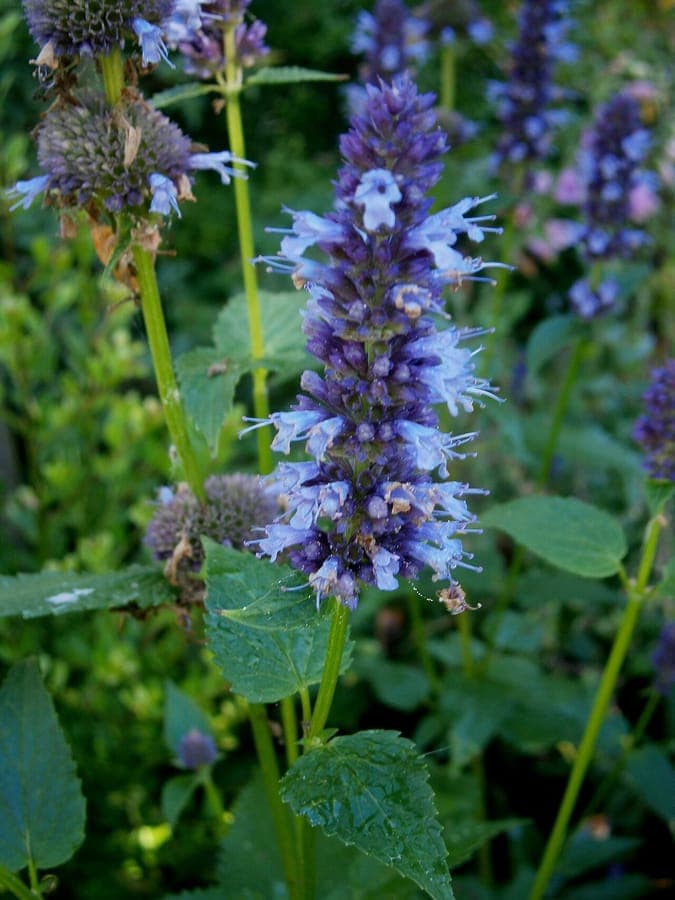
Meneerke bloem / CC BY-SA 3.0, via Wikimedia Commons
Blue giant-hyssop: complete guide
Agastache foeniculum
Want to see Blue giant-hyssop: complete guide in your garden?
1 minute, no credit card
Overview
Agastache foeniculum, commonly known as Blue giant-hyssop, is a striking herbaceous perennial that brings both structure and scent to the garden. Native to central and western North America - including Alberta, Montana, and Colorado - it thrives in USDA hardiness zones 5 to 9. In the UK and similar climates, it performs well as a hardy perennial with minimal fuss, reaching heights of 60 to 120 cm depending on growing conditions. As a member of the Lamiaceae family, it shares traits with mint and hyssop: square stems, aromatic foliage, and whorled flower spikes.
If you're planning a sun-loving, low-maintenance border, Blue giant-hyssop fits perfectly. On gardenworld.app you can generate a garden layout that highlights its vertical blooms and draws in pollinators naturally. This plant behaves as a subshrub in milder winters, meaning the base becomes slightly woody while the top dies back annually.
Appearance & bloom cycle
From July to September, tall, slender spikes of lavender-blue flowers rise above lance-shaped, bright green leaves. The blooms are densely packed in upright racemes, creating a vertical accent that draws the eye upward. When brushed, the leaves emit a sweet anise or fennel fragrance, earning it the nickname 'anise hyssop'.
The bloom period is a magnet for bees, butterflies, and even hummingbirds in North American gardens. In temperate European climates, it still pulls in bumblebees and hoverflies in droves. Each flower spike can last 6 to 8 weeks, and deadheading can extend the season by encouraging a second flush in late summer.
Ideal location
Full sun is non-negotiable for Blue giant-hyssop. It needs at least 6 to 8 hours of direct sunlight daily. In shaded spots, the plant becomes leggy, flops over, and blooms poorly. Choose a south- or southwest-facing site with good air circulation to reduce the risk of powdery mildew, a common issue in humid summers.
Avoid planting in damp, sheltered corners. This plant wants to bake, not stew. On gardenworld.app you can simulate sun exposure across your garden to find the perfect spot for Agastache foeniculum. It works well in prairie-style plantings, gravel gardens, or as a middle-tier element in structured borders.
Soil requirements
Well-drained soil is critical. Blue giant-hyssop hates wet feet, especially in winter. Sandy loam or gritty soil with a pH between 6.0 and 7.5 is ideal. Heavy clay should be amended with coarse sand or grit to improve drainage. Avoid enriching the soil too much - excessive fertility, especially nitrogen, leads to floppy growth and fewer flowers.
The plant is naturally adapted to lean conditions, so don't over-pamper it with compost or fertilizer. A light mulch of gravel helps retain warmth and prevent root rot, while also suppressing weeds.
Free design
Want to see Blue giant-hyssop: complete guide in your garden? Make a free design now.
Watering
Once established, Agastache foeniculum is drought-tolerant and rarely needs supplemental watering. However, during the first growing season, water deeply once or twice a week to help roots settle. After that, water only during prolonged dry spells (3+ weeks without rain).
When you do water, aim for 8 to 10 liters per plant, applied at the base to avoid wetting the foliage. Overhead watering encourages mildew. Rainwater is preferred - tap water with high lime content can affect soil pH and plant health over time.
Pruning
Pruning is simple but effective. In late summer, after the first flowering wave, cut back spent flower spikes by 10 to 15 cm to promote a second bloom. In autumn or early spring, trim the entire plant down to 15 cm above ground level. Leave the old stems through winter if you want to shelter beneficial insects - just remove them before new growth starts in March.
Never cut into the woody crown - it won't regenerate. Use clean, sharp secateurs to avoid disease transmission.
Maintenance calendar
- January: Dormant. Check for rodent damage.
- February: Minimal activity. Prepare tools.
- March: Cut back old stems. Apply light compost.
- April: Monitor for new shoots. Avoid overwatering.
- May: Water new plants weekly. No feeding.
- June: Watch for powdery mildew. Ensure airflow.
- July: Peak flowering. Enjoy pollinators.
- August: Deadhead blooms. Second flush possible.
- September: Let late flowers stand for seed-eating birds.
- October: Reduce watering. Prepare for dormancy.
- November: Stop watering. Leave stems for winter.
- December: Fully dormant. Protect if needed.
Winter hardiness
Hardy in zones 5–9, Blue giant-hyssop reliably survives UK winters. In colder zones or wetter gardens, apply a dry winter mulch like straw or bracken to protect the crown. Avoid wet mulches like bark chips, which trap moisture.
Young plants are more vulnerable than mature ones. Consider overwintering first-year plants in pots under cover if you're in a marginal zone.
Companion plants
Combine with drought-tolerant perennials like Echinacea, Rudbeckia, and Nepeta. These share similar soil and sun needs and extend the bloom season. Lavender pairs especially well, both visually and ecologically.
Avoid moisture-loving plants such as hostas or ferns. In garden centres across the UK, you'll often find Agastache foeniculum potted up in spring. Buying locally ensures you get a plant adapted to your climate.
Closing
Blue giant-hyssop isn't flashy in a tropical sense, but it earns its place with resilience, fragrance, and pollinator appeal. It asks for little and gives back for months. Whether tucked into a cottage garden or standing tall in a modern gravel scheme, it brings movement and life. For gardeners looking to design with purpose, gardenworld.app offers layout tools that match plants to microclimates - including full sun and free-draining spots perfect for this anise-scented beauty.
Want to see Blue giant-hyssop: complete guide in your garden? Make a free design now.
Upload a photo, pick a style, and get a photorealistic design with plant list in under a minute.
No credit card required


Similar plants
Apple mint (Mentha x villosa): complete guide
Mentha x villosa
Meet apple mint (Mentha x villosa): a fruity-scented kitchen herb with woolly leaves, perfect for tea and mojitos.
Salvia peyronii: complete guide
Salvia peyronii
Discover Salvia peyronii, a rare Lebanese mountain sage. Growing tips, hardiness, and companion planting for a Mediterranean gravel garden.
Bigleaf mint (Mentha x rotundifolia): complete guide
Mentha x rotundifolia
Discover bigleaf mint: cultivation, care tips, and garden uses. Learn how to grow this aromatic herb with soft, hairy leaves.