
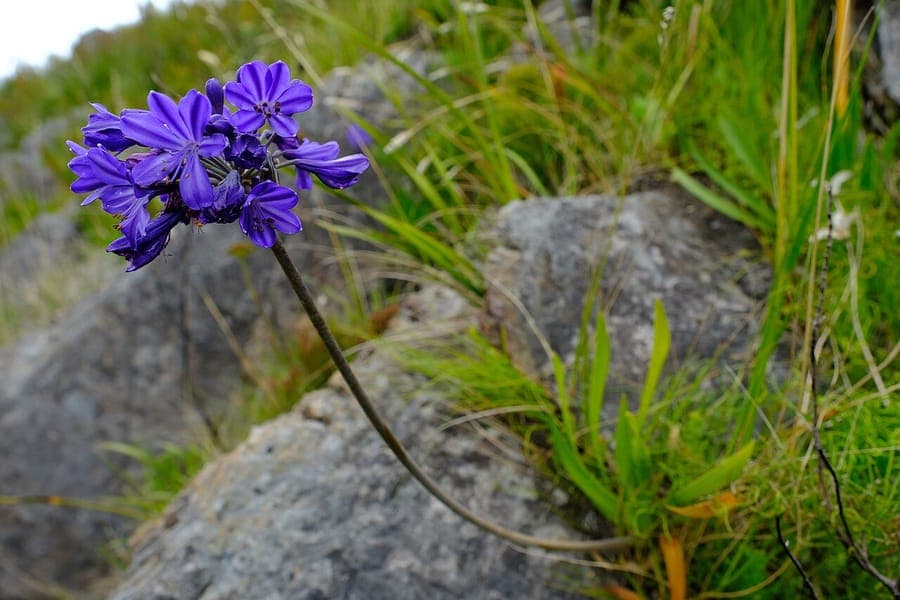
Nick Helme / CC BY-SA 4.0, via Wikimedia Commons
Lily-of-the-Nile: complete guide
Agapanthus africanus
Want to see Lily-of-the-Nile: complete guide in your garden?
1 minute, no credit card
Overview
Agapanthus africanus, commonly known as Lily-of-the-Nile, is a showstopping perennial that brings vertical drama and rich blue-purple blooms to summer gardens. Native to the Cape Provinces of South Africa, it thrives in warm, sunny spots and is surprisingly resilient once established. Despite its exotic look, it's a reliable performer in USDA zones 8–11 and can survive in zone 7b with proper winter protection. In cooler zones, it's best grown in containers and brought indoors during winter.
This plant belongs to the Amaryllidaceae family, though it's not related to true lilies. It forms dense clumps of strap-like, dark green foliage, with sturdy, hollow flower stalks rising 45–60 cm tall. The rounded umbels, packed with tubular flowers, bloom from late June through August and are a magnet for bees and hoverflies.
On gardenworld.app, you can design a sun-drenched border layout that highlights Agapanthus africanus alongside complementary textures and colors.
Appearance & bloom cycle
The leaves are evergreen in mild climates, growing 30–50 cm long and arching gently outwards. In early summer, thick scapes emerge, topped by globe-shaped flower clusters 10–15 cm across. Flower color ranges from deep blue-purple to white, depending on the cultivar. Bloom duration is typically 6–8 weeks.
Deadheading spent flower stalks encourages tidiness and prevents self-seeding. The plant may take 2–3 years to bloom from seed, so patience is key. Mature clumps can be divided in early spring to rejuvenate growth and spread the display.
Ideal location
Full sun is essential. Agapanthus africanus needs at least 6 hours of direct sunlight daily for strong flowering. In partial shade, it becomes leggy and blooms poorly. A south- or west-facing spot is ideal. It works beautifully in mixed borders, coastal gardens, or in large containers on patios.
When planting in pots, use a container at least 30 cm in diameter with excellent drainage. Terra cotta or frost-resistant plastic works well. Avoid overcrowding-give each plant 40–50 cm of space if planting in groups.
Soil requirements
Well-drained soil is non-negotiable. Agapanthus africanus hates wet feet and will quickly develop root rot in heavy clay or compacted soil. Use a mix of loam, sharp sand, and compost for garden beds. For containers, a premium potting mix with added perlite or pumice improves drainage.
pH tolerance is broad-between 6.0 and 7.5 is ideal. Avoid overly alkaline soils, which can lead to chlorosis.
Free design
Want to see Lily-of-the-Nile: complete guide in your garden? Make a free design now.
Watering
Water regularly during the growing season (May–September), especially in containers. Water when the top 2–3 cm of soil feels dry. In hot spells, this may mean watering every 2–3 days. Reduce frequency in autumn as the plant enters dormancy.
In winter, outdoor plants need little to no water. Potted plants kept in a cool, dark place (5–10°C) should be watered sparingly-once every 2–3 weeks is sufficient. Use rainwater when possible, as tap water high in lime can cause leaf tip burn.
Pruning
Pruning is minimal. Cut back flower stalks to the base after blooming to maintain neatness and redirect energy to roots. In late autumn or early spring, remove dead or damaged foliage. Evergreen types may need light trimming to shape, but avoid cutting into old wood.
Divide congested clumps every 4–5 years in March or April. This boosts flowering and prevents the plant from becoming dormant.
Maintenance calendar
- January: Dormant. No water or feed. Check indoor pots for rot.
- February: Continue dry storage. Prepare for spring repotting.
- March: Begin light watering. Divide clumps if needed.
- April: Move outdoors after frost risk passes. Start liquid feed every 3 weeks.
- May: Increase watering. Watch for slugs on new growth.
- June–August: Peak bloom. Feed every 2 weeks. Deadhead regularly.
- September: Reduce watering. Stop feeding.
- October: Trim dead leaves. Decide on overwintering method.
- November–December: Protect outdoor plants with mulch or fleece. Move pots indoors.
Winter hardiness
Hardy in USDA zones 8–11. In zone 7b, survival depends on winter protection and dry soil. In colder zones, grow in containers and overwinter in a frost-free, unheated space like a garage or greenhouse.
Key threat: wet, cold soil. A thick mulch of dry leaves or straw helps insulate the crown. Avoid wet covers-use breathable fleece, not plastic.
Companion plants
Pair with plants that offer contrasting form and color. Try Echinacea, Salvia nemorosa, or ornamental grasses like Pennisetum. Low-growers like Nepeta or Sedum provide soft texture at the base. For a coastal look, combine with Eryngium or Phormium.
Avoid aggressive spreaders like mint or bindweed that compete for space and moisture.
Closing
Agapanthus africanus delivers bold color and architectural form with minimal fuss. With full sun, sharp drainage, and smart winter care, it rewards gardeners year after year. Buy healthy stock from reputable garden centres or online retailers, and consider designing your ideal planting scheme on gardenworld.app-where you can preview how Agapanthus africanus fits into your overall garden vision.
Want to see Lily-of-the-Nile: complete guide in your garden? Make a free design now.
Upload a photo, pick a style, and get a photorealistic design with plant list in under a minute.
No credit card required


Similar plants
Douglas' Onion: complete guide
Allium douglasii
Douglas' onion is a compact ornamental allium with purple flowers, perfect for rock gardens and sunny borders. Learn care, siting and hardiness.
Oblique onion: complete guide
Allium obliquum
The oblique onion is a hardy ornamental allium with chartreuse flower heads and blue-green foliage. Location, soil and care explained.
False hooded garlic: complete guide
Allium pseudocalyptratum
Discover false hooded garlic (Allium pseudocalyptratum): a rare ornamental onion from Lebanon for rock gardens and alpine troughs.