
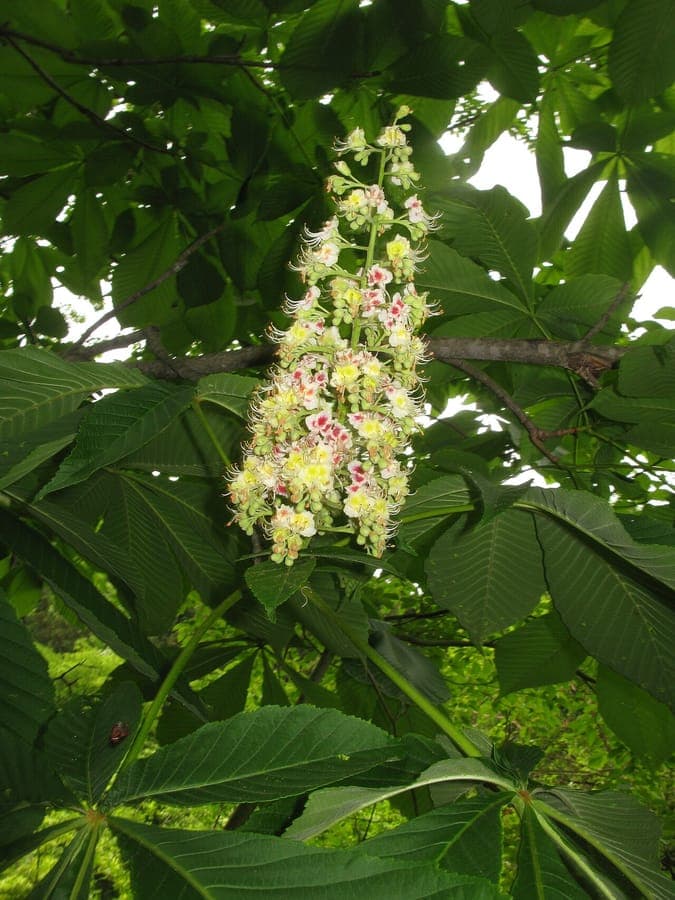
Qwert1234 / CC BY-SA 3.0, via Wikimedia Commons
Japanese Horse-chestnut: complete guide
Aesculus turbinata
Want to see Japanese Horse-chestnut: complete guide in your garden?
1 minute, no credit card
Aesculus turbinata, commonly known as the Japanese horse-chestnut, is a beautiful deciduous tree native to Japan. This tree distinguishes itself through its massive growth, large compound leaves, and characteristic brown chestnuts in autumn. With its broad crown and rich structure, it creates a majestic presence in any garden or park.
Appearance and Bloom
The Japanese horse-chestnut can reach 20 to 35 meters in height, making it a truly monumental tree species. The leaves are large, pinnately compound, and form a lush green canopy in summer. In early spring (April-May), striking white flowers with yellow central markings appear in dense plumes. These flowers attract bees and provide abundant food value. After flowering, knobby green fruit capsules form that split open in October, releasing brown-red seed nuts known as chestnuts.
Ideal Location
Place your tree where it receives full sun to partial shade. This ensures optimal growth and flowering. The tree tolerates wind reasonably well due to its flexible branches, though it appreciates protection from extreme storms. Ensure it has sufficient space to grow - think of at least 20 meters distance from buildings. Avoid places with stagnant water or boggy ground.
Soil
The Japanese horse-chestnut grows best in deeply worked, nutrient-rich soil with a pH of 5.5 to 7.5. It tolerates almost all soil types, from heavy clay to light sandy soils, but prefers slightly acidic to neutral. Provide sufficient organic matter in the form of aged compost, particularly at planting. Its deep root system means it is relatively drought-tolerant after the first year.
Watering
After planting, water regularly for the first two growing seasons, approximately once per week during dry periods. This encourages the root system to grow deep. Mature trees are relatively self-sufficient and only need extra water during extreme drought. Ensure water drains well and no marshes form. Mulch around the tree with 5 to 10 centimeters of organic material to improve moisture retention.
Free design
Want to see Japanese Horse-chestnut: complete guide in your garden? Make a free design now.
Pruning
The Japanese horse-chestnut requires little pruning, but maintenance pruning helps maintain shape. Remove dead or damaged branches in late winter or early spring. Formative pruning can be done in June, after flowering. Avoid heavy pruning, as this can remove many flowers. Let the tree retain its natural form - this gives the best results and the strongest branch pattern.
Maintenance Calendar
March through May the tree sprouts and flowers abundantly; no special attention needed beyond regular watering. June through September is growing time; monitor for drought. August through October leaves fall and fruits ripen; this is the best period for formative pruning. November through February is rest; remove dead branches and prepare for planting.
Winter Hardiness
Aesculus turbinata is hardy in USDA zones 5-8, making it very suitable for the United Kingdom and northern Europe. Young trees appreciate protection against late frost in May. Mature specimens tolerate winters to -20 degrees Celsius. The tree sheds its leaves in autumn and enters winter dormancy.
Good Companions
This tree forms a wonderful backdrop for smaller underplanting. Combine with shade-loving plants such as Hosta, ferns, and Liriope. Smaller shrubs such as Viburnum or Sambucus stand elegantly in the shade beneath. Do not plant it too close to other large trees, as it requires abundant nutrition and water.
Closing Tip
The Japanese horse-chestnut is an investment for future generations. Although it starts slowly, it eventually grows into a monumental tree that can live for centuries. The romantic white flowers in spring and brown chestnuts in autumn make it a tree species worth the wait. Plant it where you can enjoy it for many years to come!
Want to see Japanese Horse-chestnut: complete guide in your garden? Make a free design now.
Upload a photo, pick a style, and get a photorealistic design with plant list in under a minute.
No credit card required


Similar plants
Acer pycnanthum: complete guide
Acer pycnanthum
Acer pycnanthum, the Japanese swamp maple, is a fast-growing tree with early red flowers and brilliant autumn color, ideal for damp garden settings.
Freeman maple: complete guide
Acer × freemanii
Everything about the Freeman maple (Acer x freemanii): a fast-growing shade tree with spectacular autumn colour for large gardens.
Wild ackee: complete guide
Cupania americana
A comprehensive guide to Cupania americana, a tropical tree from the Sapindaceae family with conspicuous white flowers and brown fruits, native to tropical America.