
User:Kilom691 / Public domain, via Wikimedia Commons
Horse-chestnut: complete guide
Aesculus hippocastanum
Want to see Horse-chestnut: complete guide in your garden?
1 minute, no credit card
Overview
Aesculus hippocastanum, commonly known as the horse-chestnut, is a majestic deciduous tree that commands attention in parks, avenues and spacious gardens. Native to the Balkans - Albania, Bulgaria, Greece and parts of Turkey - it's been widely planted across Europe since the 16th century. Reaching heights of 20 to 30 meters with a broad, rounded crown, this tree isn't suited for small urban yards. It grows slowly at first, then accelerates after establishing its root system. The bark is smooth and gray when young, becoming scaly with age. Leaves emerge in late spring, turning golden brown in October. On gardenworld.app, you can visualise how this tree's mature size will impact your garden layout and shade patterns.
Appearance & bloom cycle
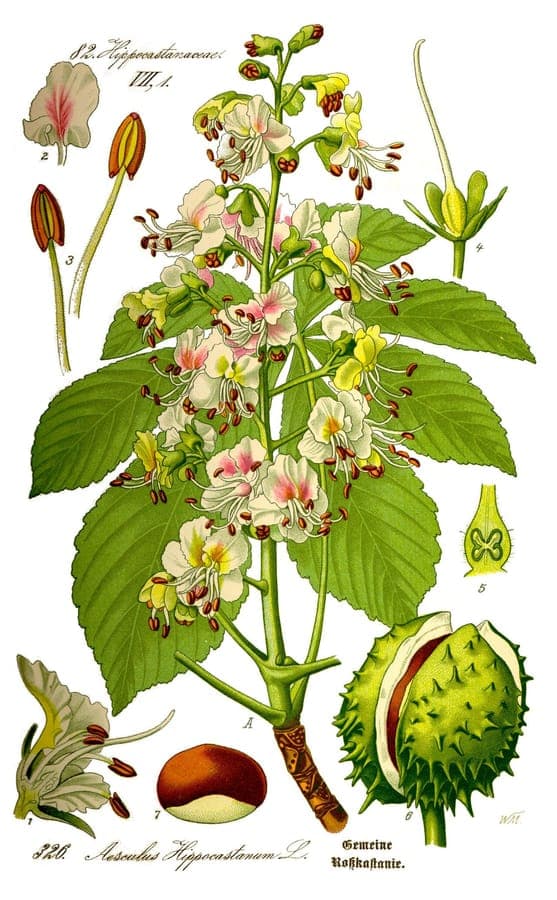
The horse-chestnut is most famous for its showy floral display in May. The flowers appear in upright, candle-like panicles 20–30 cm long. Each panicle consists of white blossoms with a distinctive yellow blotch at the base, often flushed with pink as they age. These nectar-rich blooms are a magnet for bees and other pollinators. The palmate leaves, made up of 5–7 pointed leaflets (each 10–20 cm long), are deep green and glossy. In autumn, they turn yellow to bronze before falling. The fruit is a spiky green capsule, 5–7 cm in diameter, which splits open in October to reveal one or two large, shiny brown seeds - commonly called conkers. These are toxic if ingested, so keep them away from pets and small children.
Ideal location
Plant this tree with long-term vision. It needs at least 5 meters of clearance from buildings, driveways or underground utilities. The ideal spot receives full sun to light shade - a light value of 7/10. It thrives in open areas where the crown can expand freely. Avoid windy, exposed sites, as the large leaves are prone to wind scorch. Urban plantings work well if the soil is uncompacted and deep enough. On gardenworld.app, you can simulate seasonal shade cast by a mature horse-chestnut to plan companion planting zones.
Soil requirements
The horse-chestnut prefers moist, well-drained loam or clay-loam soils. The pH should range from 5.5 to 6.5 - mildly acidic to neutral. Sandy soils are less ideal unless amended with organic matter. At planting, mix in compost or well-rotted manure to improve moisture retention and fertility. Avoid waterlogged or highly compacted soils, as the shallow, spreading root system is susceptible to rot. Mulch annually with leaf mold or compost to maintain soil health.
Free design
Want to see Horse-chestnut: complete guide in your garden? Make a free design now.
Watering
During the first two growing seasons, consistent watering is critical. Provide 20 liters per week per young tree, especially during dry spells. Use a slow-release method like a leaky hose or water bag to ensure deep root penetration. Mature trees are moderately drought-tolerant but benefit from deep watering during prolonged dry periods in summer. Never allow the base of the trunk to sit in standing water.
Pruning
Minimal pruning is required. The tree naturally develops a strong central leader and symmetrical crown. Only remove dead, damaged or crossing branches, best done in late winter (January–February) when the tree is dormant. Avoid heavy pruning, which can delay flowering and invite disease. Use sterilised tools to prevent the spread of fungal pathogens like leaf blotch.
Maintenance calendar
- January: Inspect for damaged branches, prune if needed
- February: Dormant season - no active care
- March: Loosen soil around the base, apply compost
- April: Monitor for aphids and early leaf development
- May: Peak bloom - enjoy and observe pollinators
- June: Avoid pruning, check for premature leaf browning
- July: Water young trees during dry weeks
- August: Watch for early leaf drop due to heat stress
- September: Reduce watering, stop fertilising
- October: Collect fallen leaves and spiky seed pods
- November: Final inspection, clear debris
- December: Tree enters dormancy - minimal intervention
Winter hardiness
The horse-chestnut is hardy in USDA zones 4 to 7, tolerating temperatures down to -30°C. In the UK and most of northern Europe, it survives winter without protection. Young trees may suffer from late spring frosts damaging new growth. Avoid wrapping the trunk, as trapped moisture can promote fungal issues. In colder zones, consider planting in a sheltered microclimate.
Companion plants
Due to the dense shade cast by the canopy, underplanting is challenging. Opt for shade-tolerant species like Helleborus, Lamium, Bergenia or Polystichum ferns. Avoid aggressive groundcovers that compete for moisture. Keep a 1-meter radius around the trunk clear to allow airflow and reduce disease risk. Grass is a practical ground cover choice.
Closing
The horse-chestnut isn't a low-maintenance shrub or a quick-fix ornamental - it's a long-term investment. But when given space and care, it becomes a living landmark, providing decades of shade, spring drama and autumn interest. It's not for every garden, but in the right setting, it's unforgettable. Buy young, healthy specimens from reputable garden centres with strong root balls and straight trunks. With patience and foresight, this tree will become the centerpiece of your landscape for generations.
Want to see Horse-chestnut: complete guide in your garden? Make a free design now.
Upload a photo, pick a style, and get a photorealistic design with plant list in under a minute.
No credit card required


Similar plants
Acer pycnanthum: complete guide
Acer pycnanthum
Acer pycnanthum, the Japanese swamp maple, is a fast-growing tree with early red flowers and brilliant autumn color, ideal for damp garden settings.
Freeman maple: complete guide
Acer × freemanii
Everything about the Freeman maple (Acer x freemanii): a fast-growing shade tree with spectacular autumn colour for large gardens.
Wild ackee: complete guide
Cupania americana
A comprehensive guide to Cupania americana, a tropical tree from the Sapindaceae family with conspicuous white flowers and brown fruits, native to tropical America.